

Dispatches from the Frontiers | Kyrgyzstan, September 2026
A change of dates to dodge the snow, and two old friends found themselves at the World Nomad Games: eagle hunters, horseback archers, dead goat polo and a nation having the time of its life. We’re very glad we did.
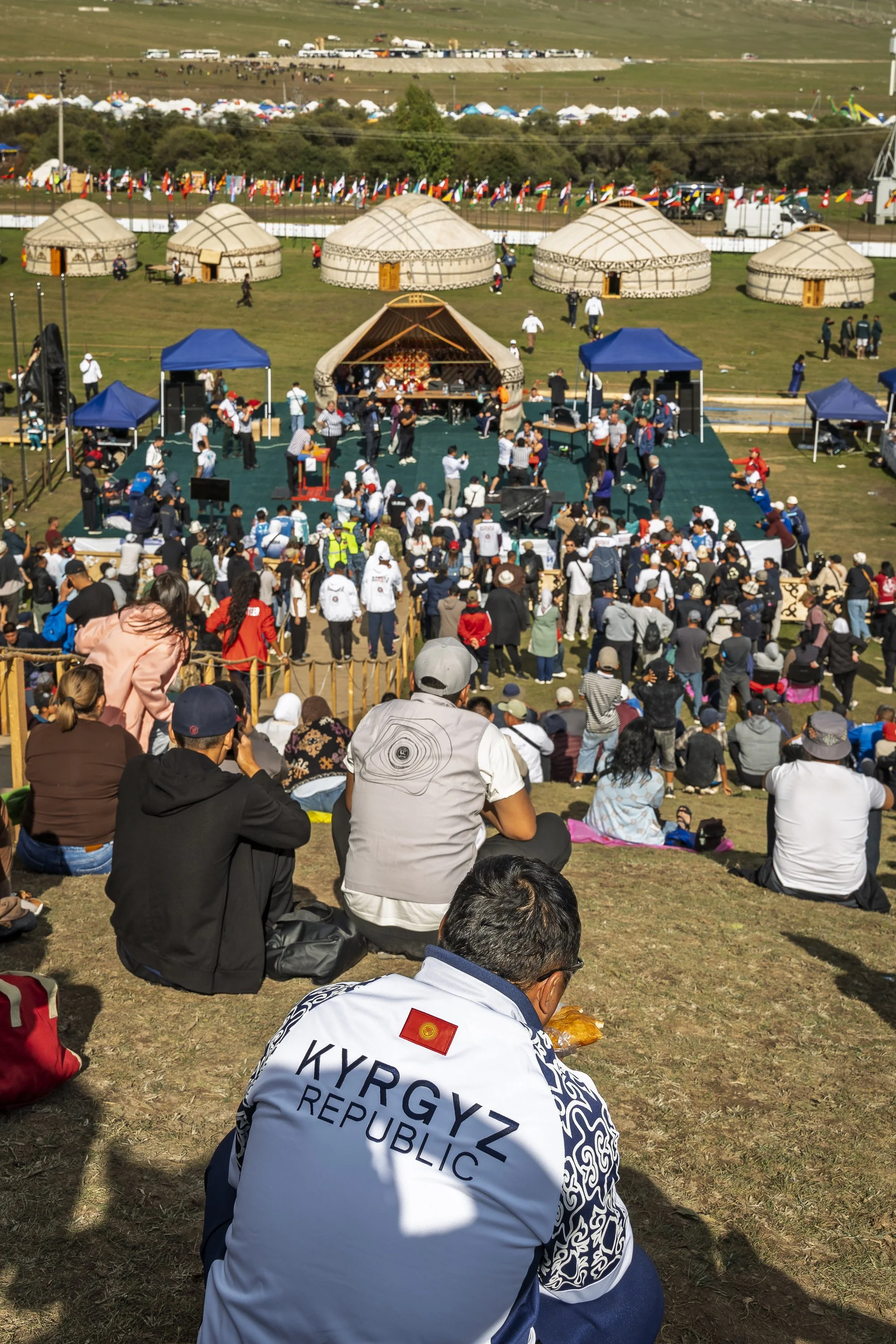
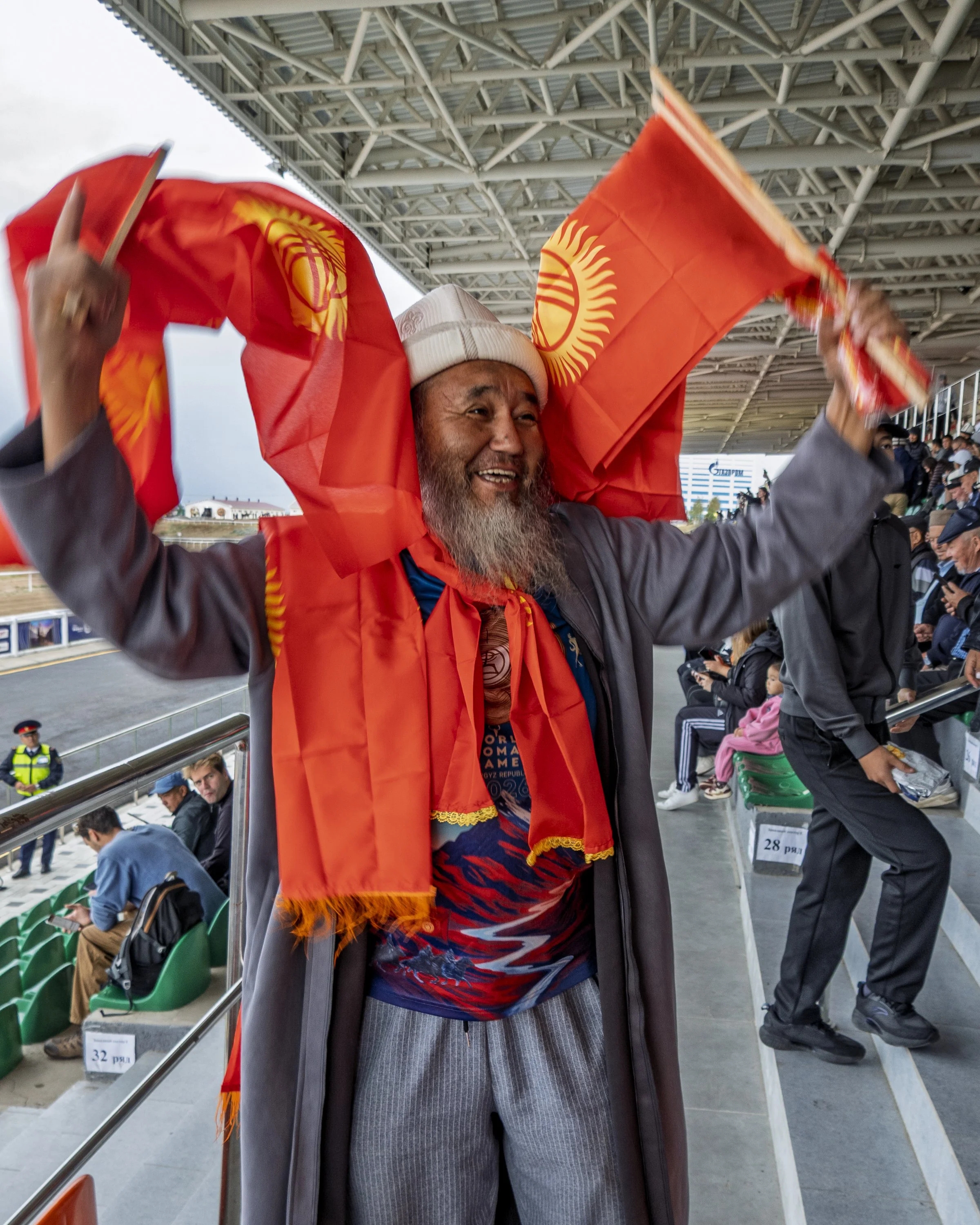
When I was fourteen, the Cantina scene in the first Star Wars movie struck me as the most gloriously mixed gathering imaginable: half the galaxy, in every shape and costume, crammed into one bar on Tatooine.
I hadn’t given it a thought in years. Then, on a wet September morning in the high country of Kyrgyzstan, I arrived at the World Nomad Games, and the Cantina came straight back.
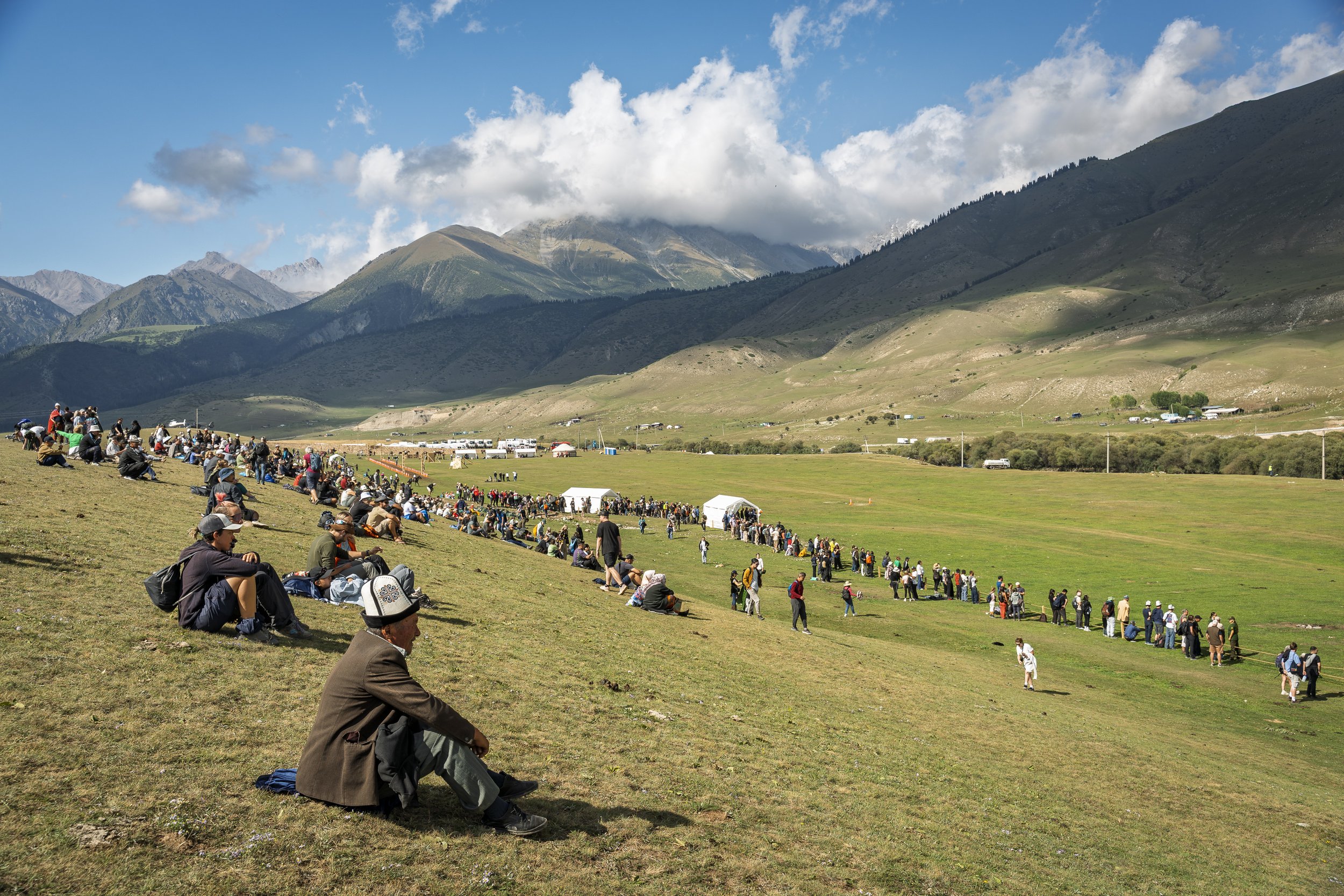
Spectators gather on the hillside to watch the horseback archery
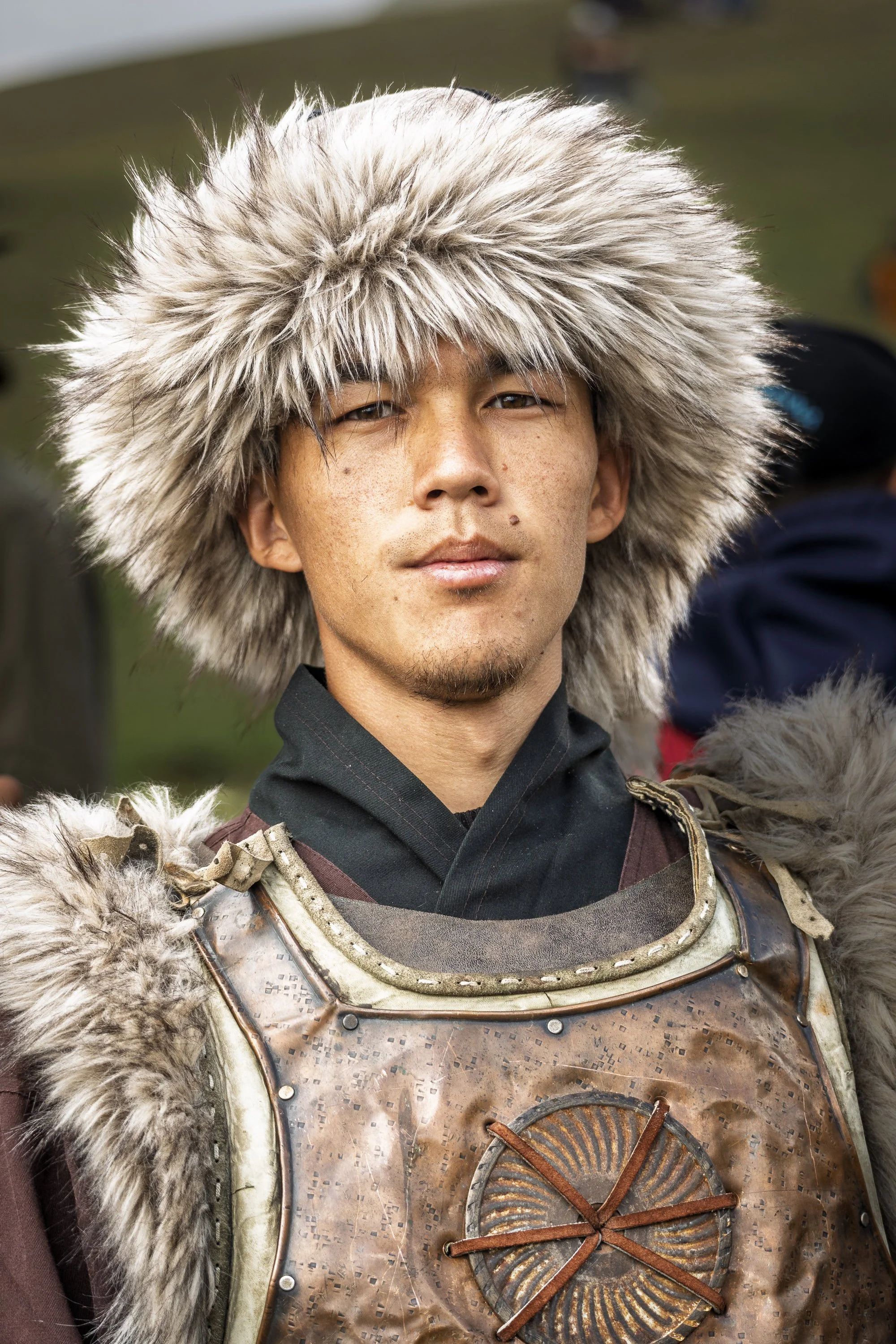
The Games bring together competitors from more than 100 countries for the sports and traditions the Olympics has never found room for. Kyrgyz kids dressed as warriors. Uzbek horseback archers. Mongolian and Kazakh eagle hunters. Tajik wrestlers. Russian and American teams for kok boru, otherwise known as dead goat polo. And a sizeable proportion of Kyrgyzstan’s population, on a mission to enjoy every moment.
There was even a TeamGB contingent. Who knew nomadic culture reached so deep into the Cotswolds? At the arena in Cholpon-Ata, a few of the British supporters looked like they took a wrong turn from the Badminton Horse Trials: burgundy cords, checked shirts, Barbours and Hunter wellies. The Trust-fund nomads were out in force. If the Cantina had a strangest table, it was theirs.
As far as we could establish, Ireland’s entire contribution was a man playing board games.
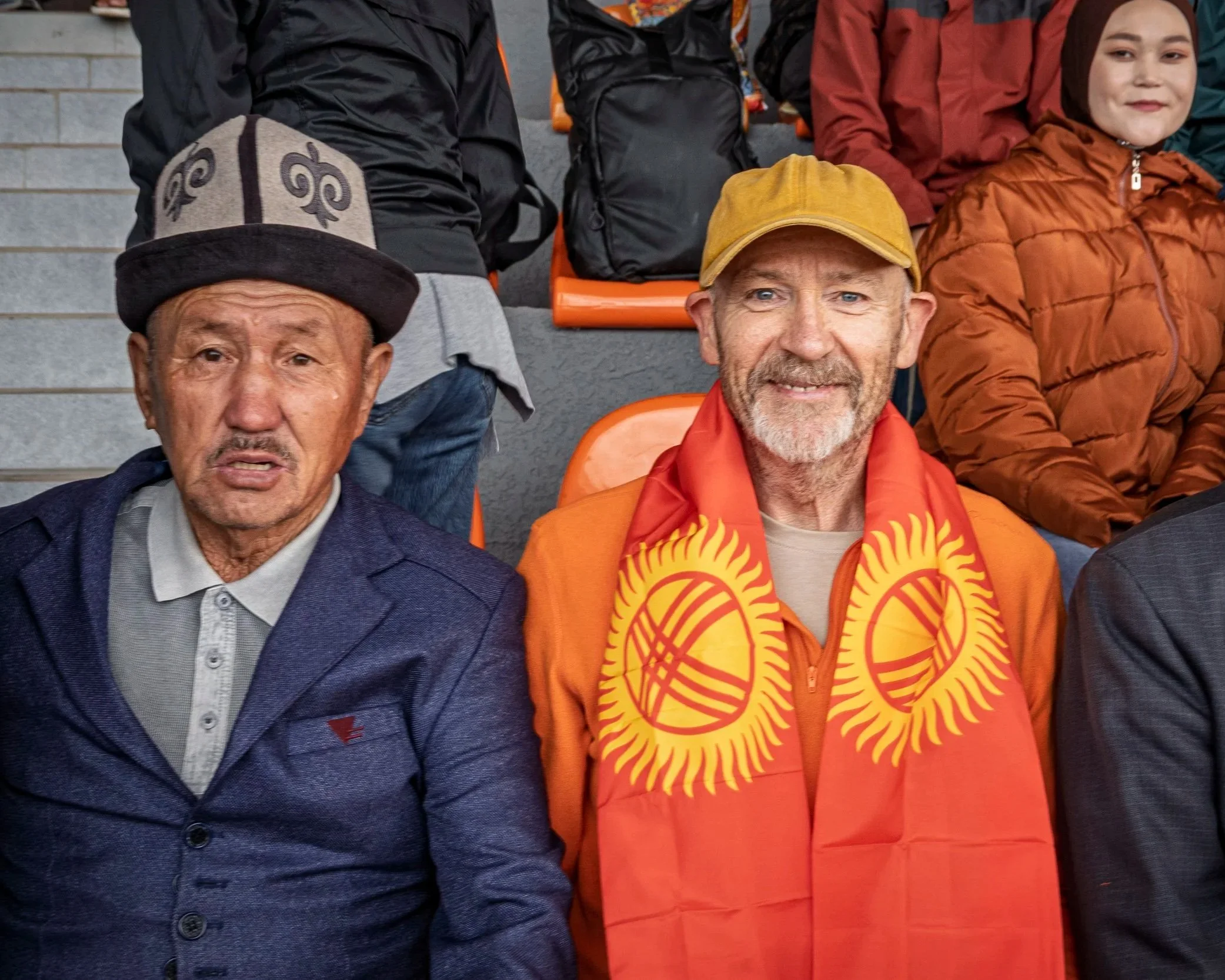
So we adopted Kyrgyzstan.
The Undercard
The World Nomad Games are not subtle. Most events test strength, nerve and horsemanship, the skills that kept nomadic peoples alive on the steppe for thousands of years. There are categories for food and for games of the mind too, but they aren’t what draw the crowds. The crowds come for the events where someone might get hurt.
In a culture like that, perhaps it’s no surprise how Ireland is known. Whenever we explained we were Irish, only one name came to people’s lips. Not U2. Not Guinness. A cage fighter: the MMA star Conor McGregor.
At home he’s a polarising figure. Here, his reputation rests entirely on what he did in the cage.
The programme is enormous. Beyond the headline horse events there was belt wrestling and arm wrestling. There was tug of war, which Kazakhstan won ahead of the hosts, and something billed, alarmingly, as bone crushing. I didn’t get to all of it. With venues scattered between Cholpon-Ata and the Kyrchyn Gorge, nobody could.
Horseback Archery - the main draw
For me, though, the real spectacle came on horseback: the archery, and kok boru, Kyrgyzstan’s national sport.
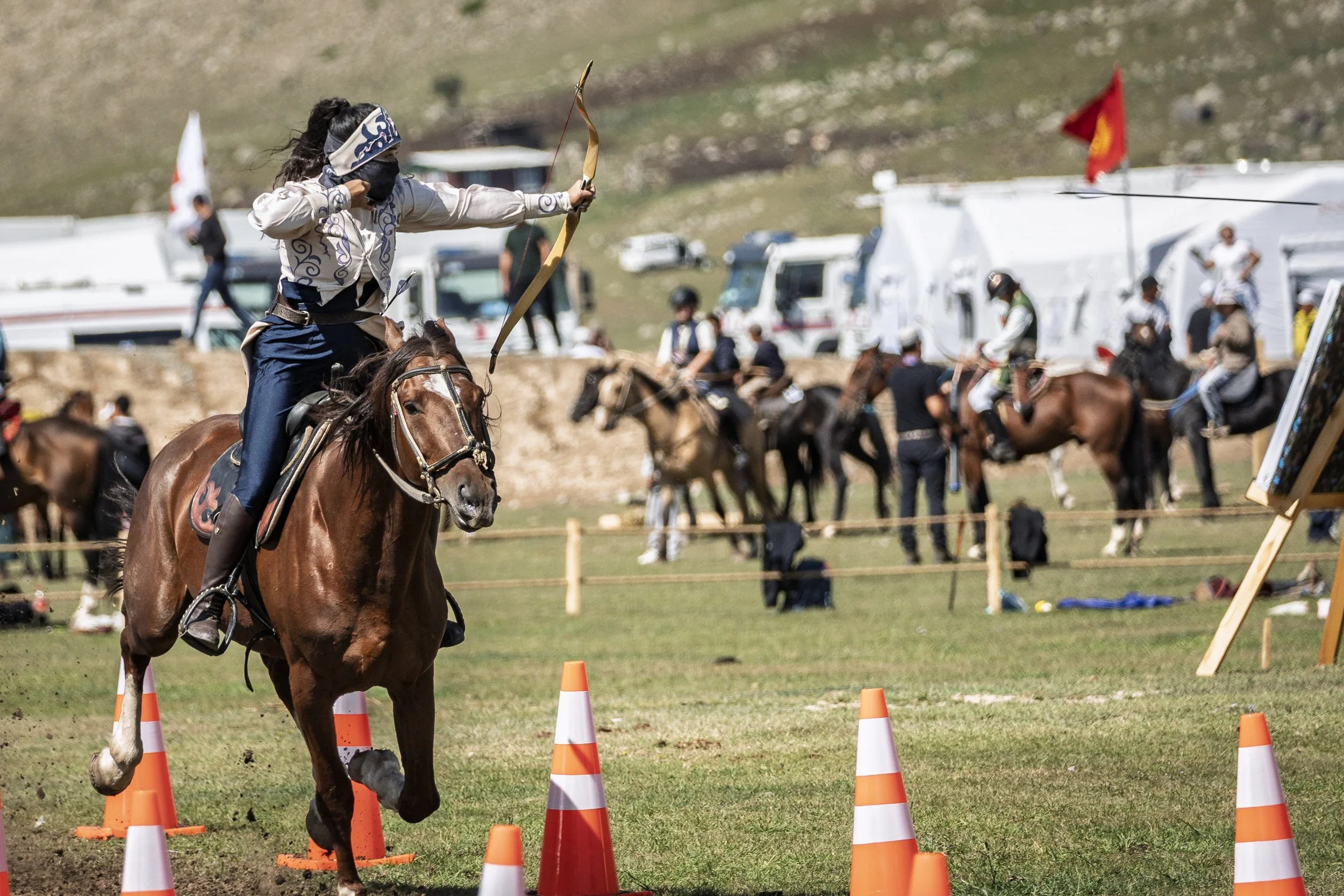
An Uzbek competitor lets loose with an arrow
Horseback archery was born on the battlefield. For centuries the horse gave the peoples of the steppe their edge, and the Mongols most famously built the largest land empire the world has seen on it. Each warrior rode with several spare horses, covered huge distances at speed and could loose volleys of arrows at full gallop, even turning in the saddle to shoot backwards.
Although I doubt Genghis Khan’s riders had to steer round traffic cones.
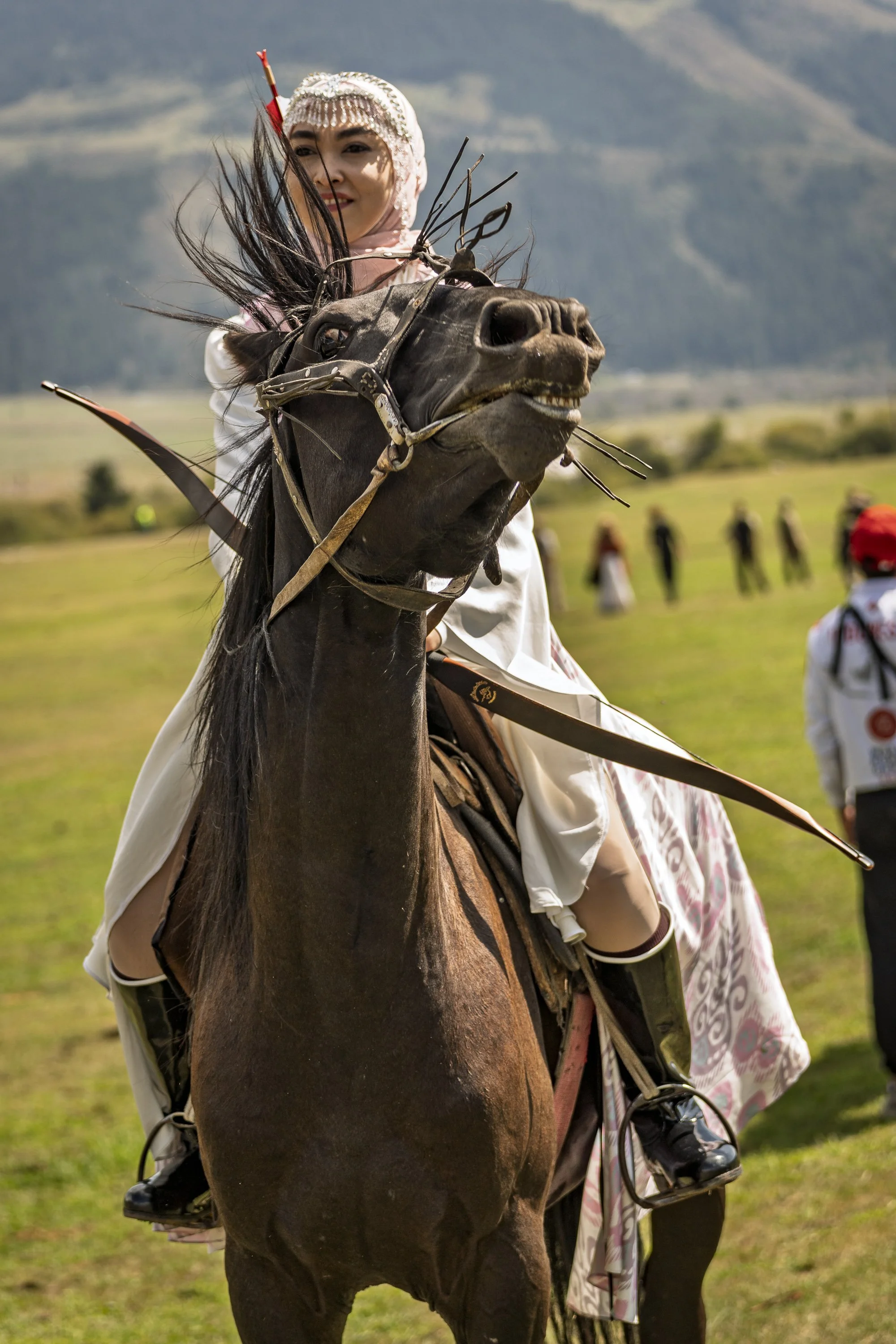
It’s still an extraordinary thing to watch: horse at full stretch, no hands on the reins, the rider drawing and releasing in a few strides. The event drew riders from across the world. I spotted French, British and Hungarian competitors. But Central Asia took the honours: Mongolia won the women’s event, and Kazakhstan the men’s.
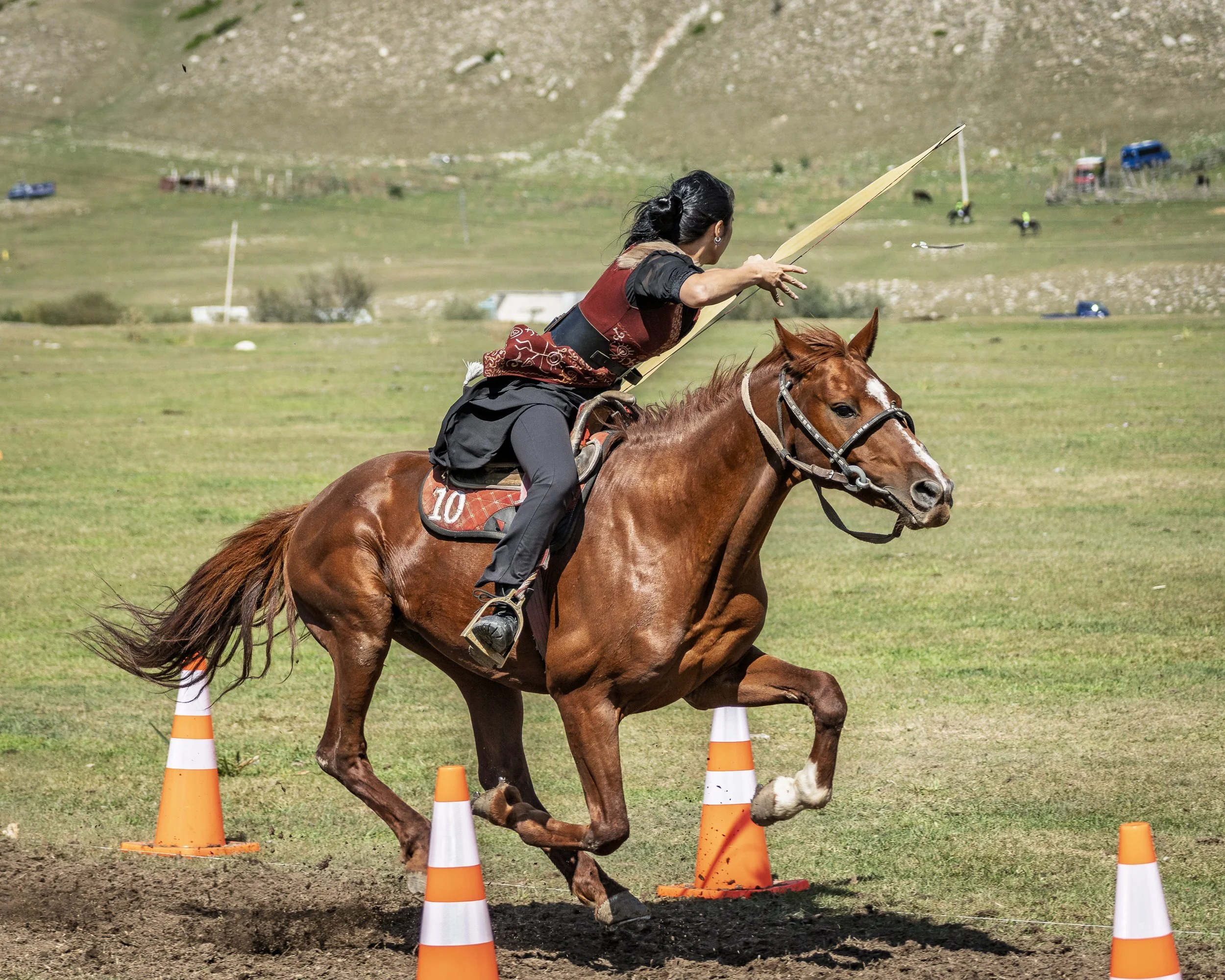
A Kyrgyz rider does her thing
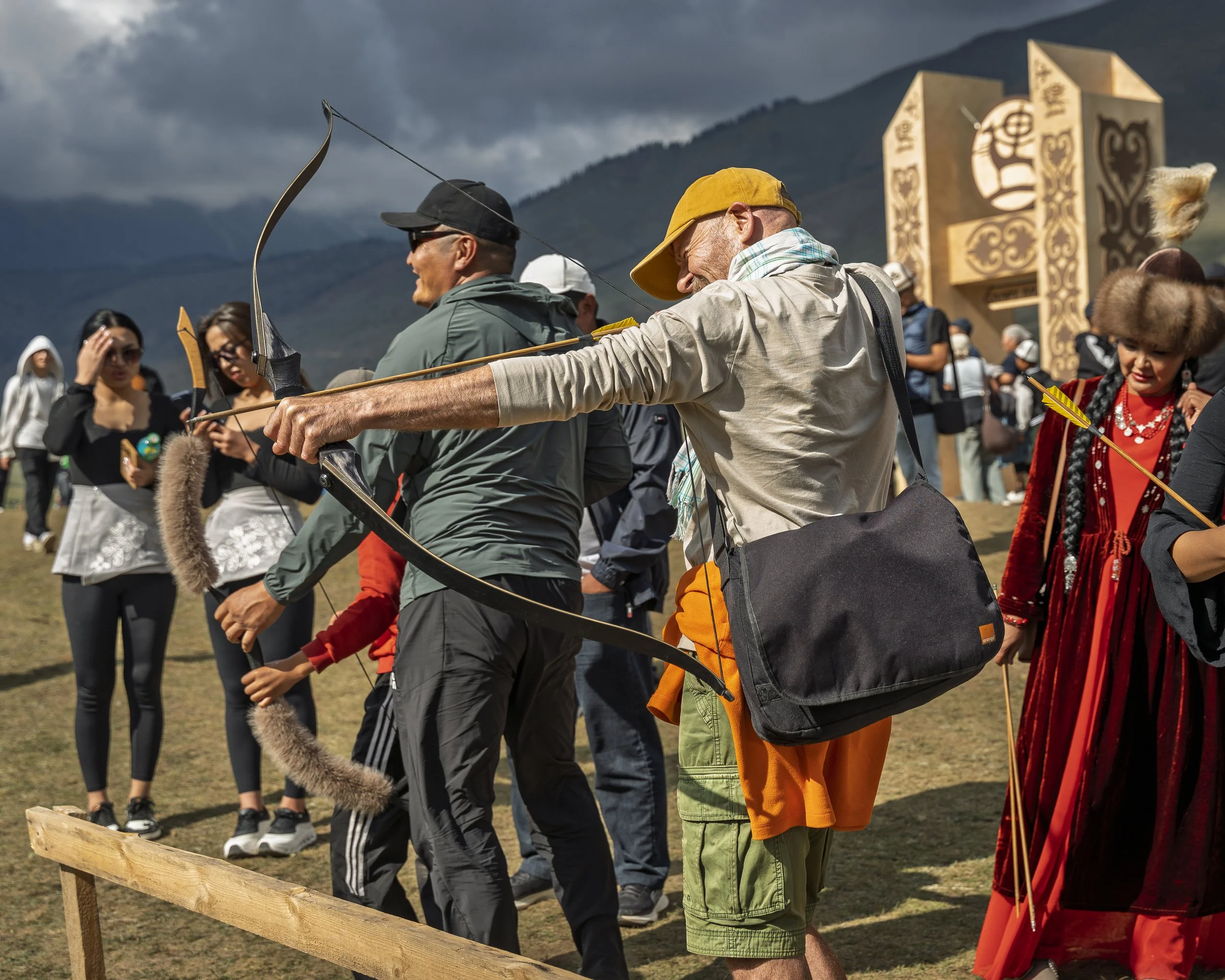
Inspired, even my mate had a go. Although he didn’t fancy it on horseback.
Kok Boru
If the Games have a main event, this is it, for the Kyrgyz crowds and the foreign visitors alike. The name means “grey wolf,” and the story goes that it began with herders chasing down wolves that had raided their flocks. Versions are played right across Central Asia. Today the wolf has been replaced by a goat carcass.
And the rules of the game?
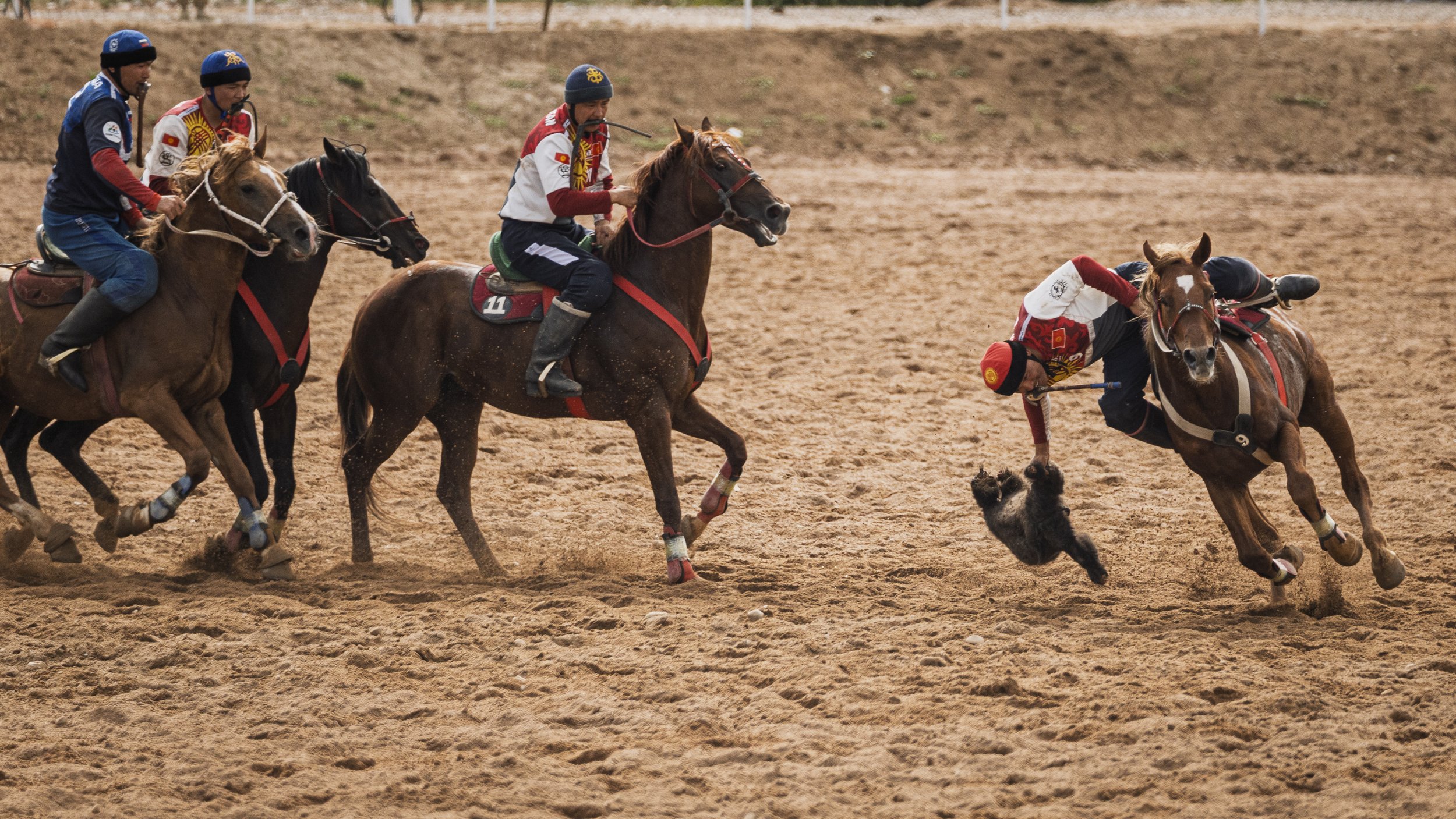
Step one: pick up a 30kg goat carcass. From the saddle. At full gallop.
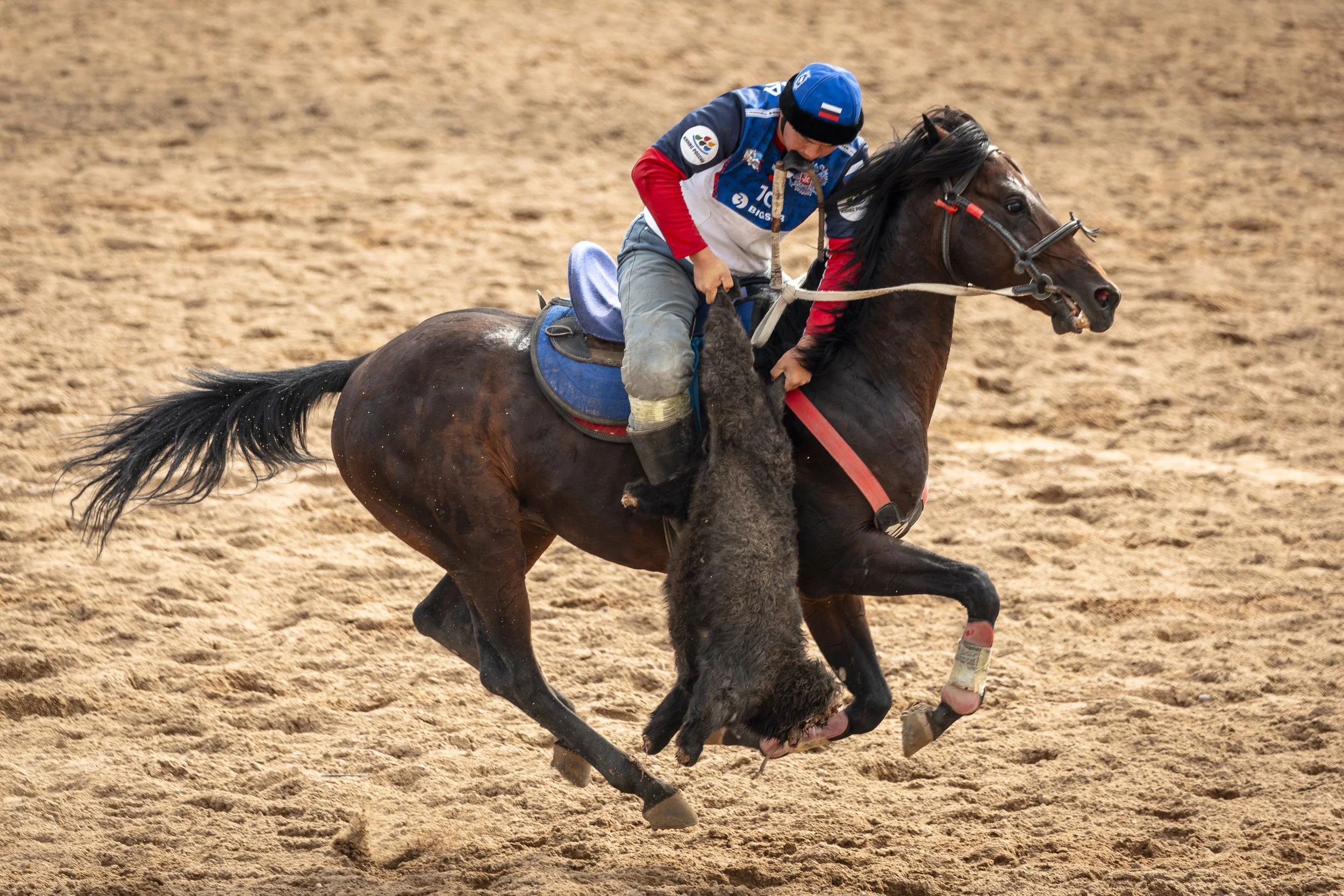
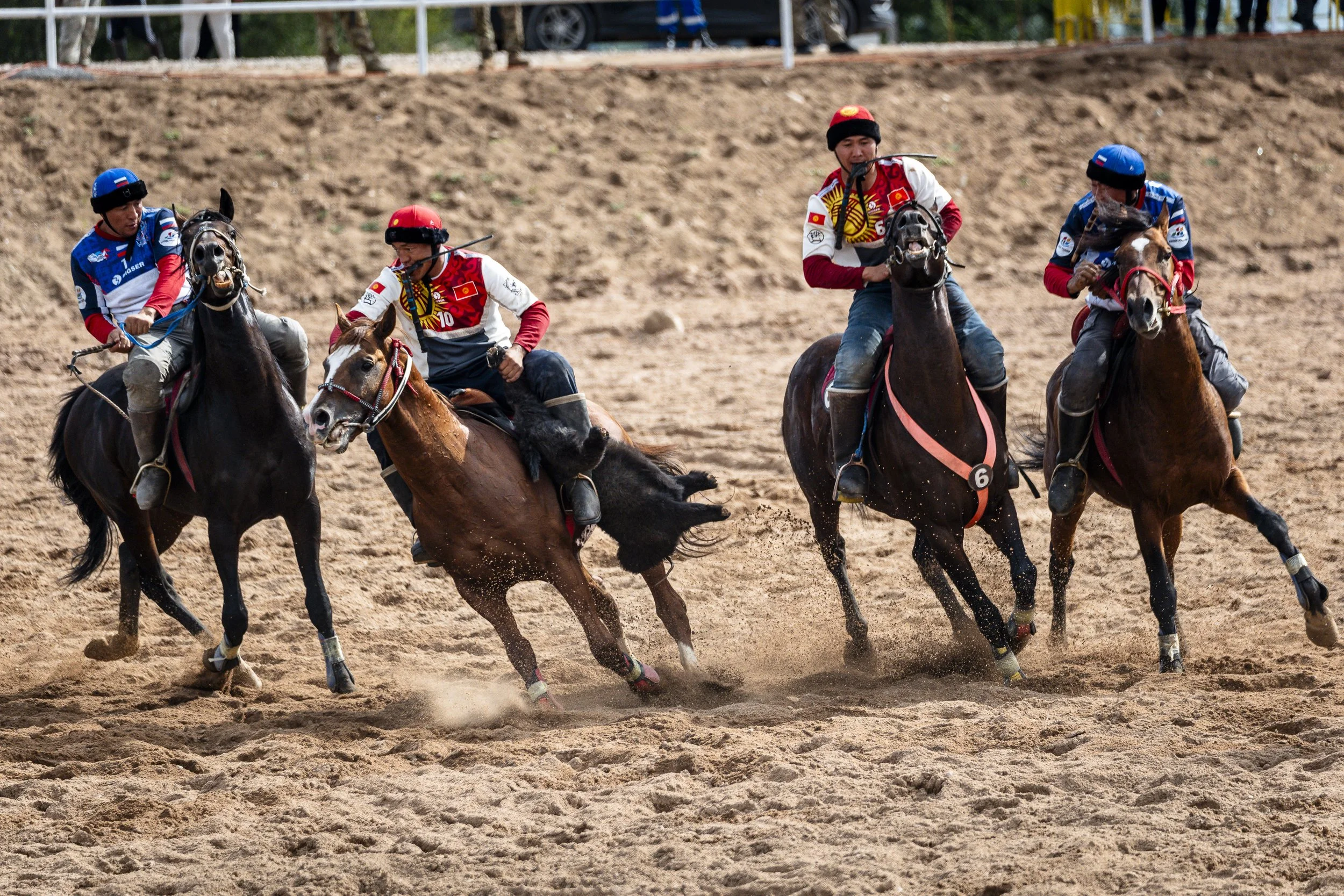
Step two: hang on to it while four opponents charge flat out to take it off you.
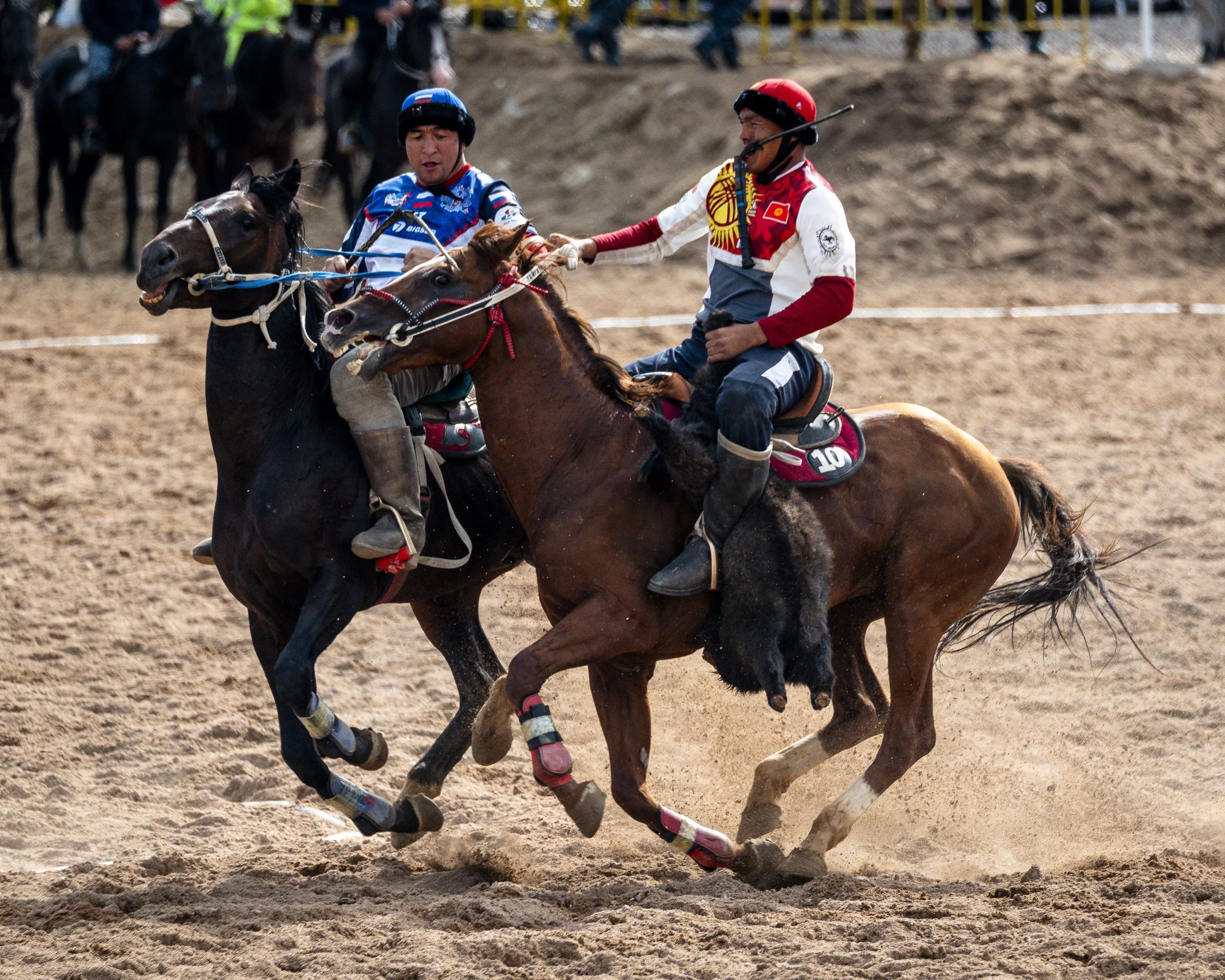
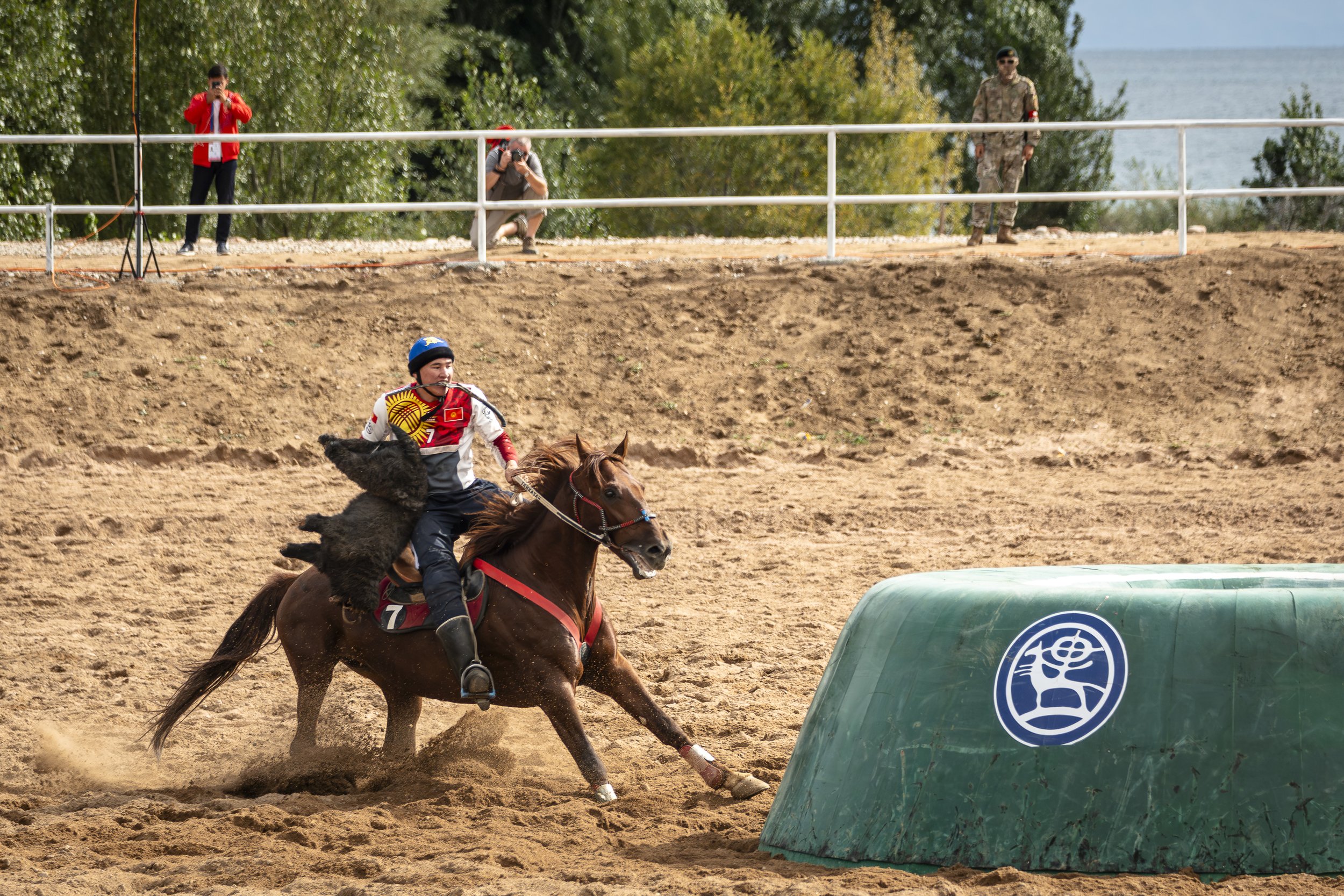
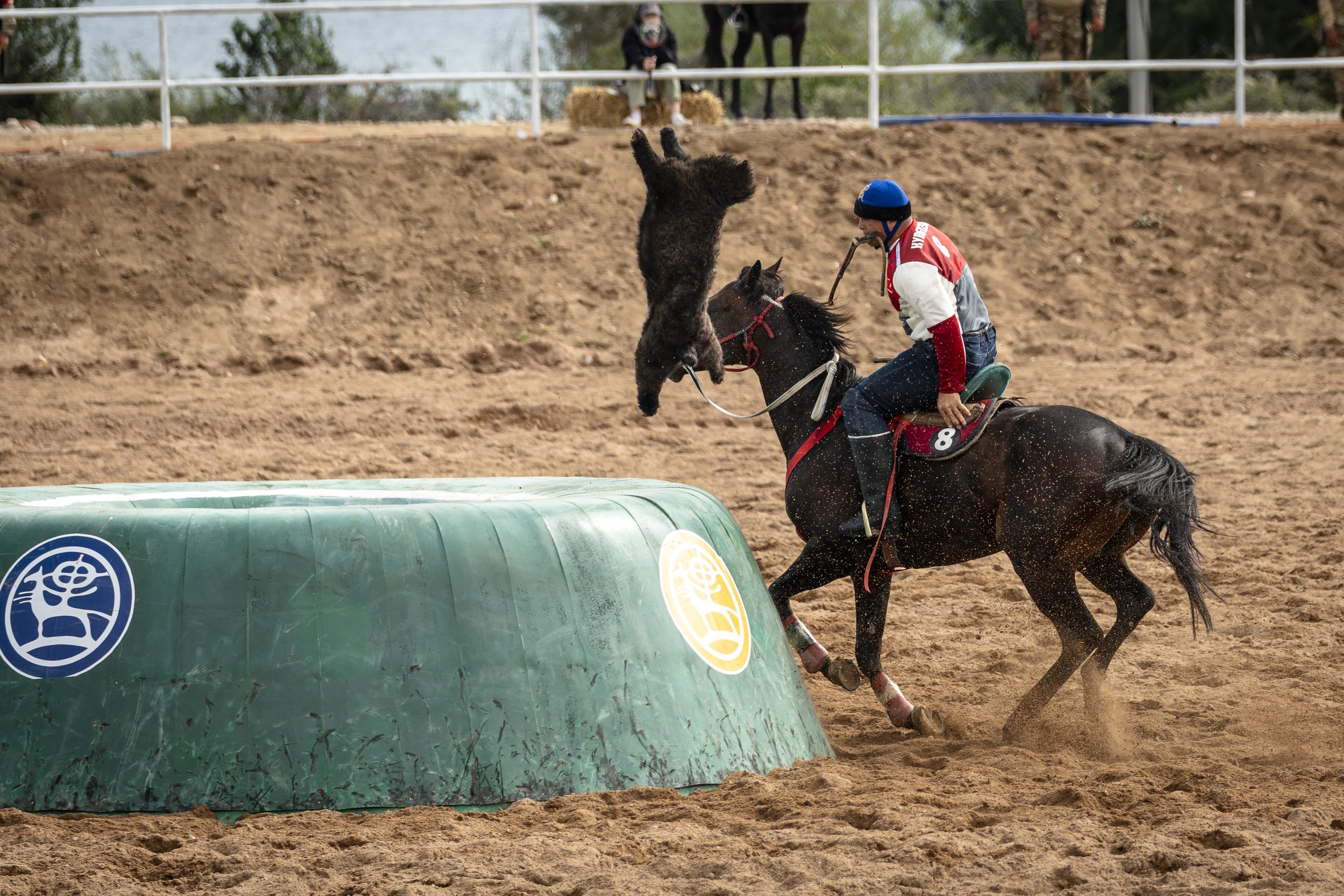
Step three: hurl it into the tai kazan in your opponents’ half.
It is not polo. Riders grip their whips between their teeth to free both hands. Horses barge, rear and bare their own teeth. Possession comes down less to finesse than to who can lean furthest out of the saddle at speed and still hang on.
And this, a Kyrgyz spectator assured me, was the sanitsed version. Up in the high country, the rules are looser, team colours are non-existent, and the whole thing is a good deal more boisterous. What we were watching had been cleaned up for competition.
Step four: Repeat. We watched Kyrgyzstan beat Russia 16-4 in the final group game before going on to beat Kazakhstan in the final. World Kok-Boru champions. Again.
It’s the people
Exciting as the competition was, I found myself drawn, as usual, to the people.
The Kyrgyz crowds were unmistakably proud: proud that the Games had come home, and proud that so many foreigners had come to see them. Families arrived in traditional dress, and the kalpak, the tall white felt hat worn by Kyrgyz men, was everywhere: in the stands, on the referees, on grandfathers and small boys alike.
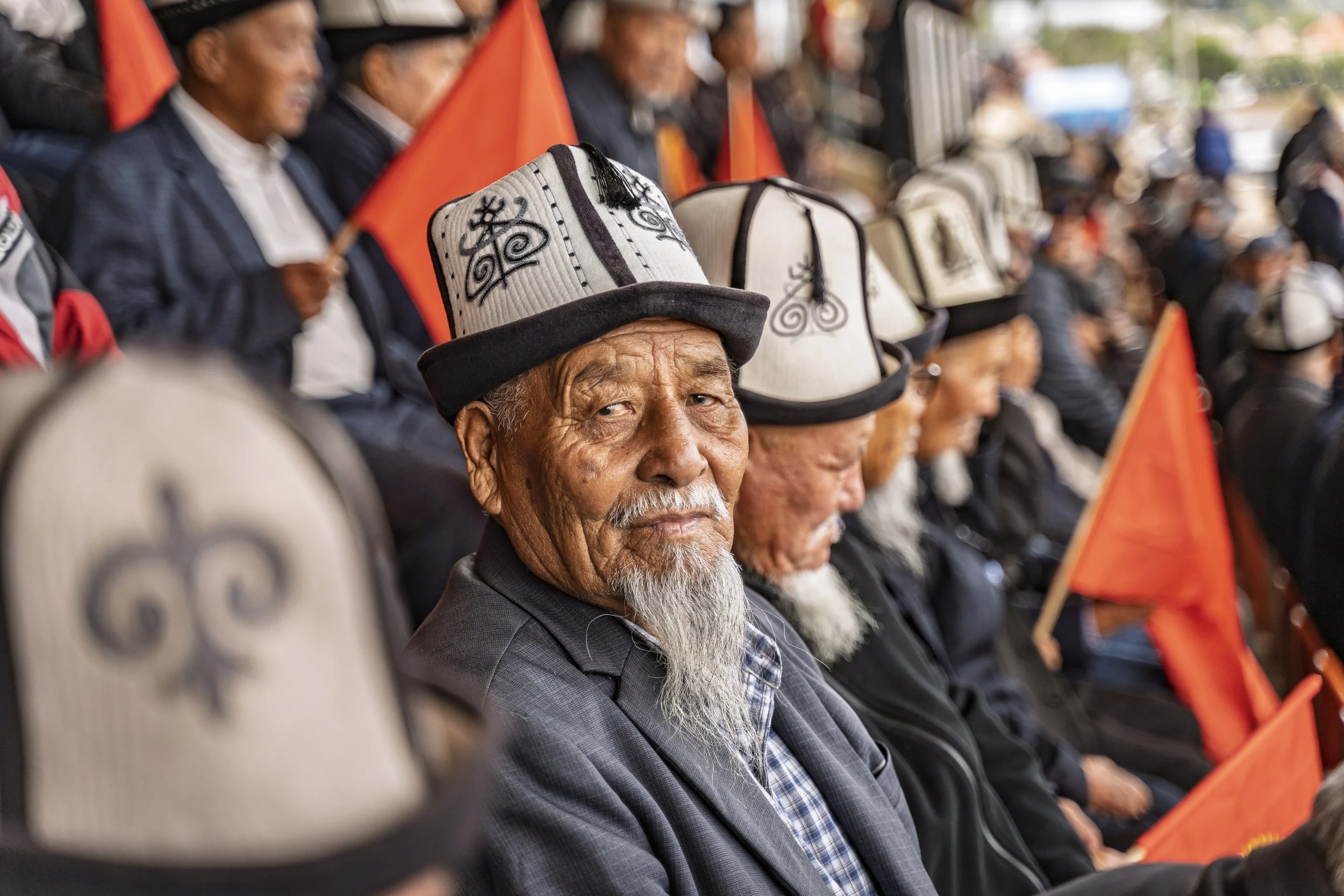
Waiting for the games to begin
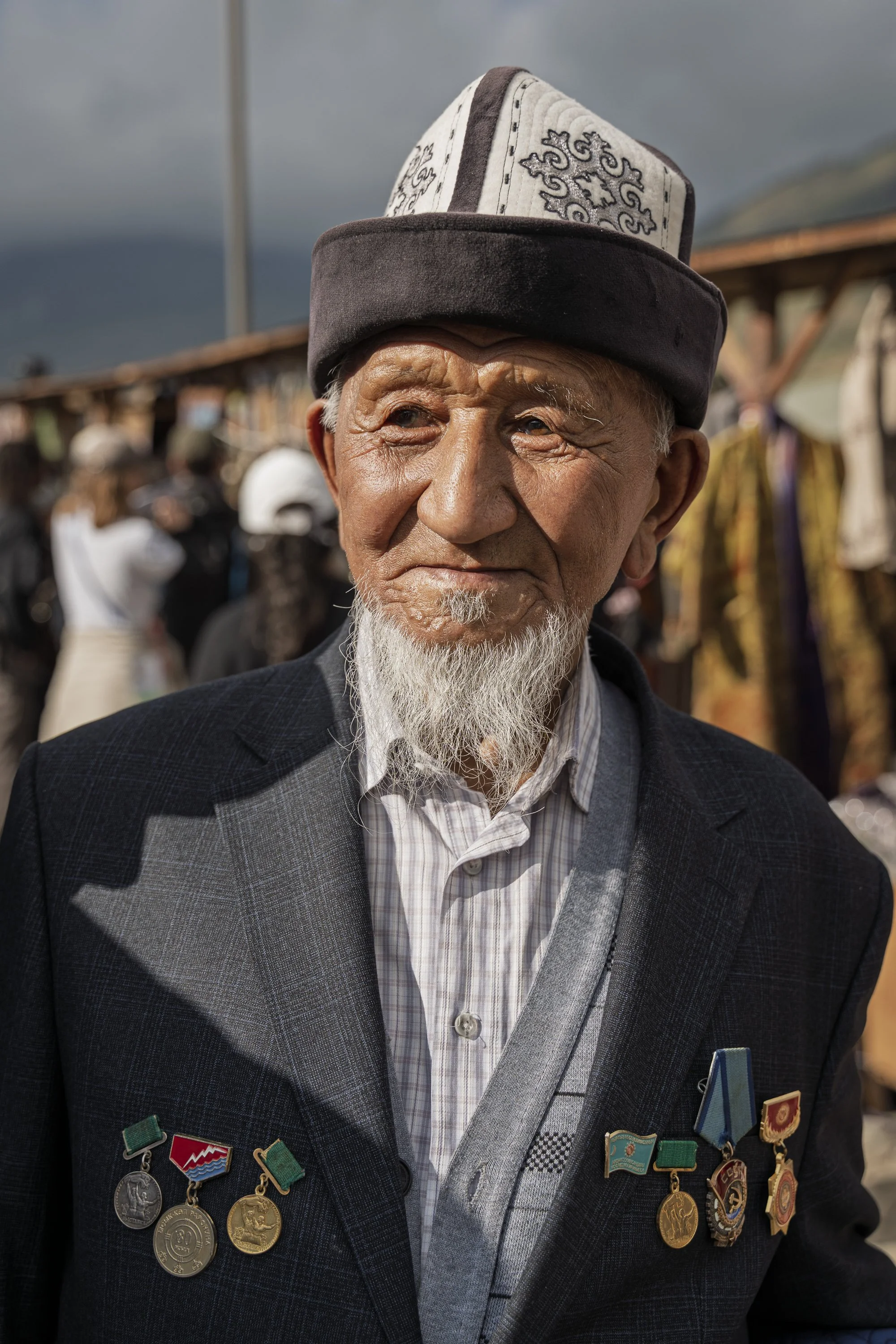
A Kyrgyz elder in his kalpak, Soviet-era medals on his lapel
The kok boru may have been tidied up for competition, but the pride hadn’t. This was spectacle, but not a spectacle put on for tourists. It was a country celebrating its culture, food and its nomadic traditions and glad to have the world watching.
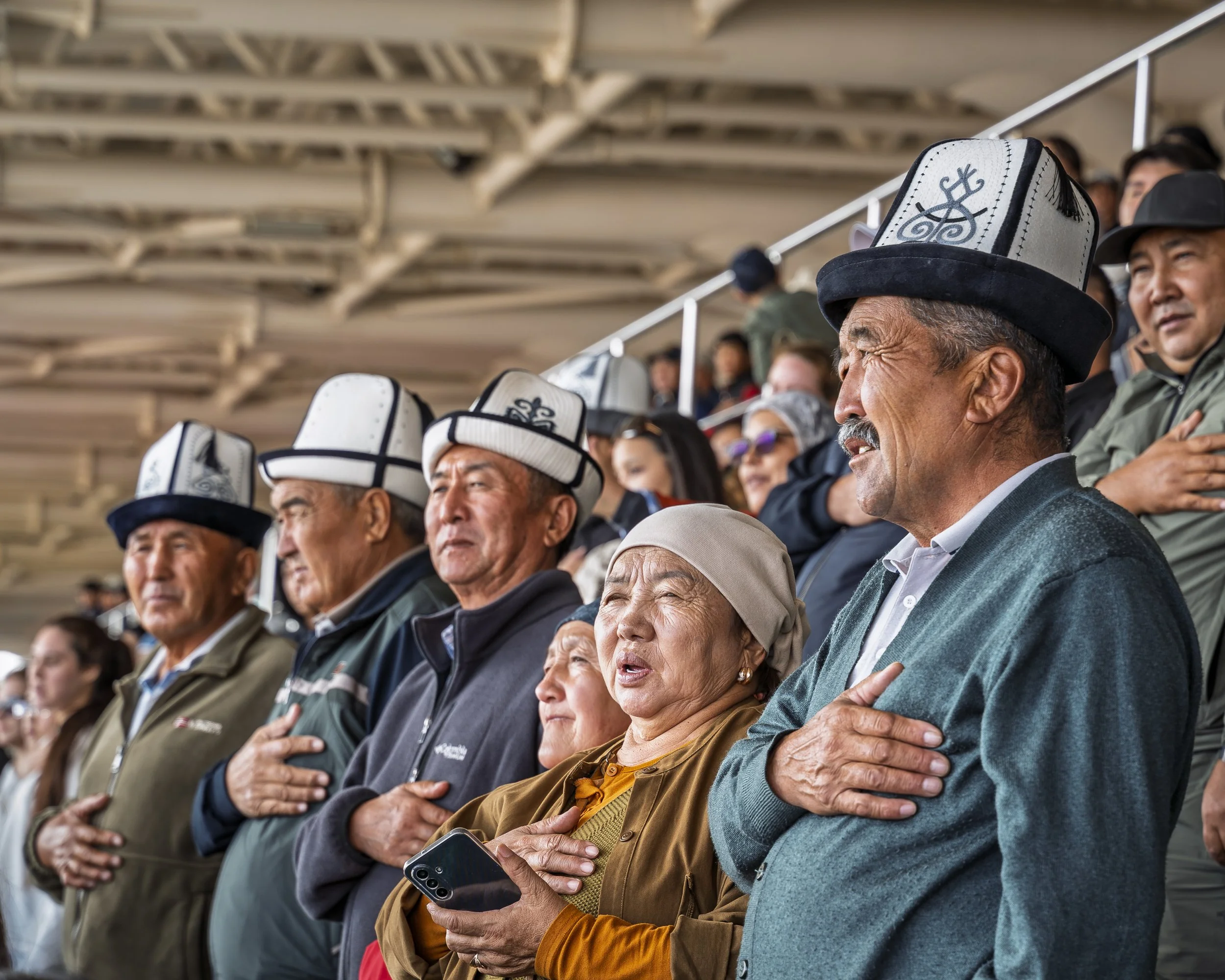
When the anthem played, the stands rose, hands on hearts.
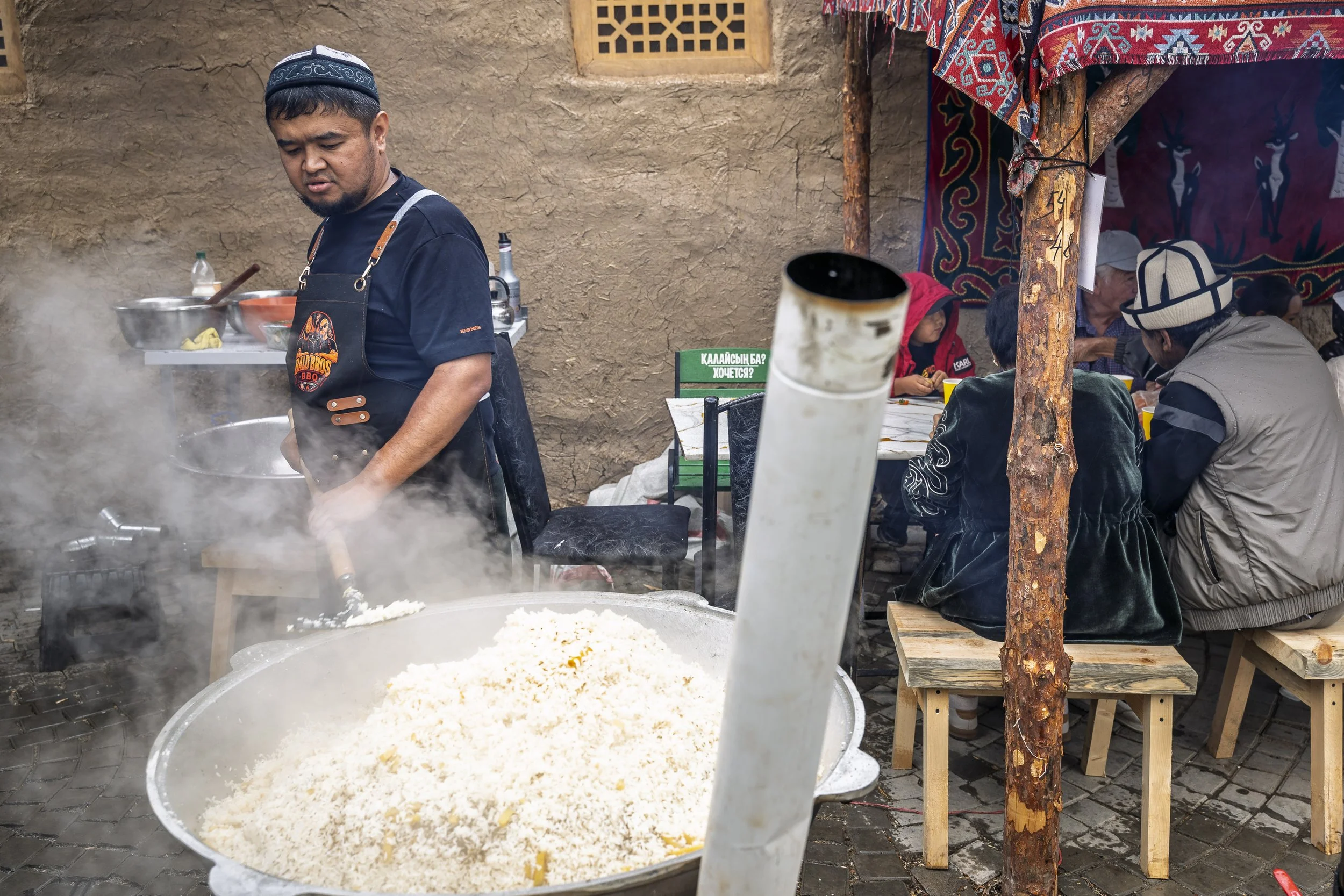
A plov masterclass. Central Asia’s signature dish: rice, yellow carrots and cumin, cooked over a wood fire in a giant kazan with an indecent quantity of mutton fat.
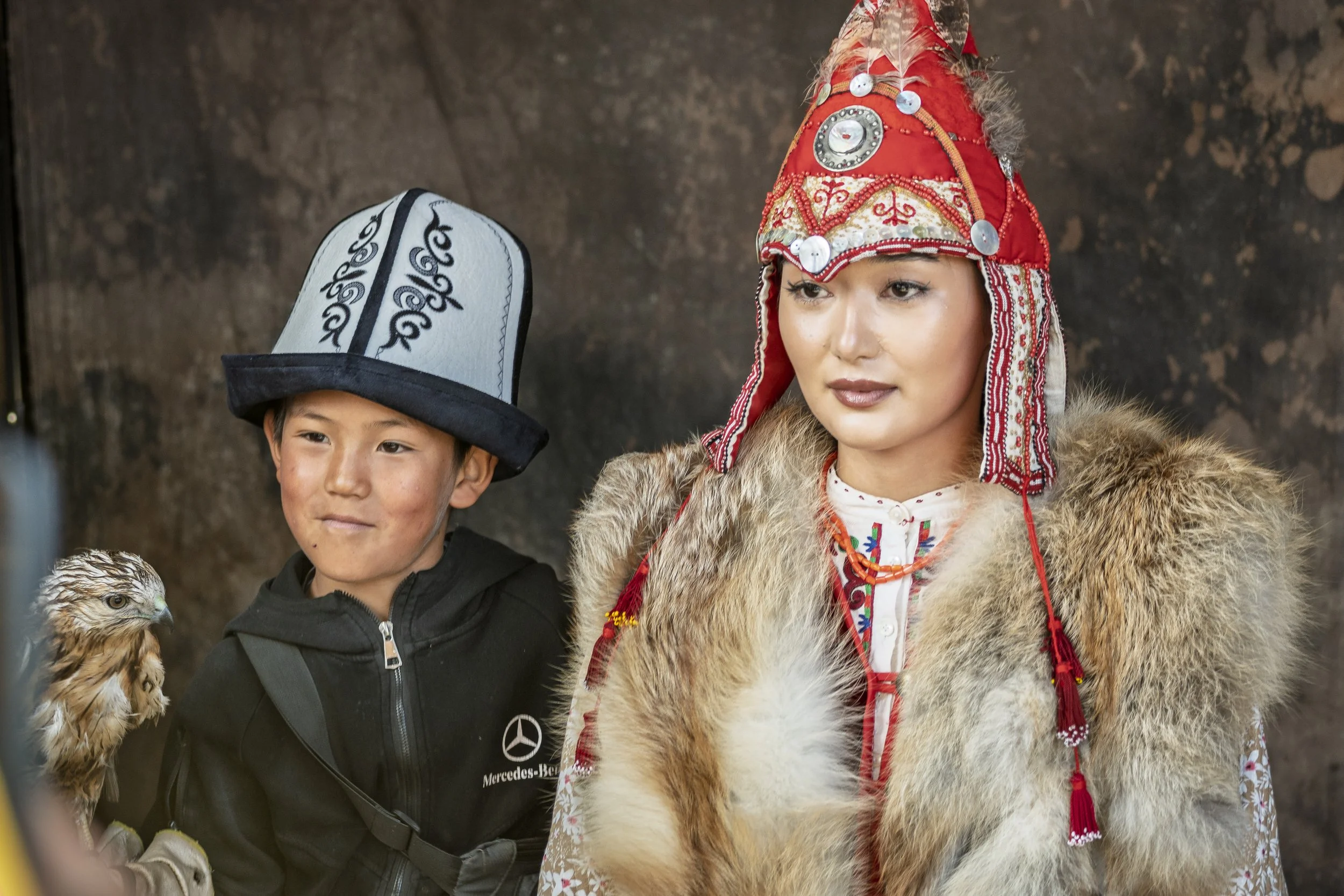
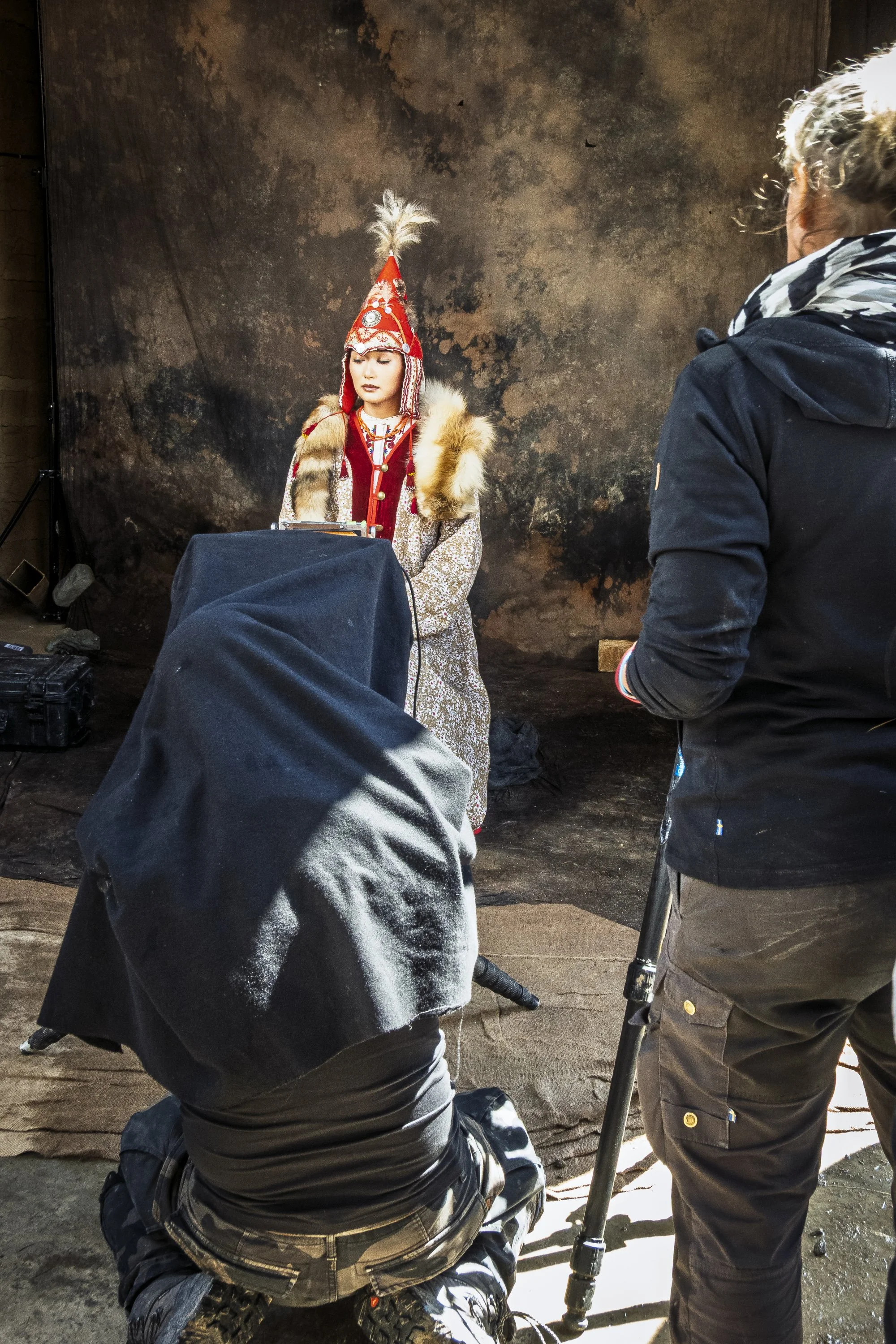
Some photographers travel lighter than others. In a corner of the ethno-village, Jimmy Nelson, famous for his grand portraits of the world’s traditional peoples, had set up a large-format camera, a painted backdrop and a young woman in a magnificent ceremonial headdress. I couldn’t resist photographing the photographer. And sneaking a frame of my own.
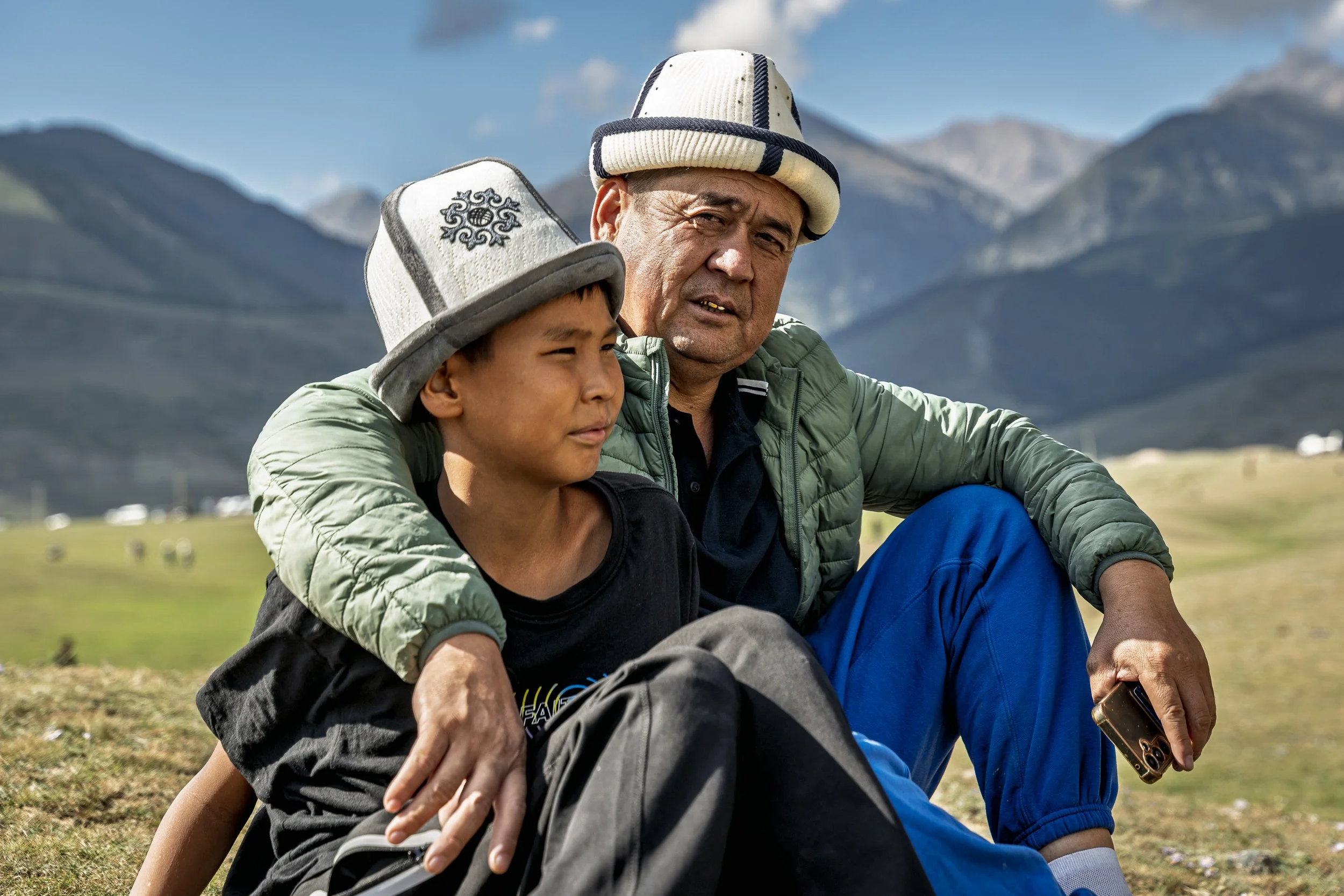
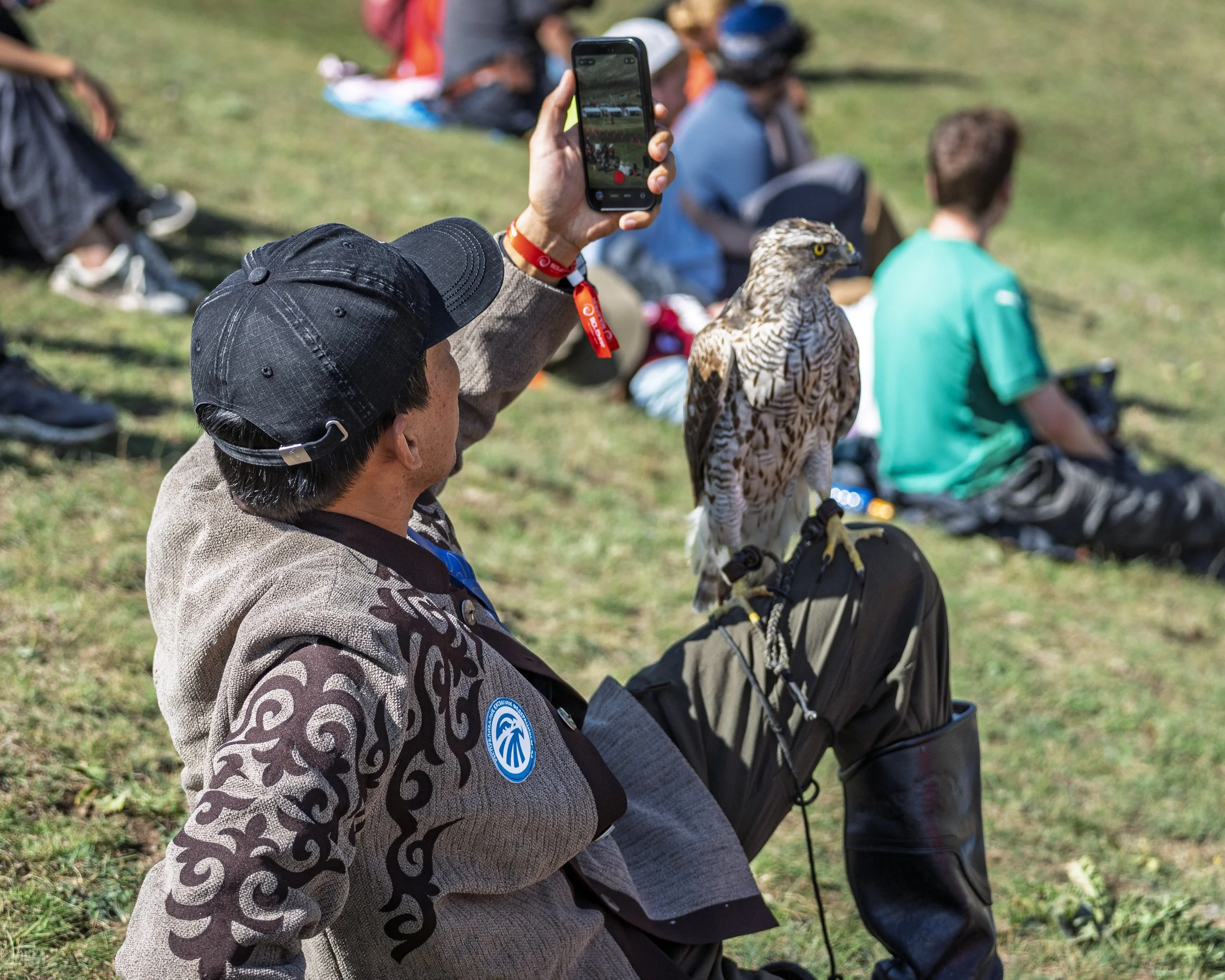
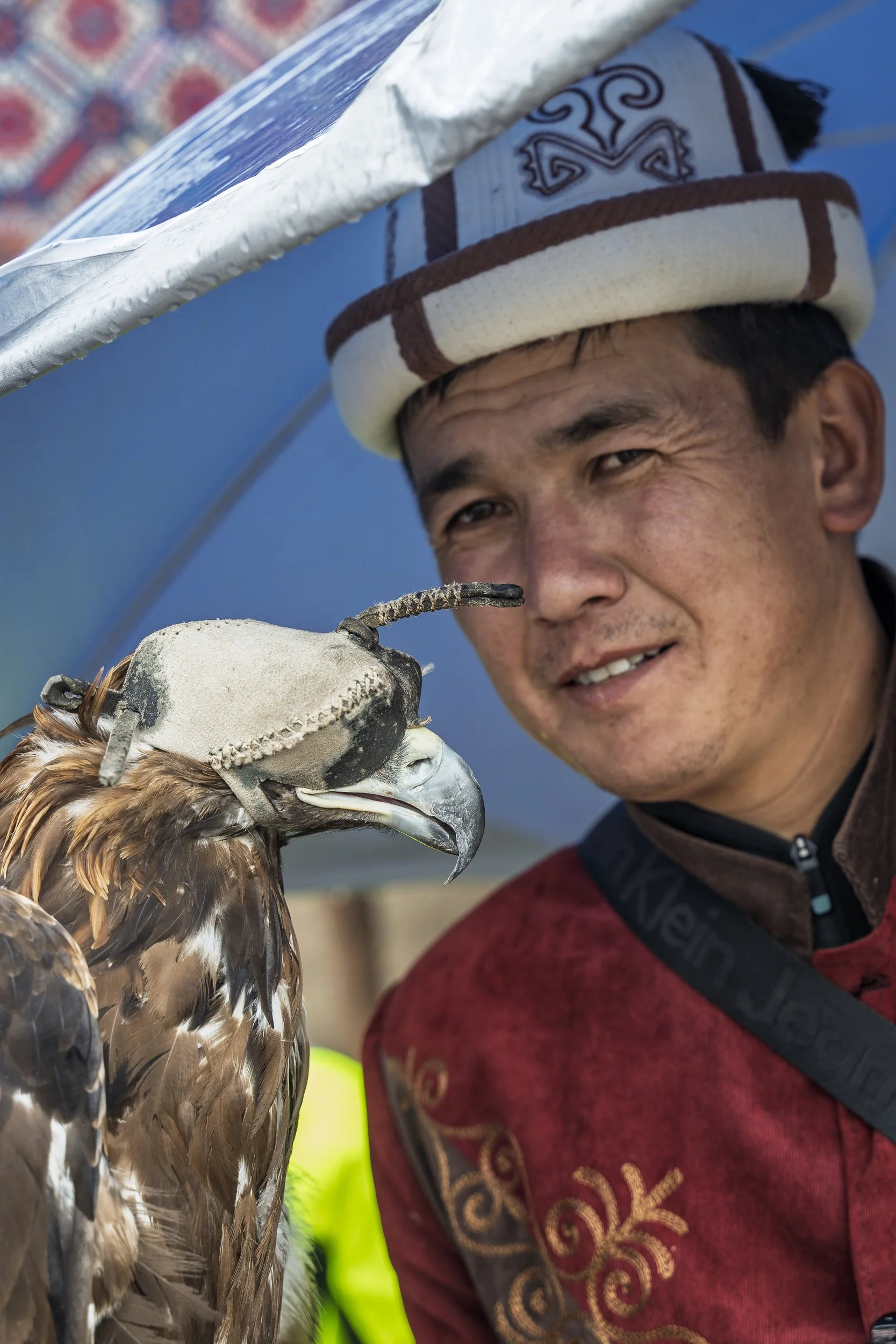
I don’t have Jimmy’s talent, experience or kit, so I make do with photographing people where they are. And when spectators bring their hunting hawks along for the day, the way I might take the dog for a walk, I don’t think I do too badly.
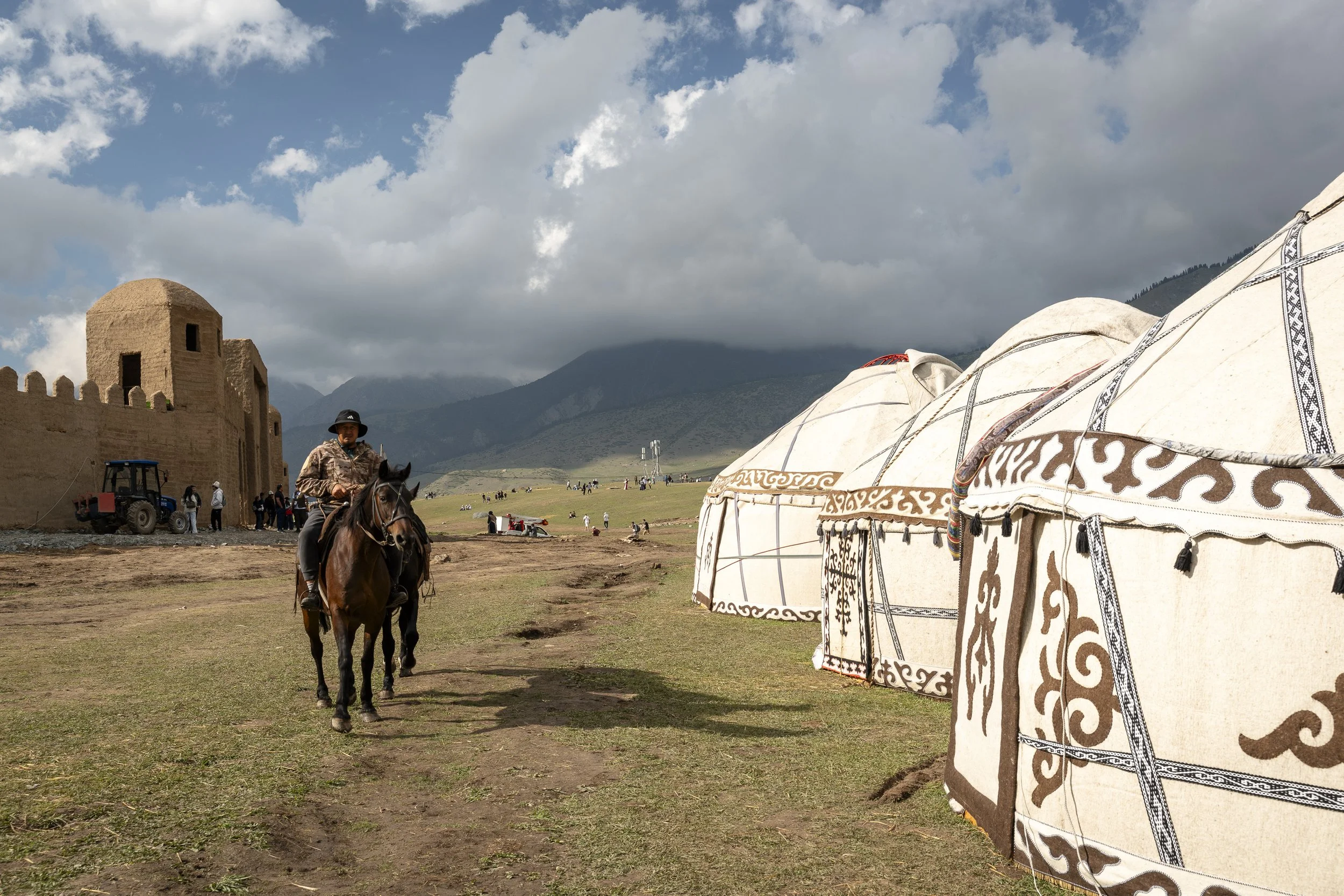
Managing to get to the Games in the first instance was an incredible experience. I don’t think I mentioned that entrance to almost all events was free - so typical of the hospitality we experienced around Kyrgyzstan. And the closest I will ever come to a cantina on Tatooine or a bit part in Star Wars.
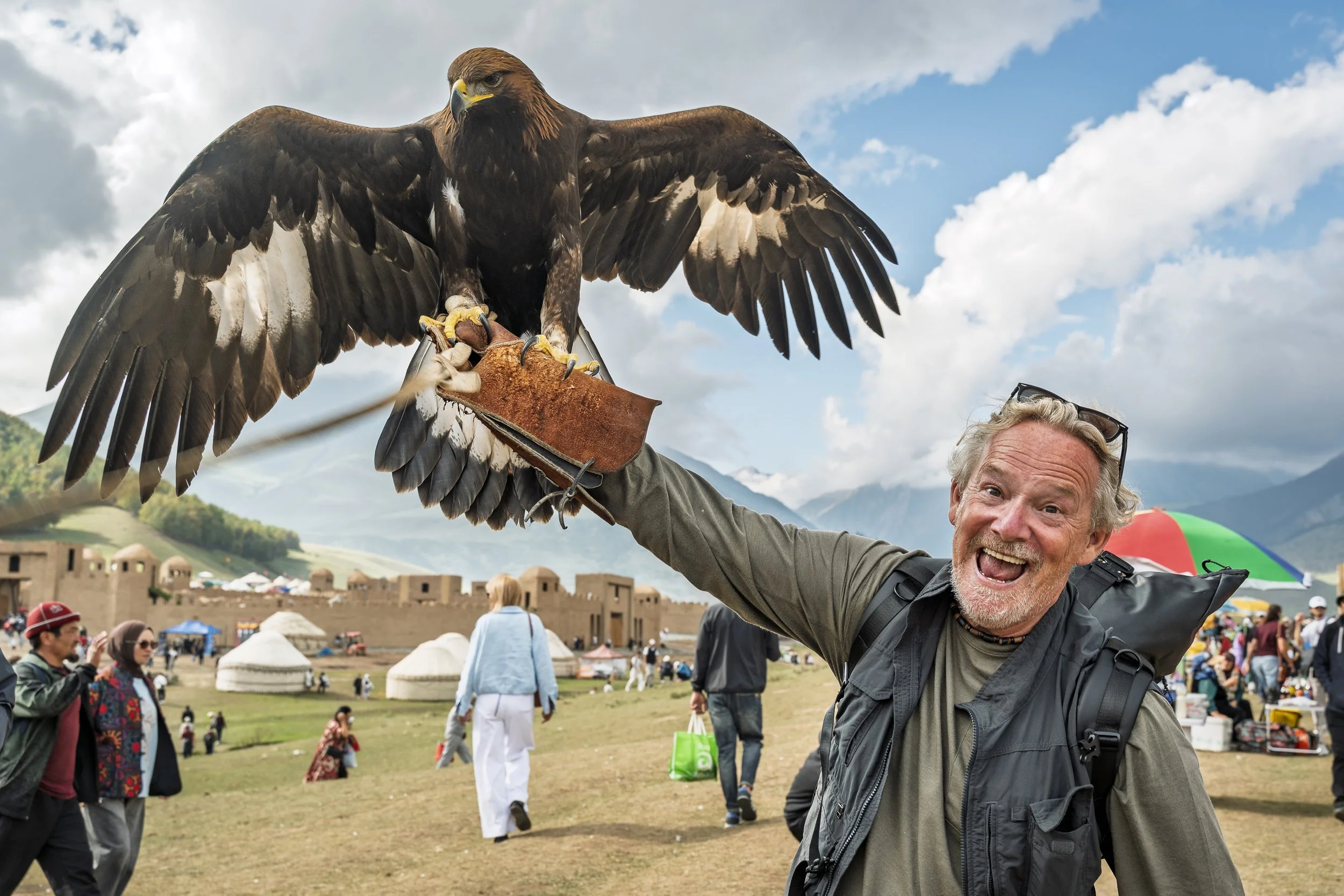
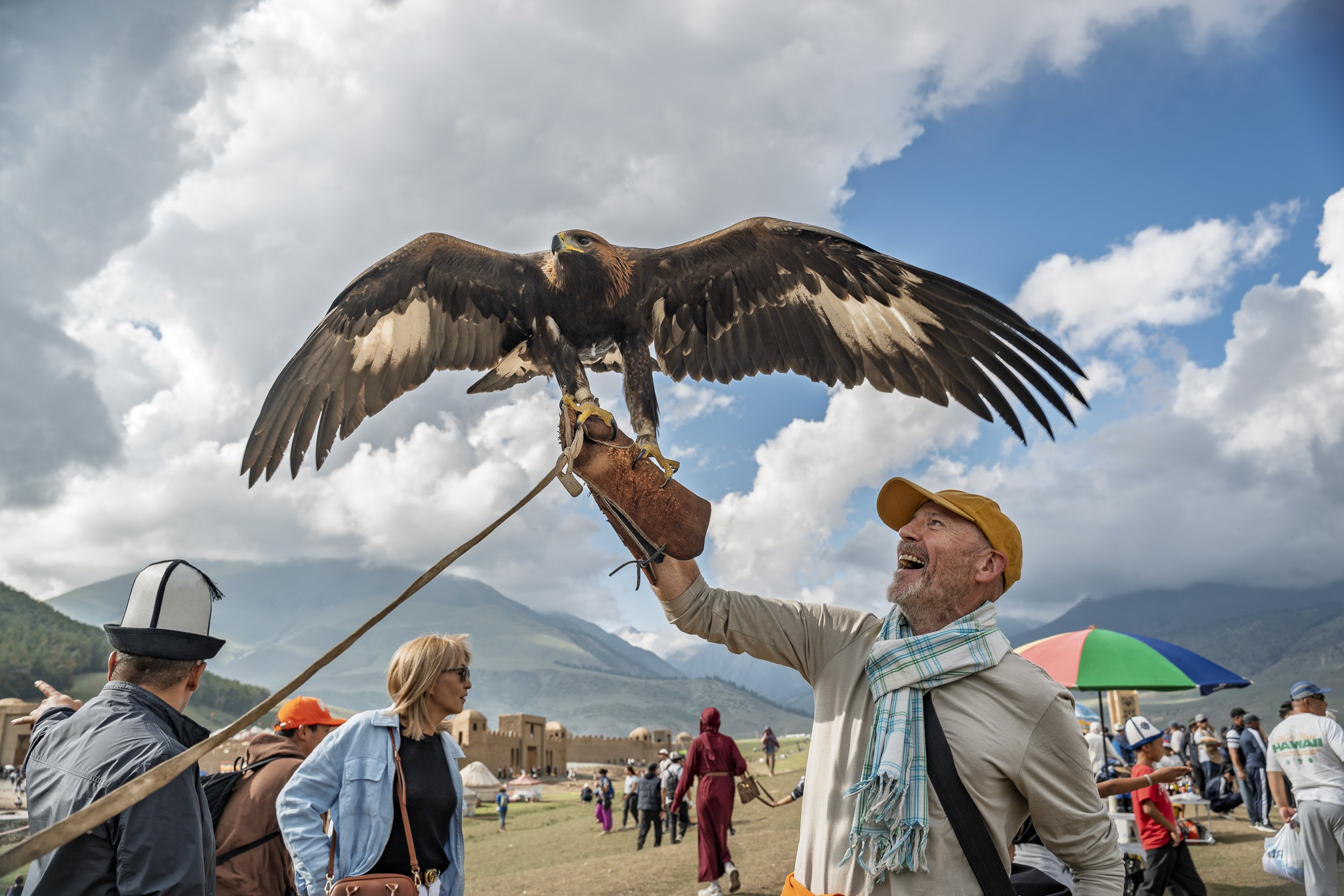
Still, if Ireland ever enters a team, these two eagle hunters from Fermanagh stand ready, with Brian and Seamus on the glove.
For Brian, Fermanagh’s OG Nomad who wandered the hippy trail and almost everywhere else on the planet but never quite made the SiIk Roads.
