

Dispatches from the Frontiers | Kyrgyzstan, September 2026
No fences, no hedgerows, no dry-stone walls. Just open grassland running to the horizon, and no sign of the man-made boundaries I’ve come to expect almost everywhere else I travel.
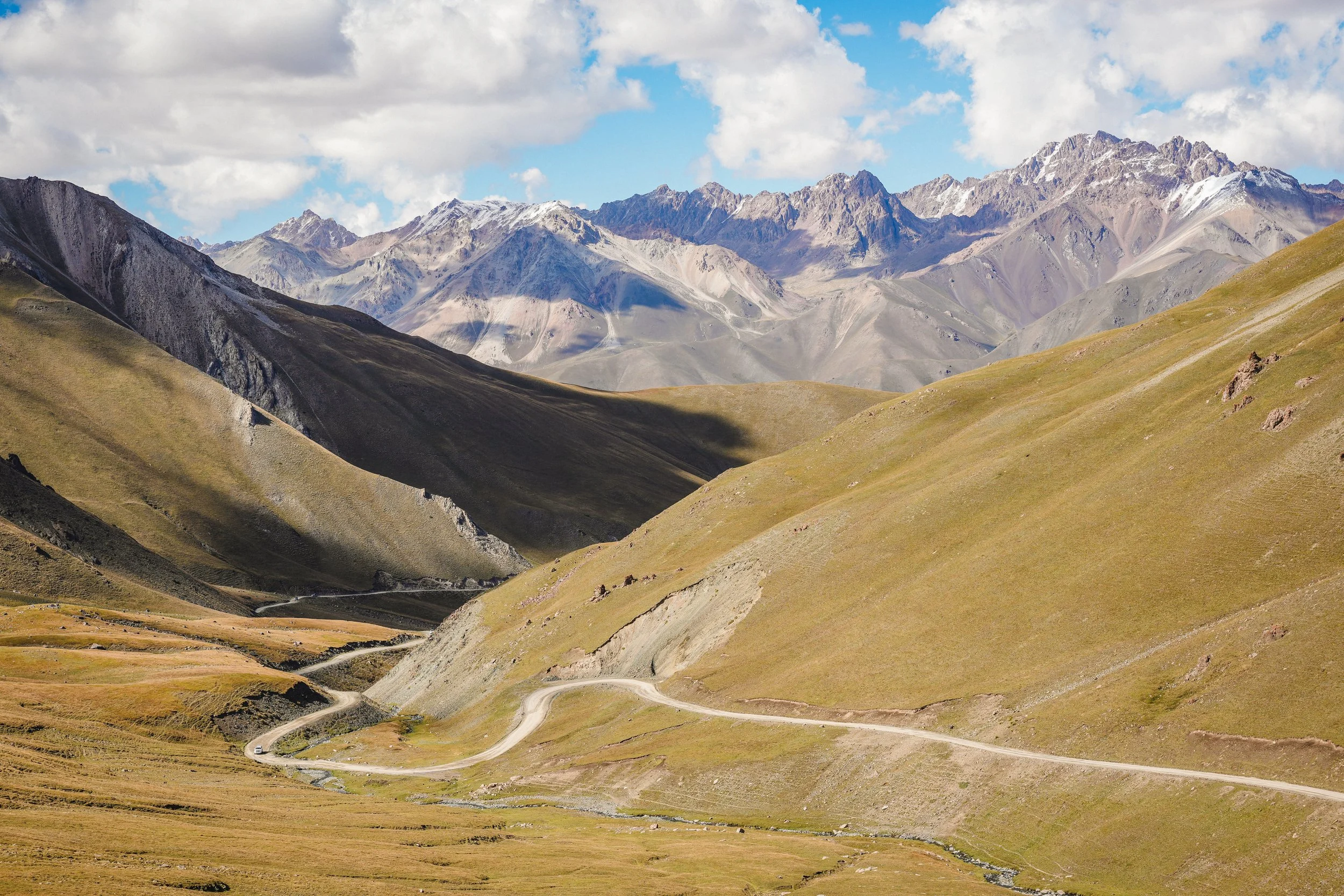
Mountain pass Kyrgyzstan
The mountains and the sheer scale of the place were impossible to miss. But it was the absence of boundaries that I noticed. Ireland, where I come from, has fine views too, but always across a patchwork of fields and smallholdings. There’s none of that on the high pastures of Kyrgyzstan.
The sense of freedom may be partly an illusion. Grazing rights up here are allocated and managed, and families return to the same pastures year after year. But the land carries no visible sign of it. After the crowded, parcelled-up landscapes most of us live among, that sense of space is a powerful draw, and perhaps one reason overseas visitors are coming to Kyrgyzstan in growing numbers.
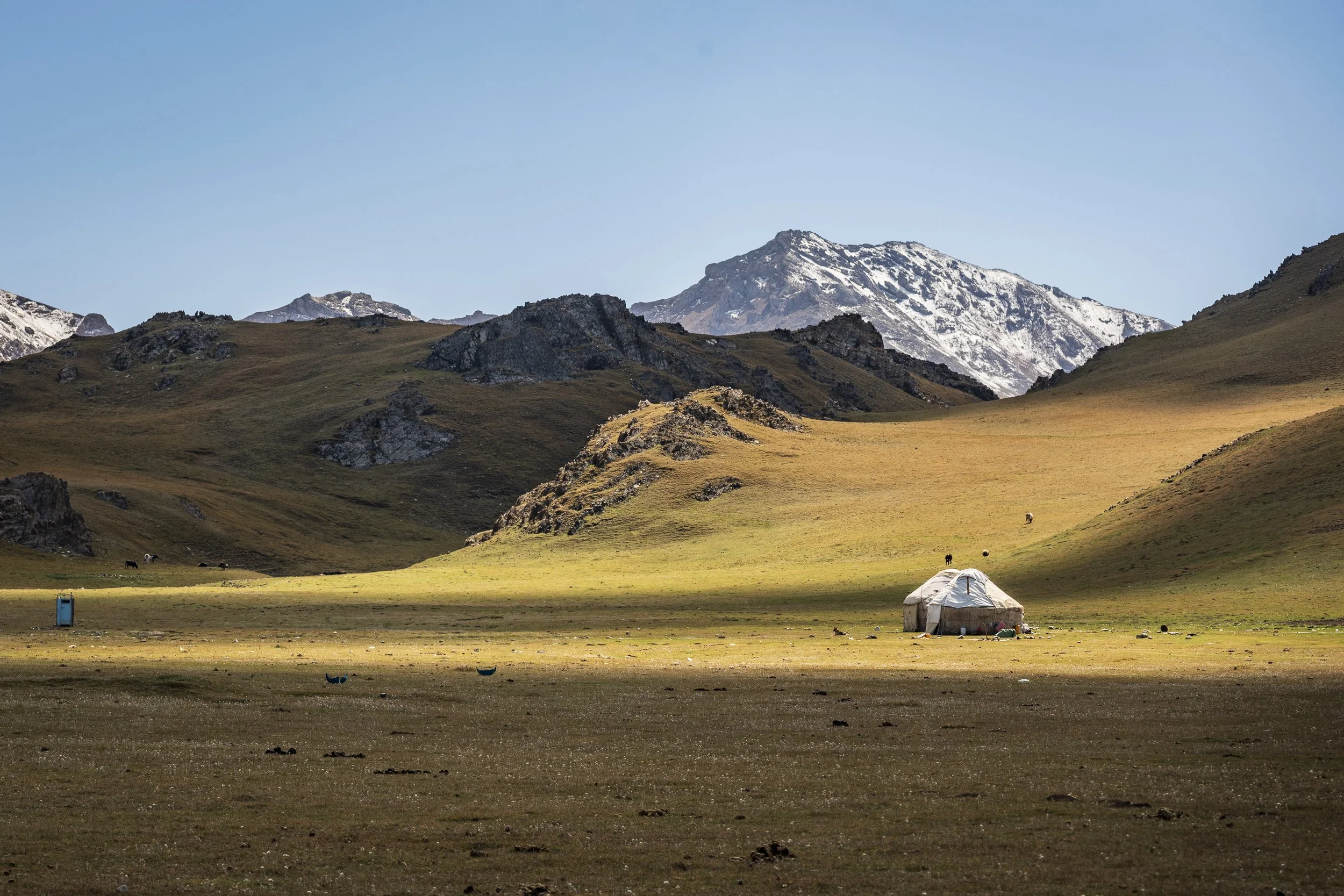
A lone yurt and its outside toilet (which deserves a blog of its own) in Son Kul
These high summer pastures are known as jailoo. For generations, Kyrgyz herding families have brought their livestock into the mountains during the warmer months, living in yurts before returning to lower ground for winter.
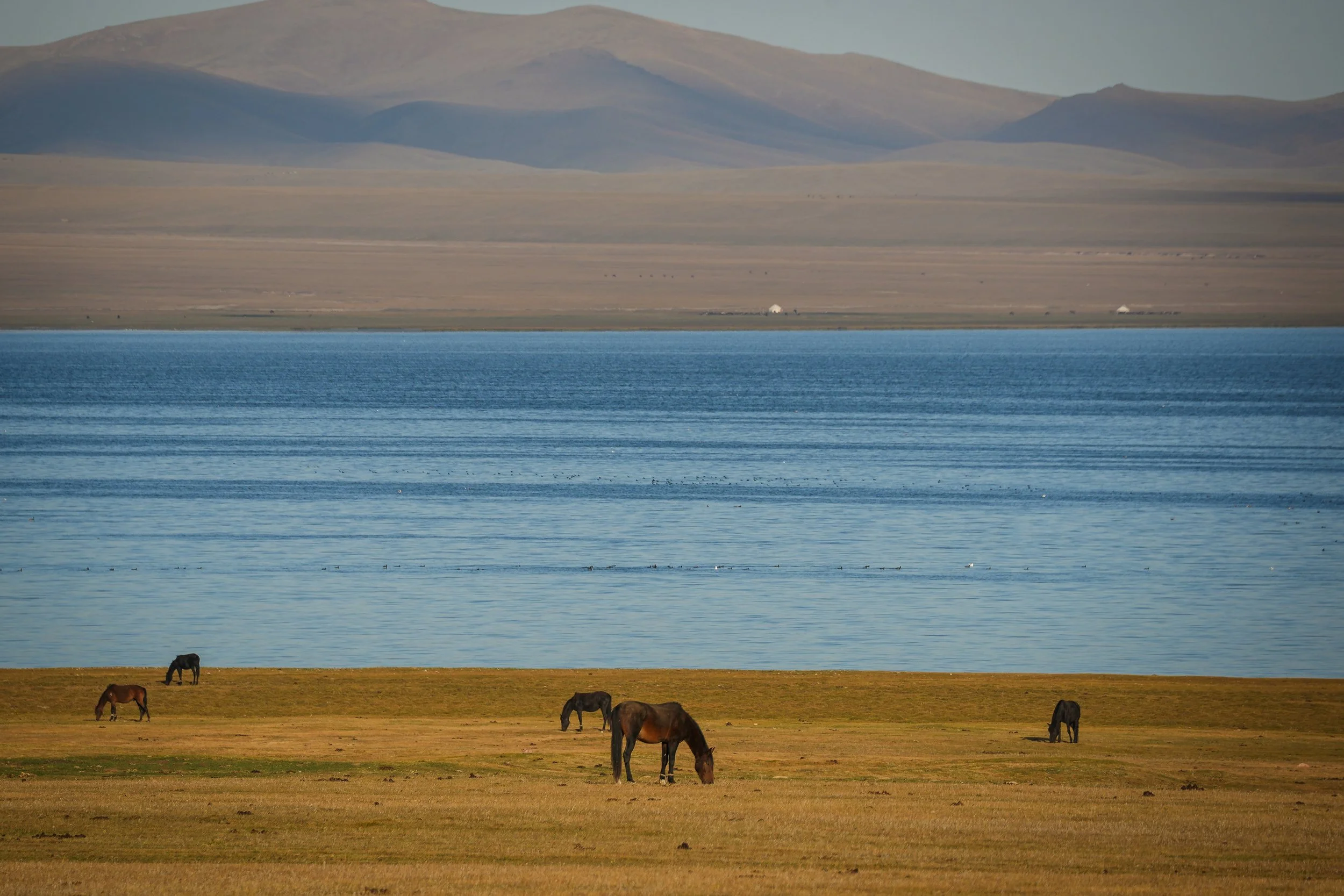
Horses graze on the shores of Son Kul. Lone yurts in the distance.
But what looks like an uninterrupted tradition has a more complicated history.
Soviet collectivisation transformed Kyrgyzstan’s pastoral economy. Livestock came under collective and state ownership, families were encouraged or compelled to settle, and herding became part of a centrally managed agricultural system. Seasonal movement to the high pastures continued, but under very different arrangements.
Following independence in 1991, the collective farms were dismantled and livestock passed into private hands. Families gradually rebuilt their livelihoods around smaller herds and seasonal grazing. What we see today is not simply an ancient way of life preserved intact, but one that has survived considerable upheaval and continues to adapt.
Tourism is part of that evolution
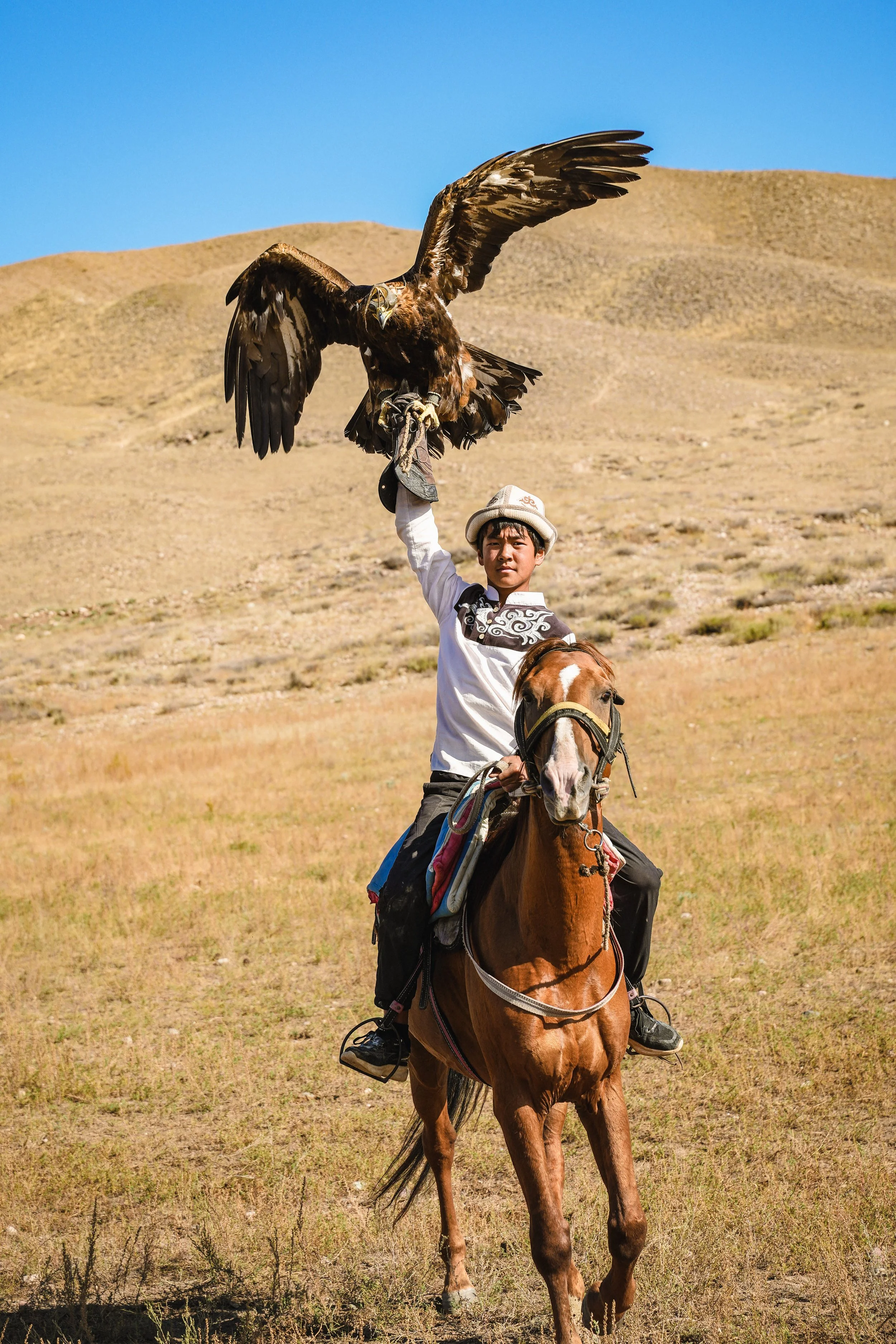
Young eagle hunter in Bokonbaevo gallops towards visitors
Kyrgyzstan isn't preserving its nomadic traditions as a backdrop for Instagram influencers — although the eagle hunters of Bokonbaevo appear to be doing a reasonable trade from them. And good for them.
On the jailoo itself, the arrangement is more practical. Around Son-Kul, some herding families supplement their incomes by accommodating visitors in yurts, providing meals and arranging horse treks. Independent travellers and occasional organised groups share the pastures with working herders and their animals.
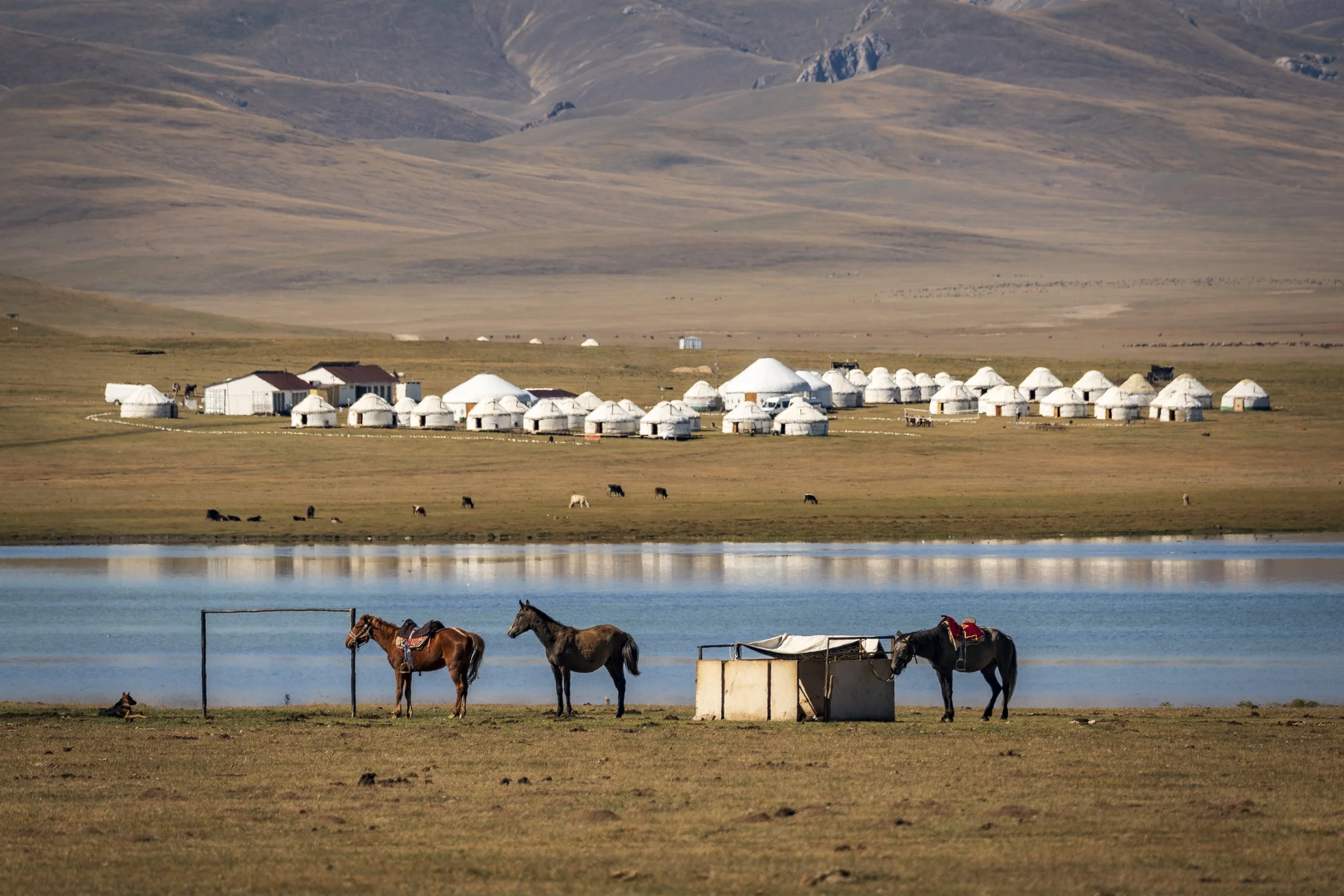
Horses saddled for another day of trekking around Son Kul
But this is no nomadic theme park. Horses remain working animals, livestock still needs tending, and life in the mountains continues regardless of whether visitors are watching. Tourism is becoming one of the ways these traditions remain economically viable.
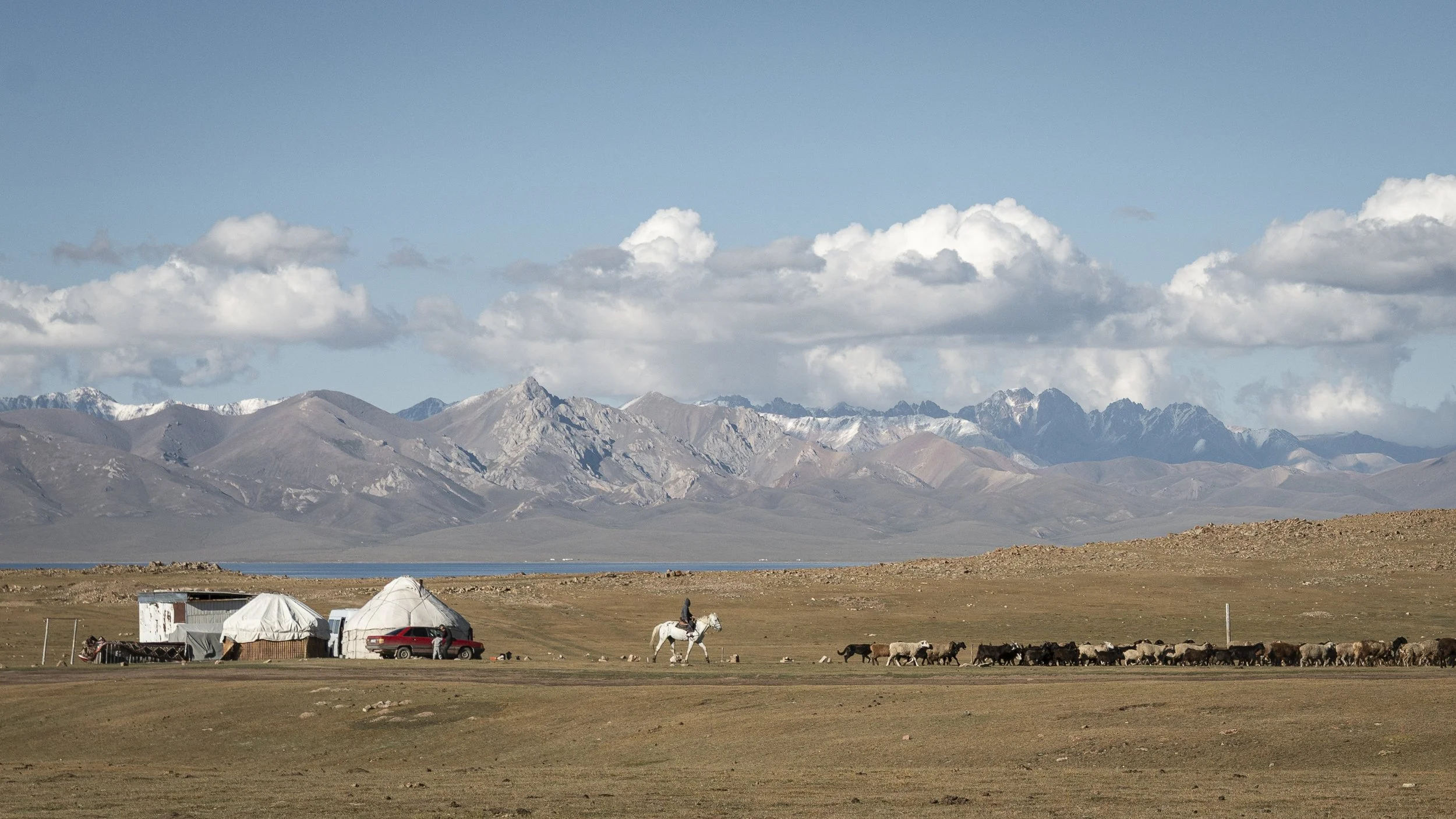
Herders at Son Kul reach the camps by car and then work on horseback.
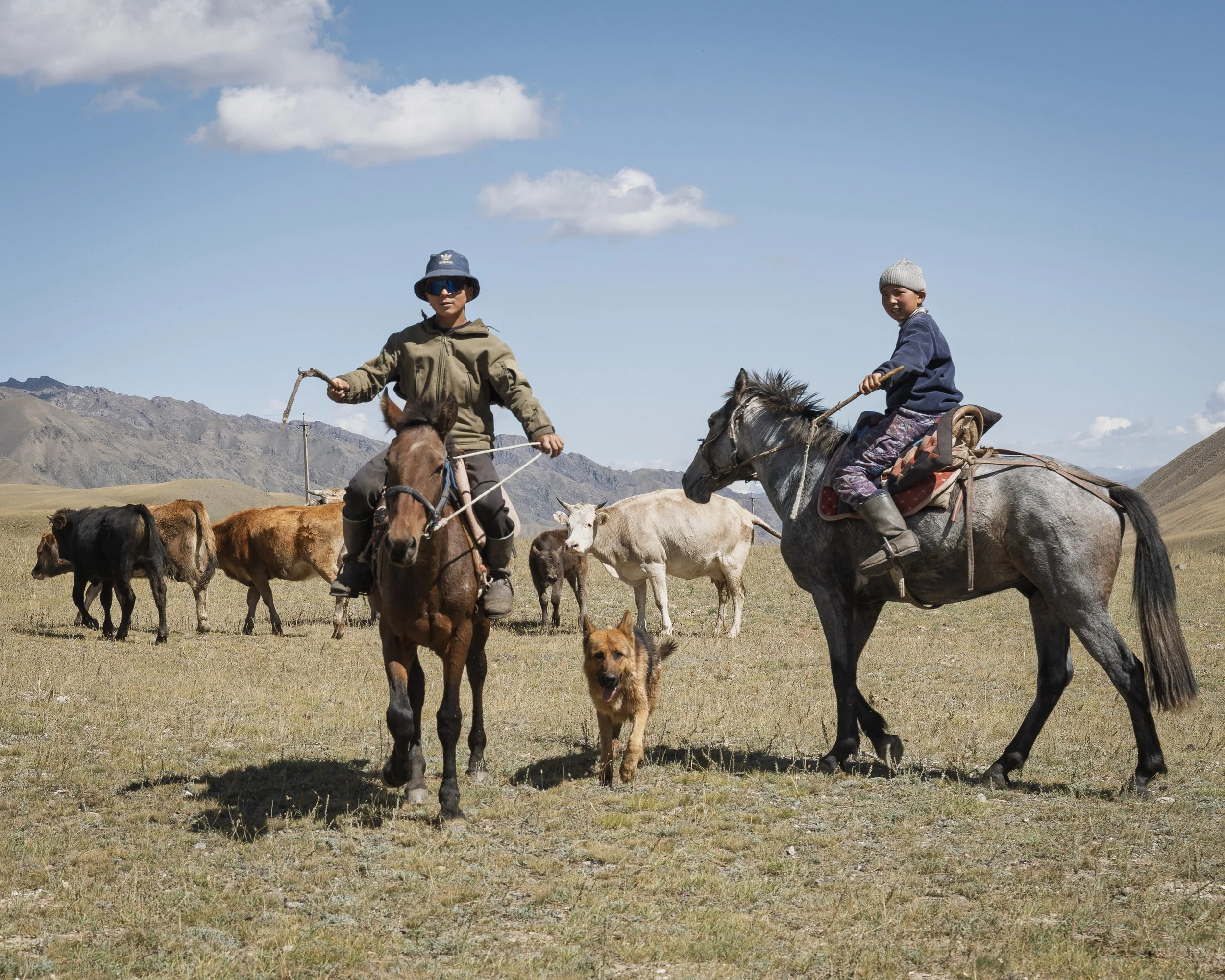
Kyrgyz herders with their dog come to say hello
The modern world has arrived in other ways, too.
Starlink satellite internet has reached some of these remote encampments. There's something incongruous about finding a connection to the global digital economy in a place where the nearest paved road may be several hours away.
A yurt, a few horses, snow-capped mountains and satellite broadband.
Getting there can be an adventure in itself
Getting around independently requires a little ingenuity. Marshrutkas connect the principal towns, but they're not much use if your destination is a yurt several hours into the mountains.
Beyond the paved roads, your options are fairly straightforward: hire a 4x4, join an organised tour, hitchhike or learn to ride a horse.
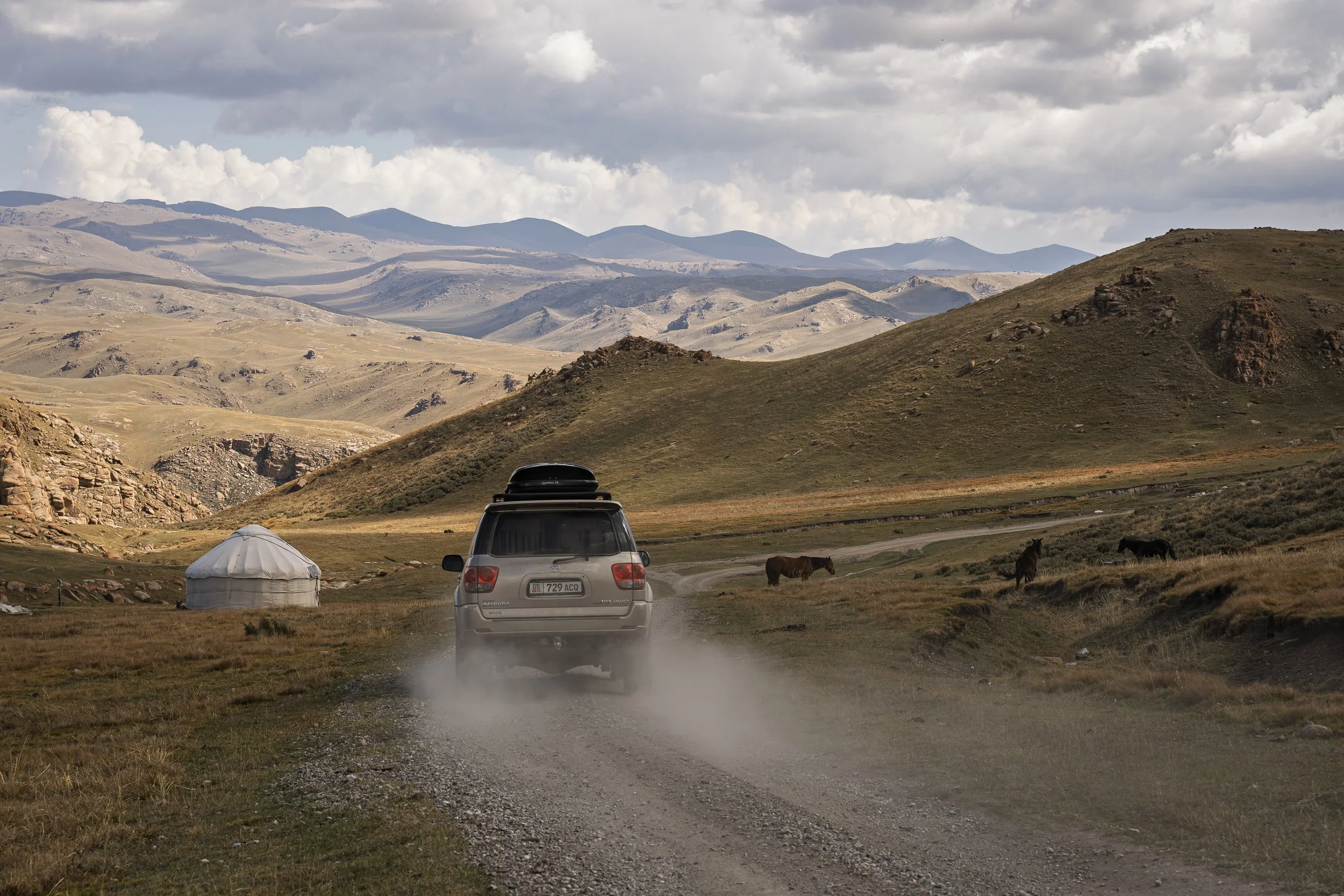
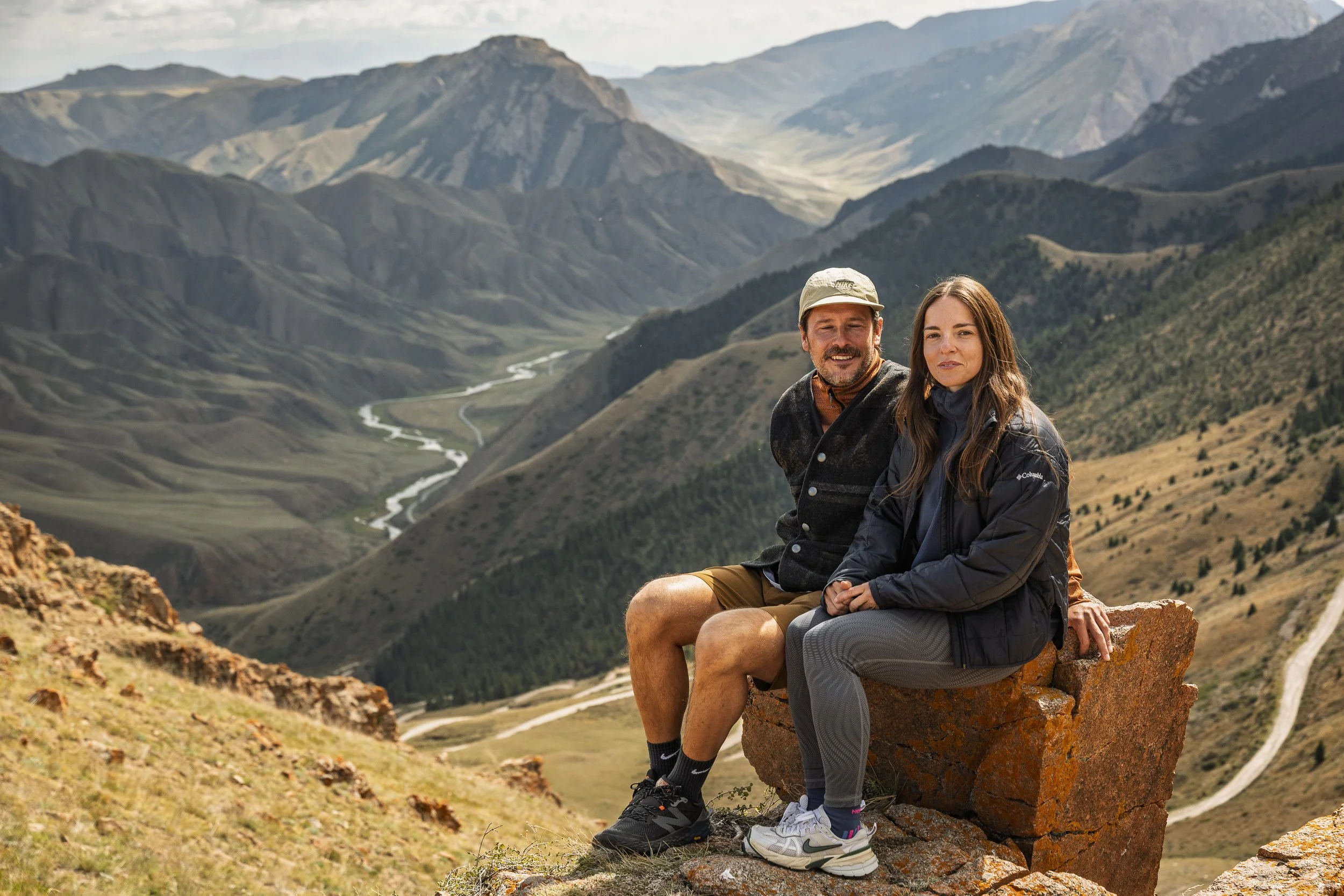
We tried hitchhiking. It worked thanks to Italian adventurers Matteo and Katarina who picked us up on a dusty track.
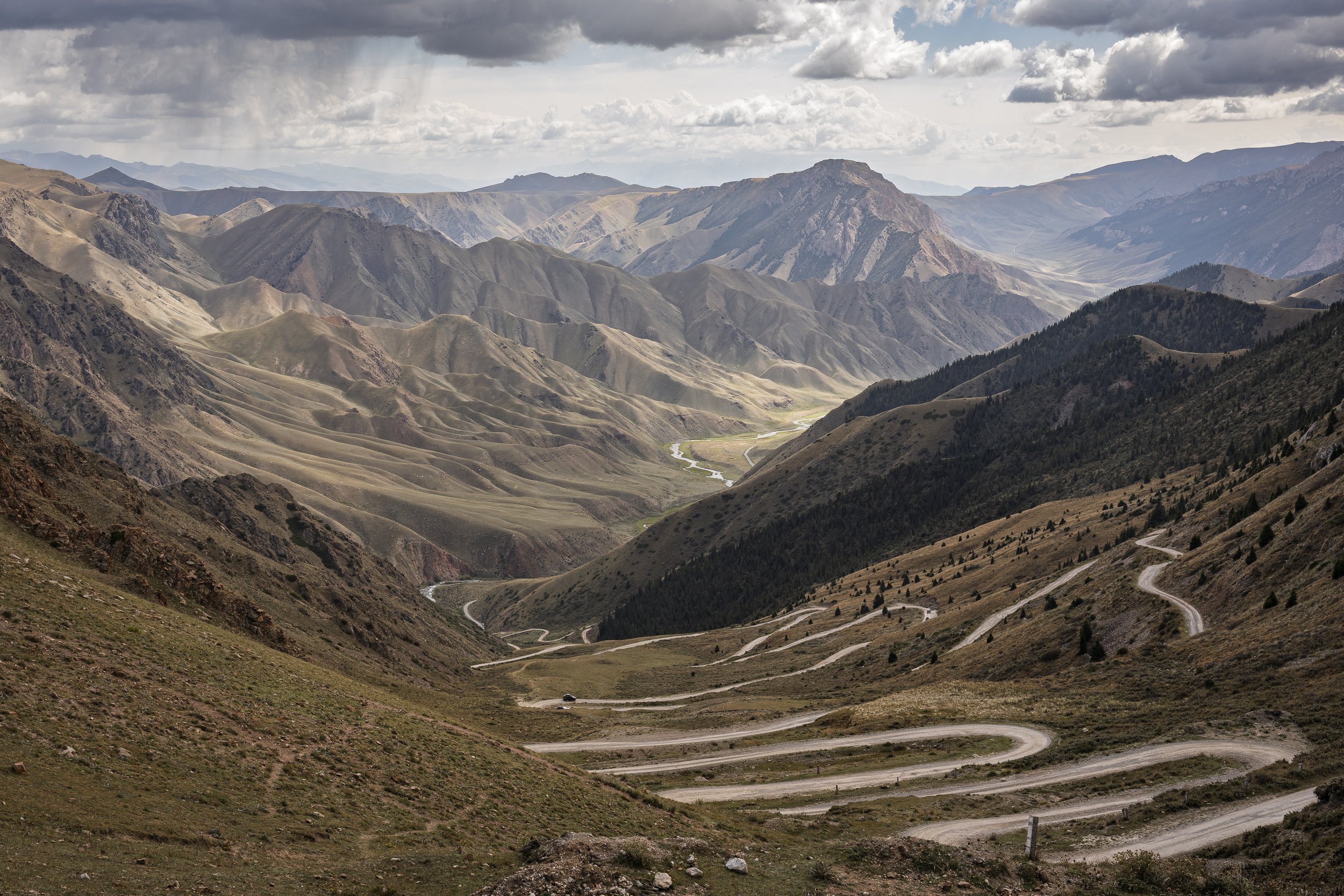
33 Parrots Pass, one of the most spectacular views where the road seems to blend into the river below - a hairy hairpin on the road to the central city of Naryn.
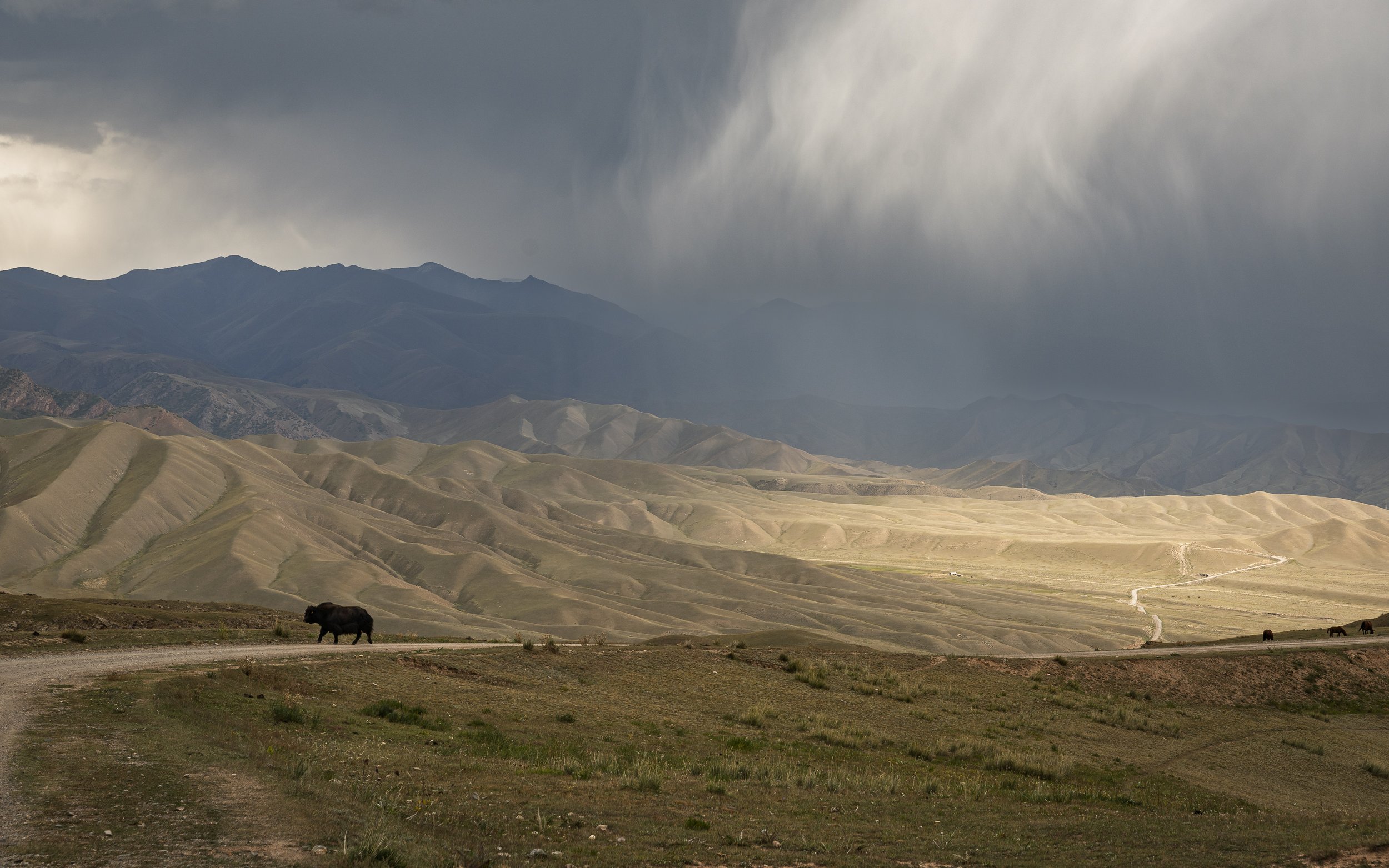
The light on the jailoo shifts constantly between passing rainstorms. Add a lone yak and even an amateur landscape photographer like me can make a fist of it.
And then there are the nights
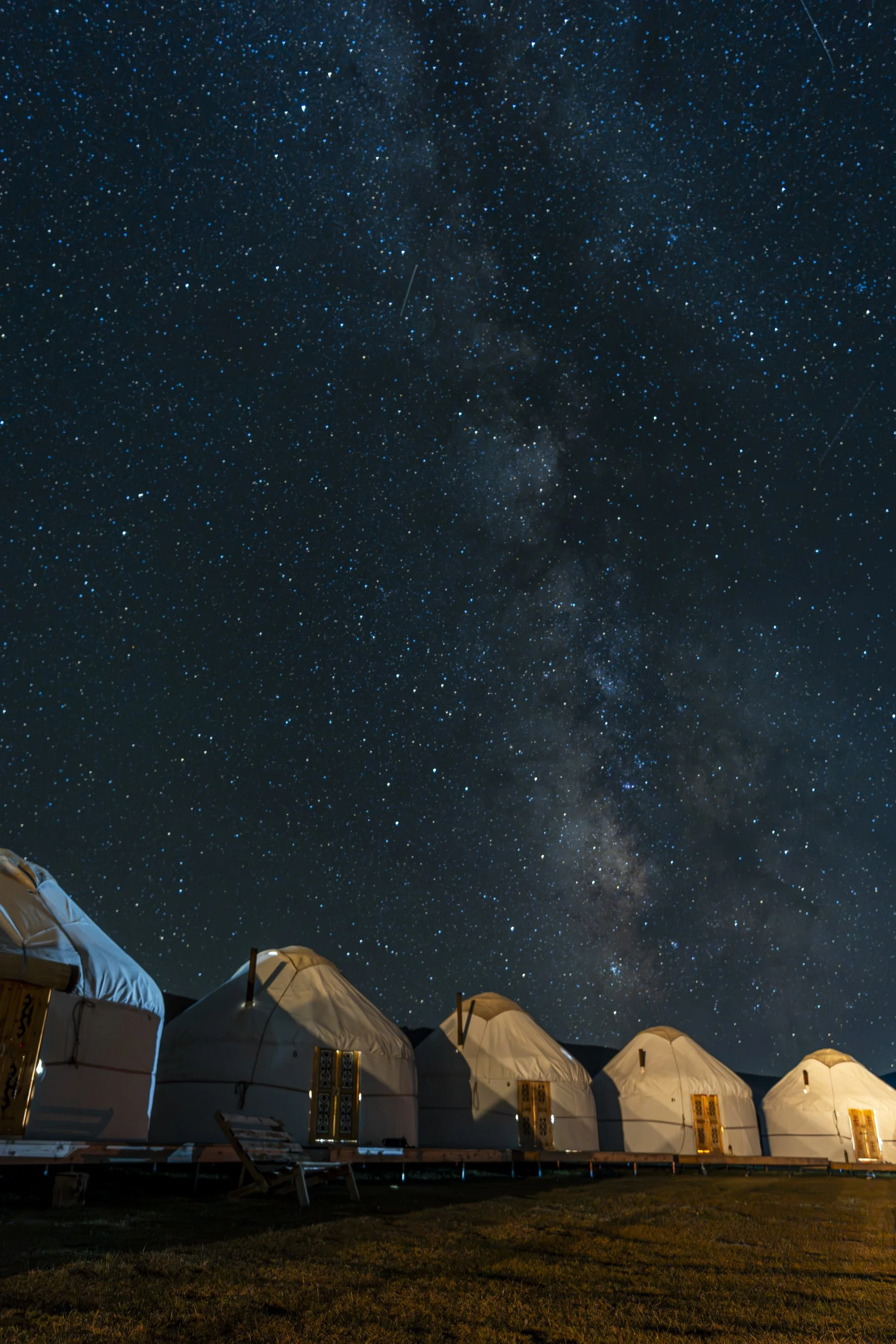
At Son Kul, more than 3,000 metres up and hours from the nearest paved road, there is almost no artificial light.
My friend and I stood outside the yurt in the cold September air, checking Stellarium to see whether the Milky Way would be visible. It was. It was also right in front of us, plain to the naked eye, which made the app slightly redundant.
We weren’t alone. Twenty or so visitors from across Europe were out in the dark too, simply looking up. I spent most of the time grappling with manual settings and exposure times, trying to capture what everyone else was content just to watch. A dozen frames went in the bin. No matter, I thought. We could try again the following evening.
The following evening, the clouds rolled in.
You take these moments when you have them. I hope my efforts did it justice.
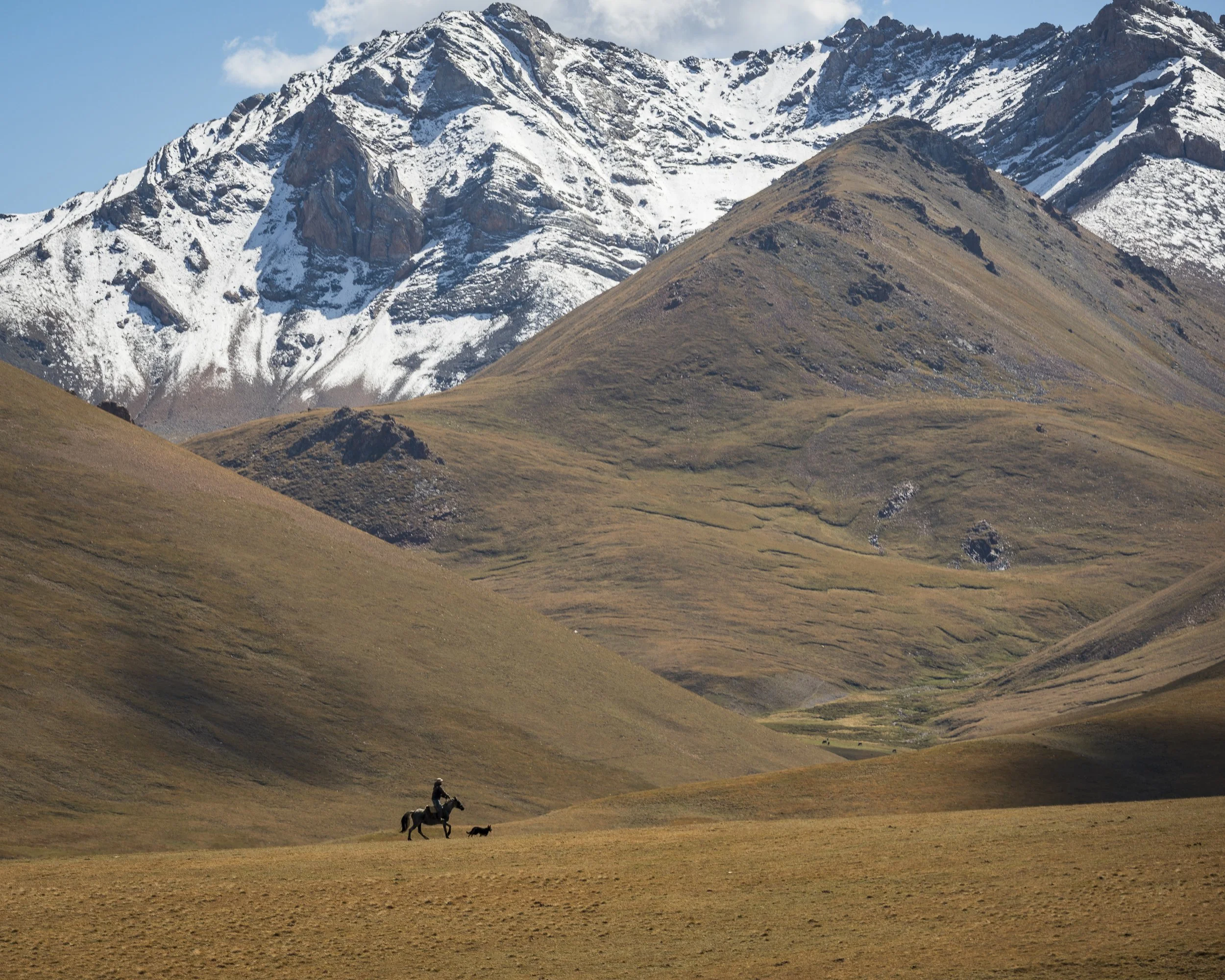
It would be easy to romanticise it all. Herding livestock at altitude, coping with harsh weather and living far from essential services is demanding work. Tourism brings opportunities, but also pressures on communities and the landscape.
And yet, despite the tracks, grazing animals and occasional satellite dish, the human presence still seems remarkably light.
We spent part of our five-week Central Asian journey exploring Kyrgyzstan, but I came away feeling we'd barely scratched the surface.
I'd love to return for a longer horse trek, explore some of the more remote hiking routes through the Tian Shan, and spend more time in the Pamirs around Lenin Peak.
There are places where a few days feel more than enough. Kyrgyzstan isn't one of them.
Tourism will change parts of the country, inevitably. Better roads, communications and accommodation will bring opportunities for the people who live here, even if some of the remoteness that makes the high country so compelling is gradually diminished.
We should never deny local communities the benefits of that development simply to preserve a landscape for adventurous visitors.
But I'm glad to have experienced it as I did.
Remote, rugged and unspoilt. One of the most remarkable journeys of my life.
It really is good for the soul.
Photographed in Kyrgyzstan, September 2026.
Explore the full photographic collection: Kyrgyzstan — High Country Landscapes.
