

Planning your own trip to Central Asia?
Practical tips, observations and lessons learned from five weeks travelling independently through Kyrgyzstan, Uzbekistan and a sliver of Tajikistan and Kazakhstan.
Including a few things we'd do differently.
Five Weeks. Four countries. 5000 kilometres. Two friends. Approx $2,500 each
A small mea culpa
For years I've happily read other travellers' blogs, borrowed their recommendations, checked their routes and scoured Tripadvisor and Google reviews. I haven't been nearly as diligent about returning the favour. So this is an attempt to put that right.
A friend and I spent five weeks travelling independently through Central Asia in September 2026. We covered more than 5,000 kilometres, taking in Kazakhstan, Kyrgyzstan, Uzbekistan and a short detour into Tajikistan, by train, marshrutka, private car and a little hitch-hiking. We booked a few things in advance and plotted a broad itinerary, then winged it for much of the journey: finding places to stay as we went and arranging transport on the fly.
Don't worry: this isn't a day-by-day account, nor a definitive guide to an enormous region. It's a collection of things we found useful, places we would recommend and a few things we would do differently. There are no affiliate links and no sponsored recommendations. Where I name a business, it’s because we used it and thought it worth mentioning. And every photograph here was taken on this journey – so what you see is what we found.
Our trip was, in effect, two journeys in one: Kyrgyzstan's high country and nomadic traditions, followed by Uzbekistan's Silk Road cities, the Fergana Valley and the extraordinary landscapes beyond the Aral Sea. It could easily have been three or four separate visits. More on that later.
In a Nutshell
- explore Central Asia contains multiple journeys. Kyrgyzstan's mountains and the Silk Road cities of Uzbekistan each deserve a trip of their own, unless you're planning a longer visit.
- landscape Give Kyrgyzstan more time than the map suggests. Roads, not kilometres, set the pace. Consider a 4x4 or a local driver, and fly between north and south. And be prepared for the occasional uncomfortable ride.
- mosque Don't rush the Silk Road cities. Try to stay at least two nights in each city, book walking tours, and get up early at least once.
- travel_explore Look beyond Samarkand, Bukhara and Khiva. The Fergana Valley and the Aral Sea were two of our highlights.
- train Book Uzbek trains and popular hotels ahead. Improvise elsewhere.
- badge Check your visa. British passports need an e-visa for Tajikistan; EU passports currently don't.
- payments Bring pristine US dollars in large denominations, and buy a local SIM on arrival.
- photo_camera Photographers: no drones in Uzbekistan; pack a tripod for the night skies over Kyrgyzstan.
- handshake Expect a warm welcome. We never felt unsafe, and even the border officials smiled.
- account_balance_wallet Budget about US$500 a week each for five weeks of comfortable independent travel, excluding international flights.
The Journey
We began in Almaty, crossed into Kyrgyzstan for the World Nomad Games, travelled around Issyk-Kul and into the mountains at Son-Kul, then continued via Bishkek and Osh into Uzbekistan's Fergana Valley. From there came Tashkent, Samarkand, a detour to Penjikent in Tajikistan, Bukhara and Khiva. Finally we headed west through Nukus and Moynaq towards the Aral Sea, before returning to Tashkent and flying back to Almaty.
It's worth studying the distances before trying to reproduce the itinerary: a short line on a map can represent a long day on an unpaved road.
WORTH KNOWING We made the itinerary work, but it was not the only sensible way to explore the region. The geography — especially in Kyrgyzstan — should shape the plan as much as the list of places you want to see.
Kyrgyzstan: High country adventures
Give Kyrgyzstan more time than you think
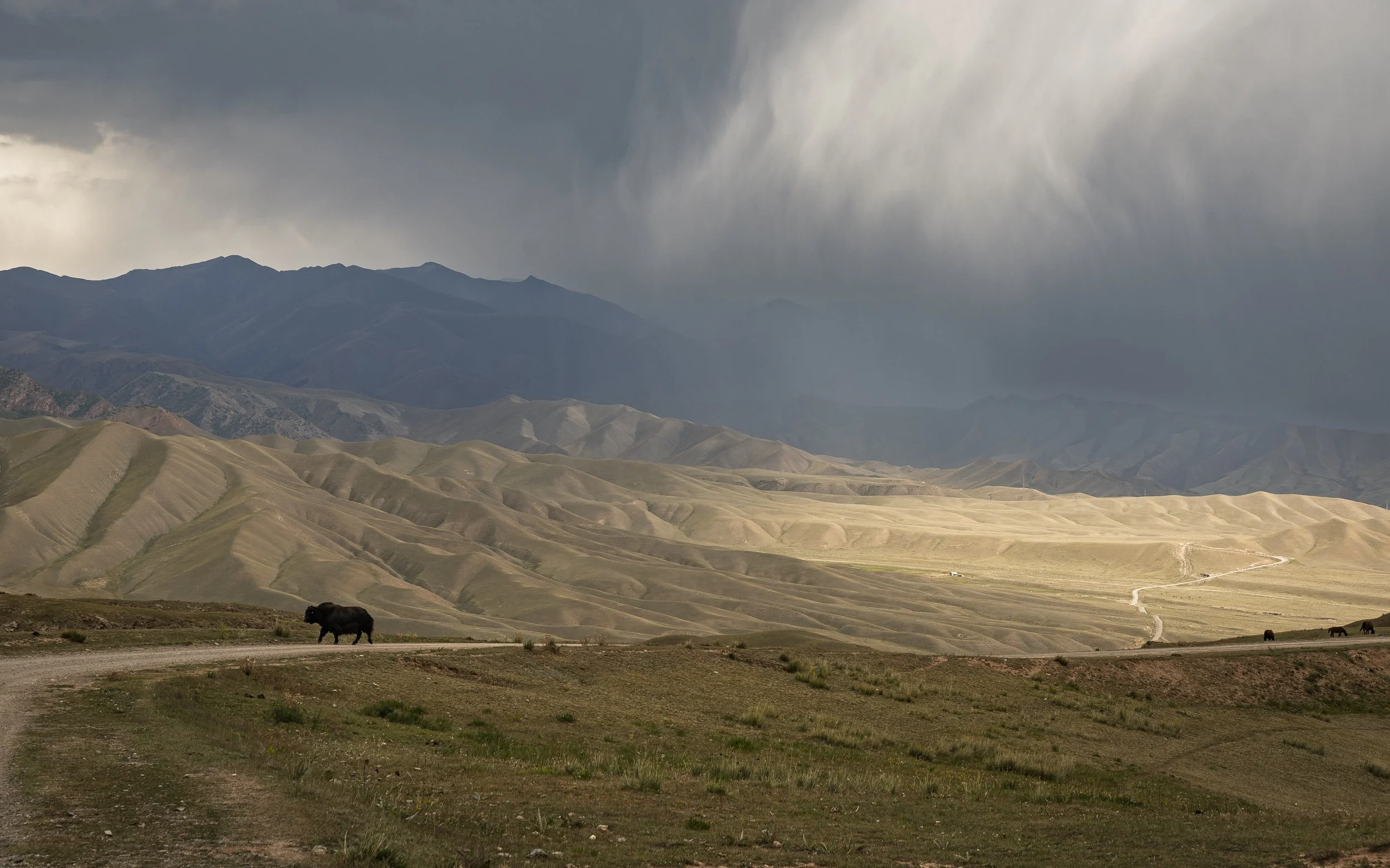
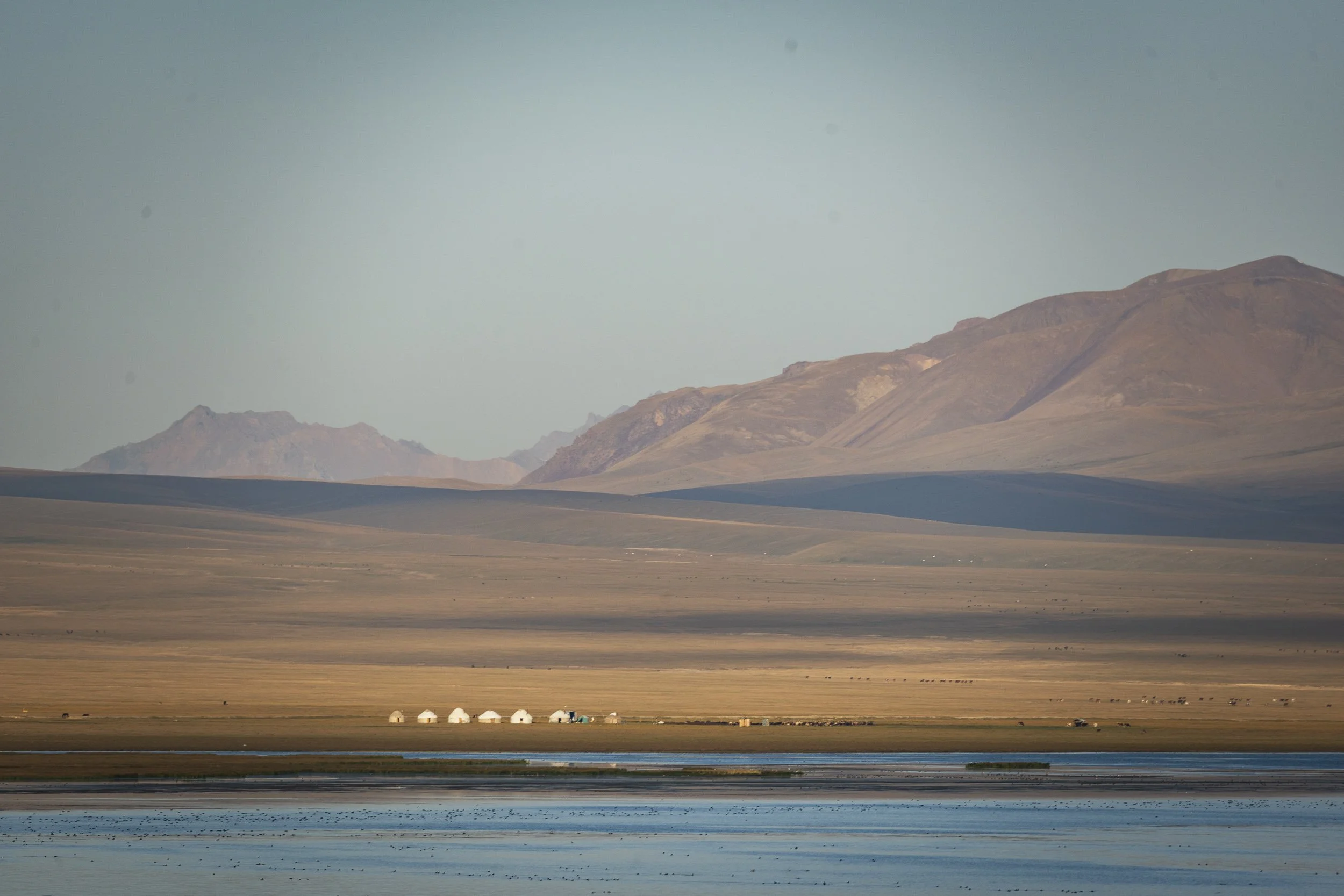
If there is one country where I would change our allocation of time, it is Kyrgyzstan. The high pastures, mountain lakes, yurts, horses and extraordinary open spaces were among the most memorable parts of the journey. We saw plenty in almost two weeks, but we barely scratched the surface.
The roads are part of the explanation. Distances that look manageable can take far longer than expected, especially away from the main highways. A journey on a rough mountain track is not the same proposition as a similar distance on a paved road. There is also very limited transport infrastructure and, while new roads are still being built, there’s still a heavy reliance on shared minibuses and hitch-hiking
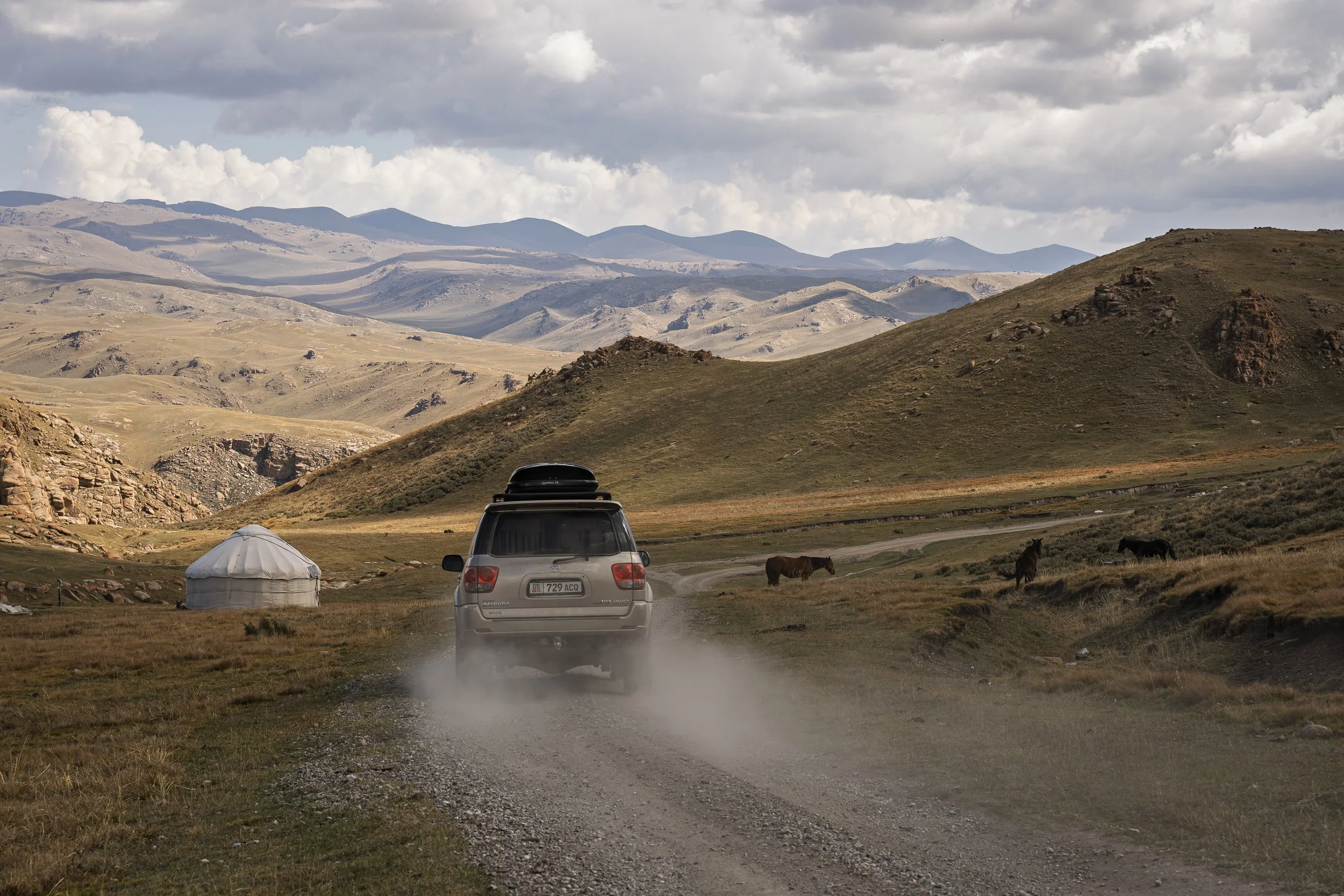
Much of Kyrgyzstan simply isn’t accessible without a 4×4.
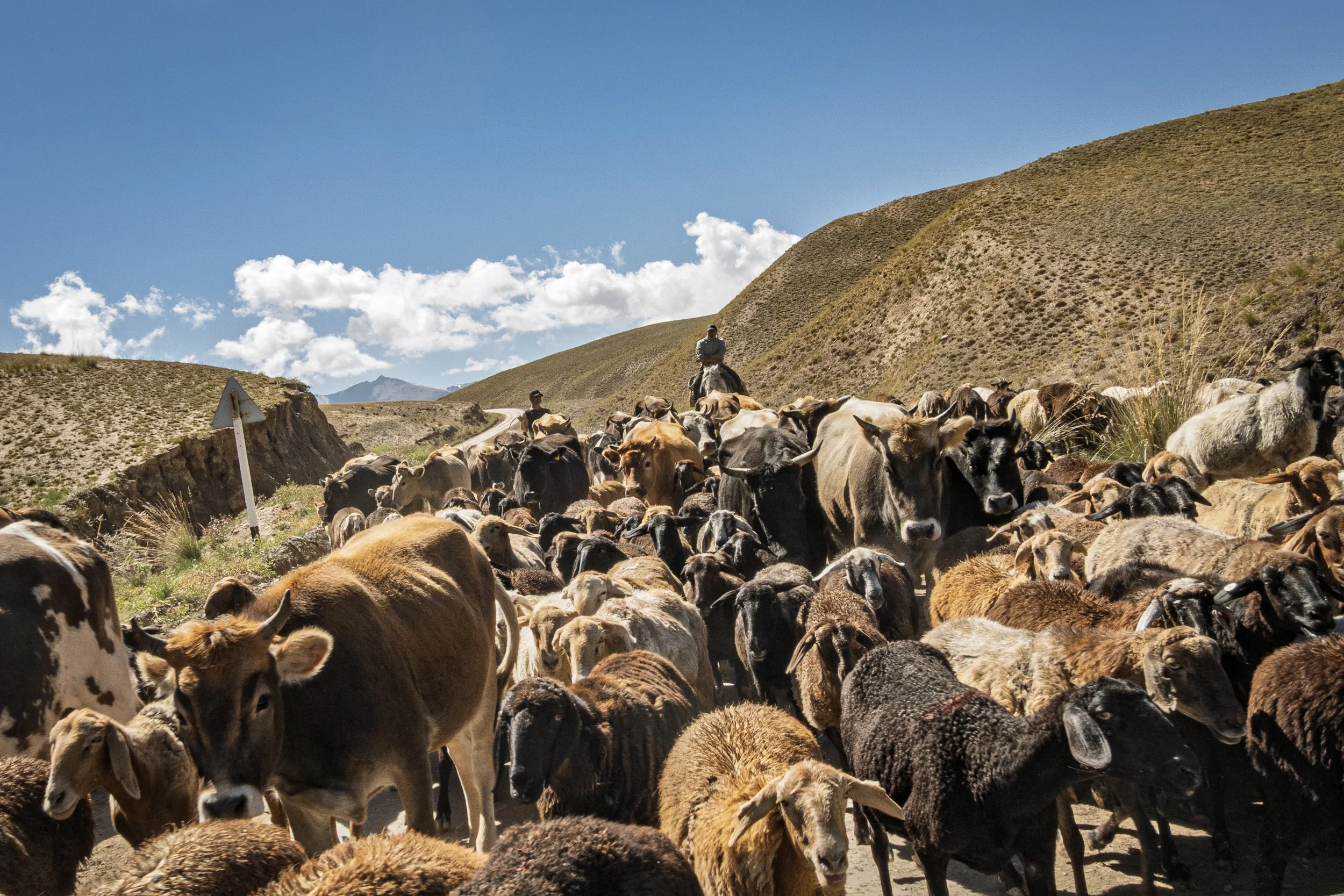
Be prepared for livestock hold ups - even on the main highways.
Next time
In short: a 4x4 loop from Bishkek for the north and centre, then a flight to Osh for the south.
We'd hire a self-drive 4x4 in Bishkek and loop east to Karakol, along the south shore of Issyk-Kul, then on to Son-Kul, Tash Rabat and the high mountain lakes, before returning the car in Bishkek.
From there, the short flight to Osh would leave proper time for the Alay Valley and Lenin Peak.
We learned the hard way that many of the roads don’t connect cities in straight lines – hardly surprising with so many mountains to navigate. Rather than travelling directly overland from Naryn to Osh, we had to double back to Bishkek: a two-day about-turn followed by a 14-hour drive south. It cost us time we had hoped to spend in the mountains of southern Kyrgyzstan.
The World Nomad Games, and other happy accidents.
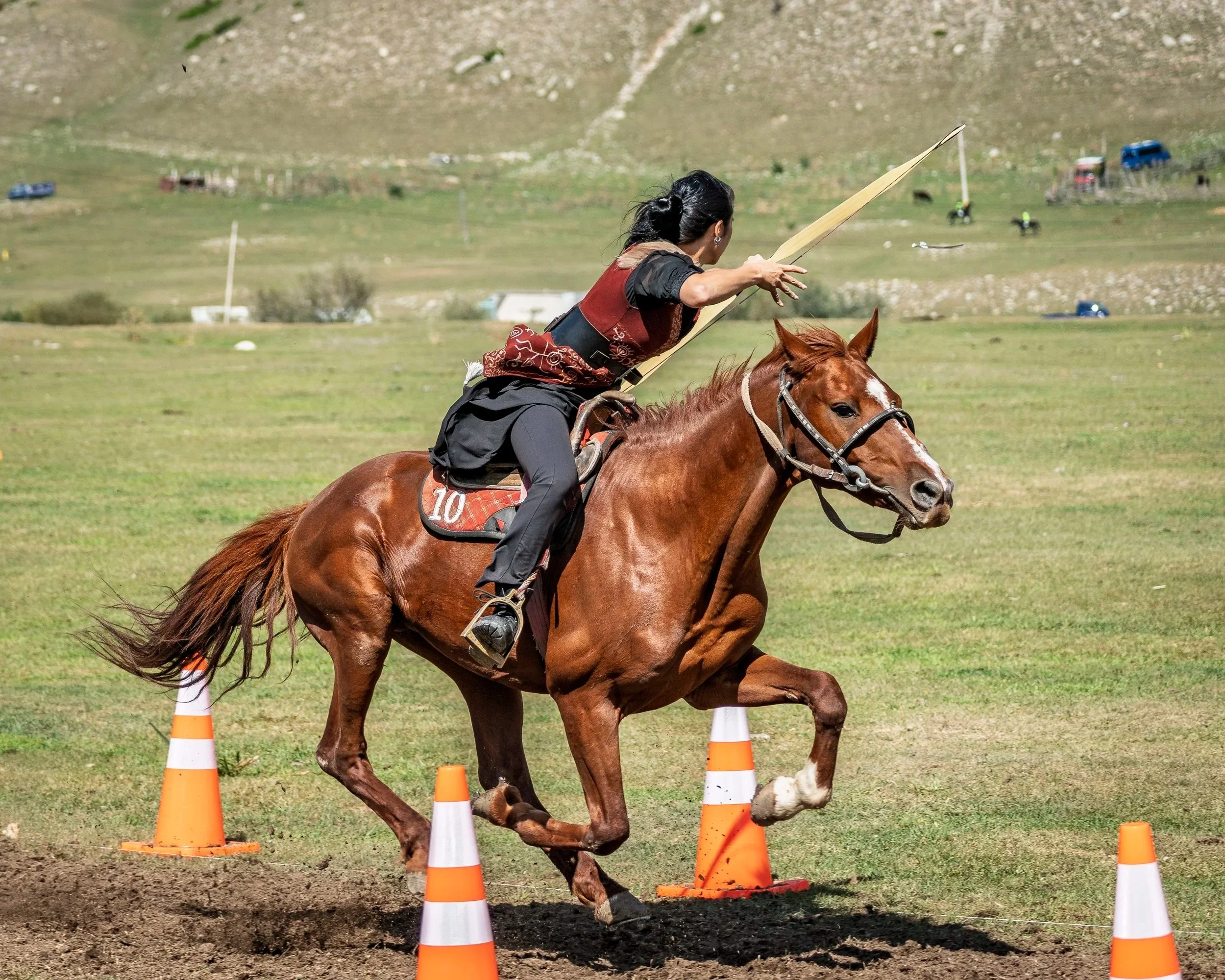
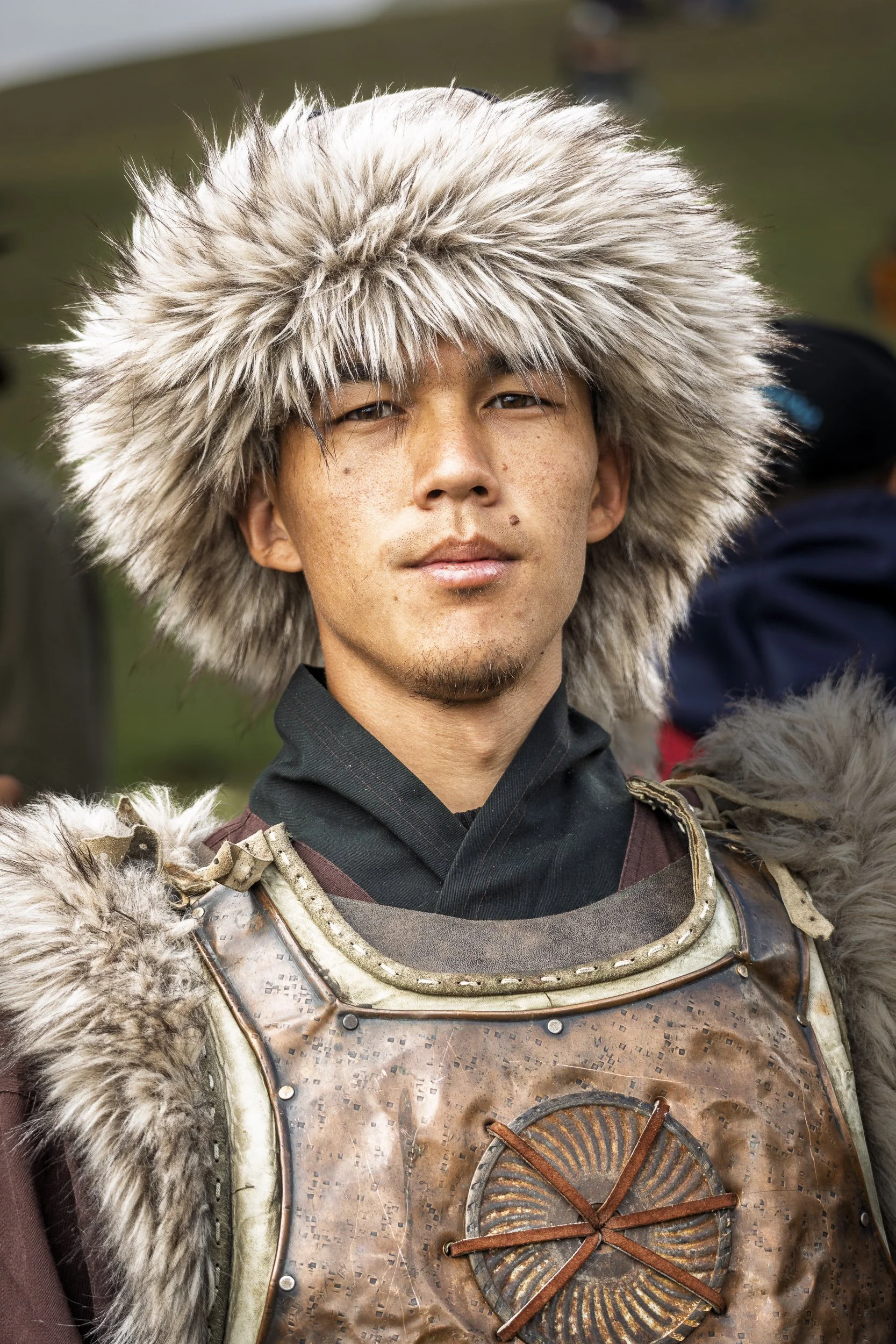
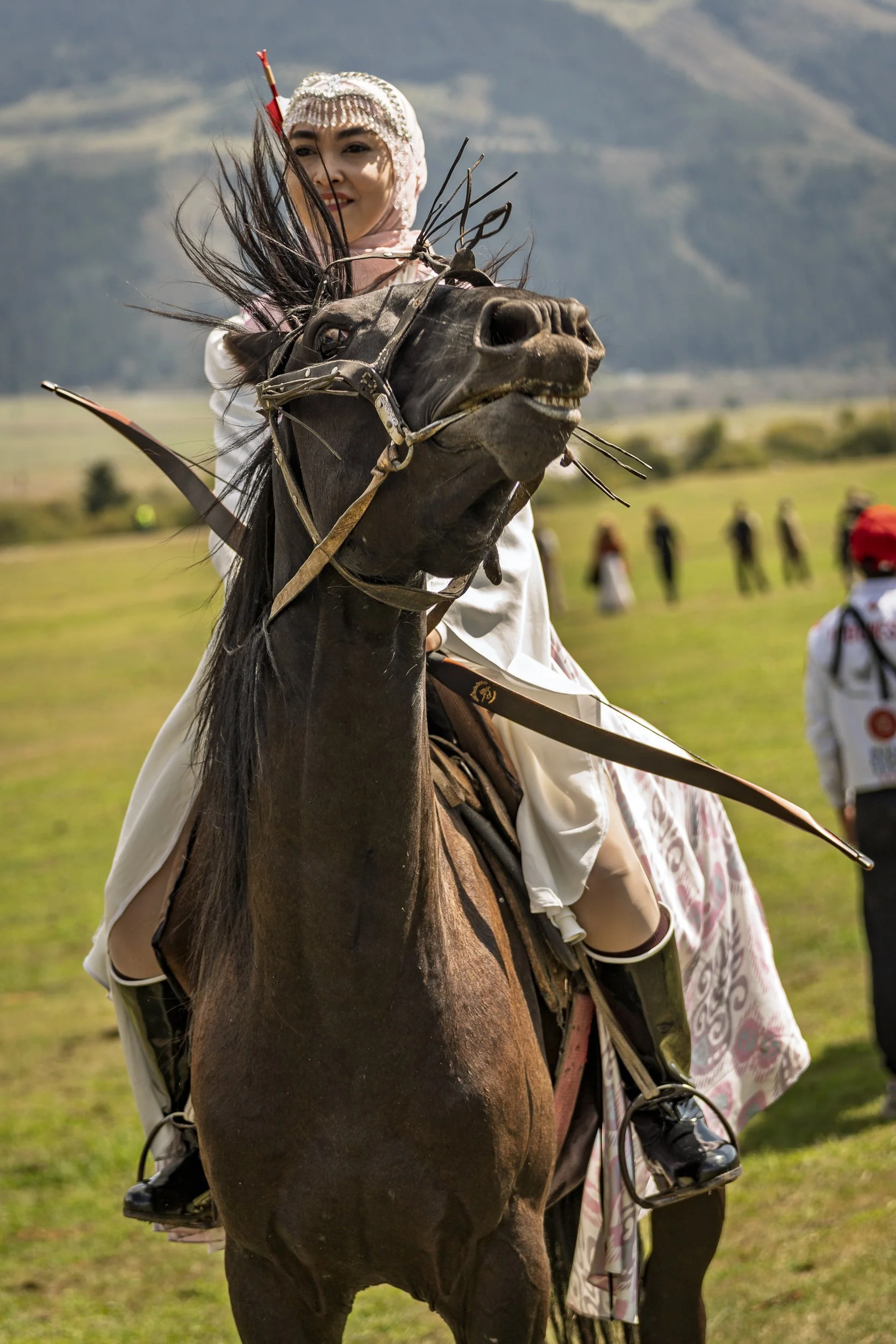
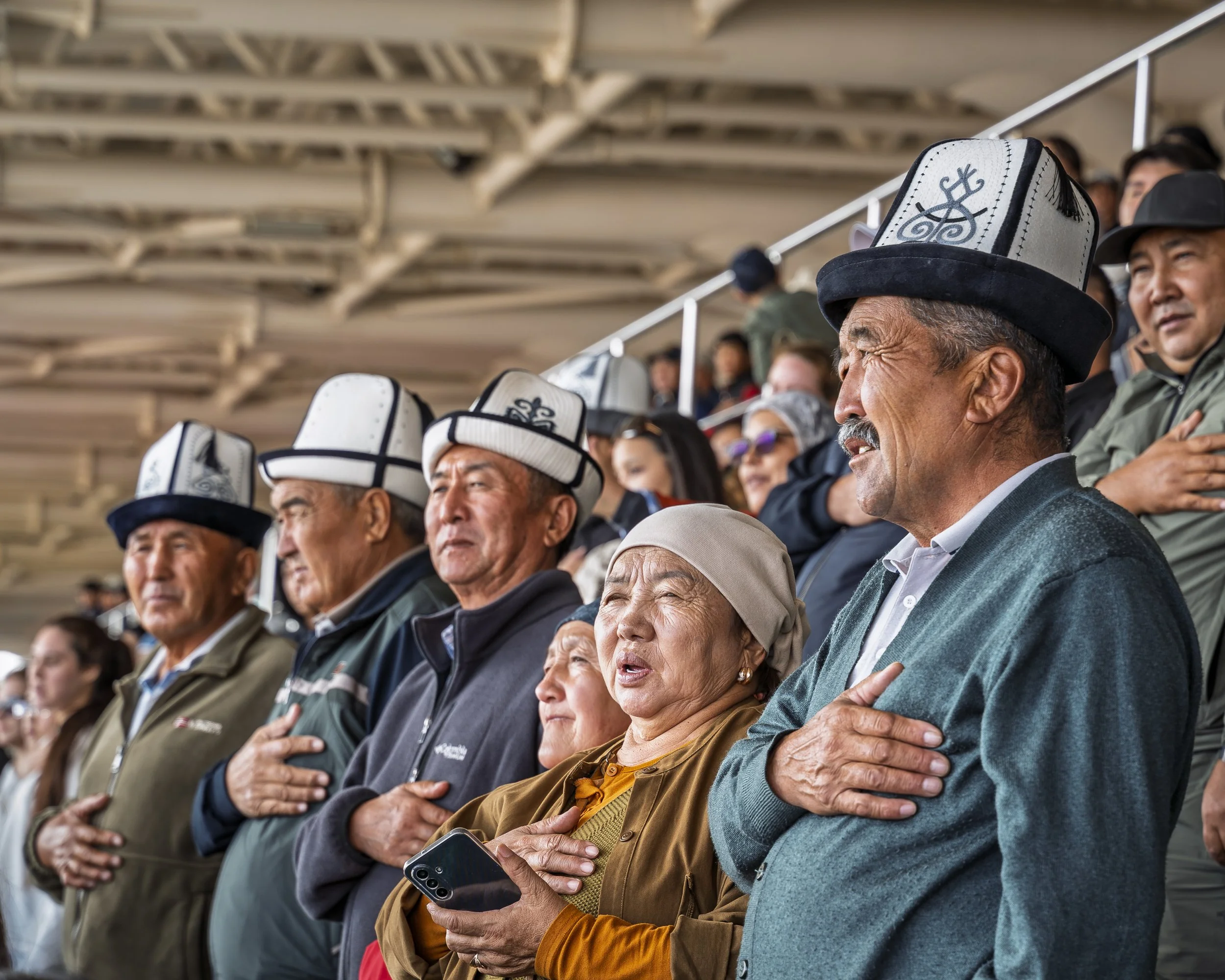
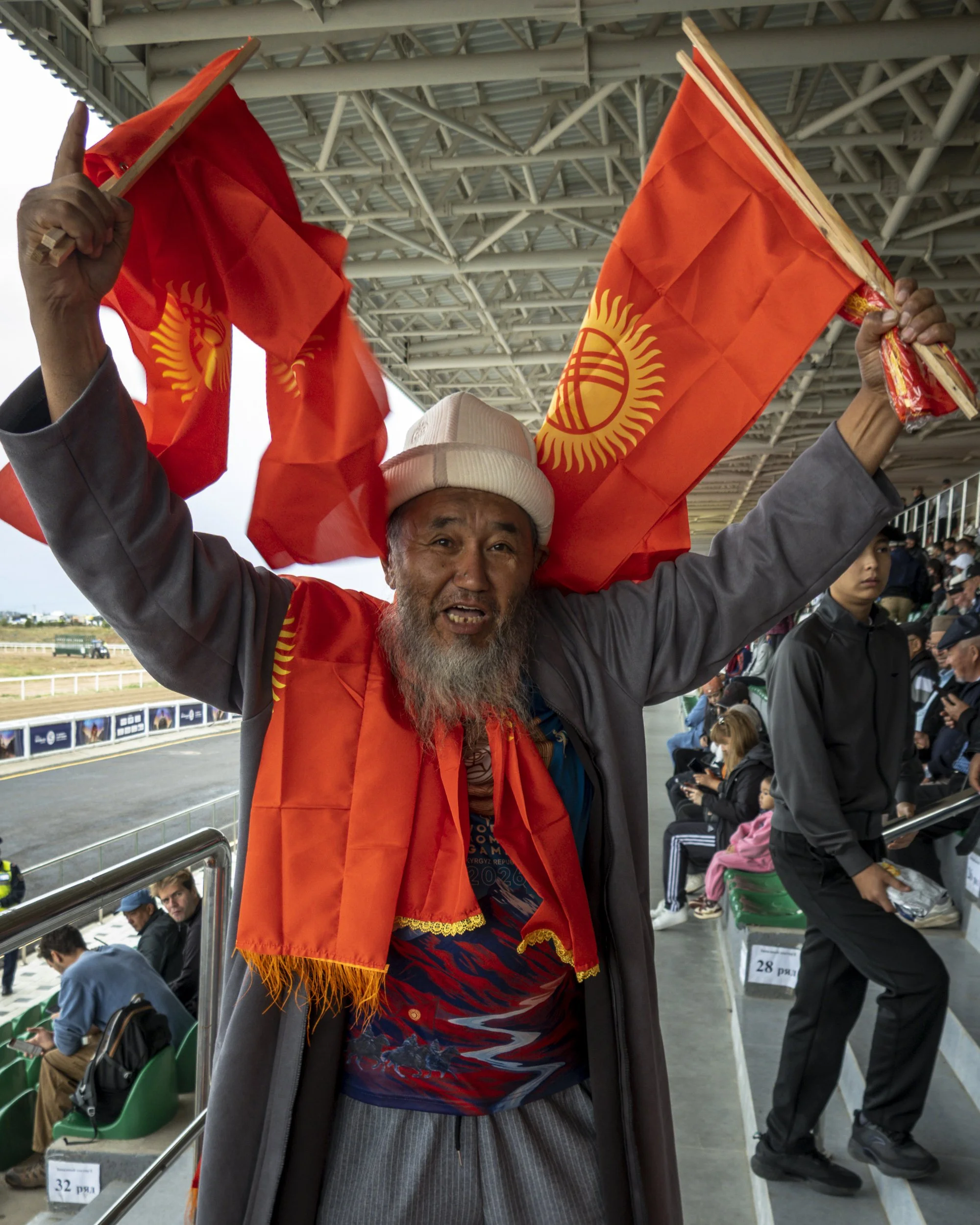
Our original plan was to travel in May. We only moved to September because we’d heard some of the higher passes might still be closed earlier in the year. As luck would have it, the new dates coincided with the World Nomad Games in Kyrgyzstan – so we rebuilt the entire route to make sure we were there. It turned out to be one of the highlights of the five weeks. I’ve written about it in more detail in If Tatooine Hosted the Olympics.

Our advice
One of the joys of slow travel is stumbling across local celebrations and traditions. But sometimes it pays to do your research in advance and anchor your journey around a major event – just as we did with the World Nomad Games.
Uzbekistan: The Silk Road Cities and beyond
The reason for our journey
The Silk Road cities were the centrepiece of our journey and the reason we came to Central Asia in the first place. They didn’t disappoint. We also discovered there is a lot more to Uzbekistan if you can find time to explore beyond those destinations.
Many travellers join tours that start in Tashkent, fly to Khiva and work back east through Bukhara and Samarkand. We did it the other way round, travelling east to west. Why? Because we had the time, and once we discovered we could add the Aral Sea to the itinerary, it made more sense to end there.
What follows is a brief snapshot of each city and some general advice. For more photos, see the Silk Road Cities galleries.
Samarkand
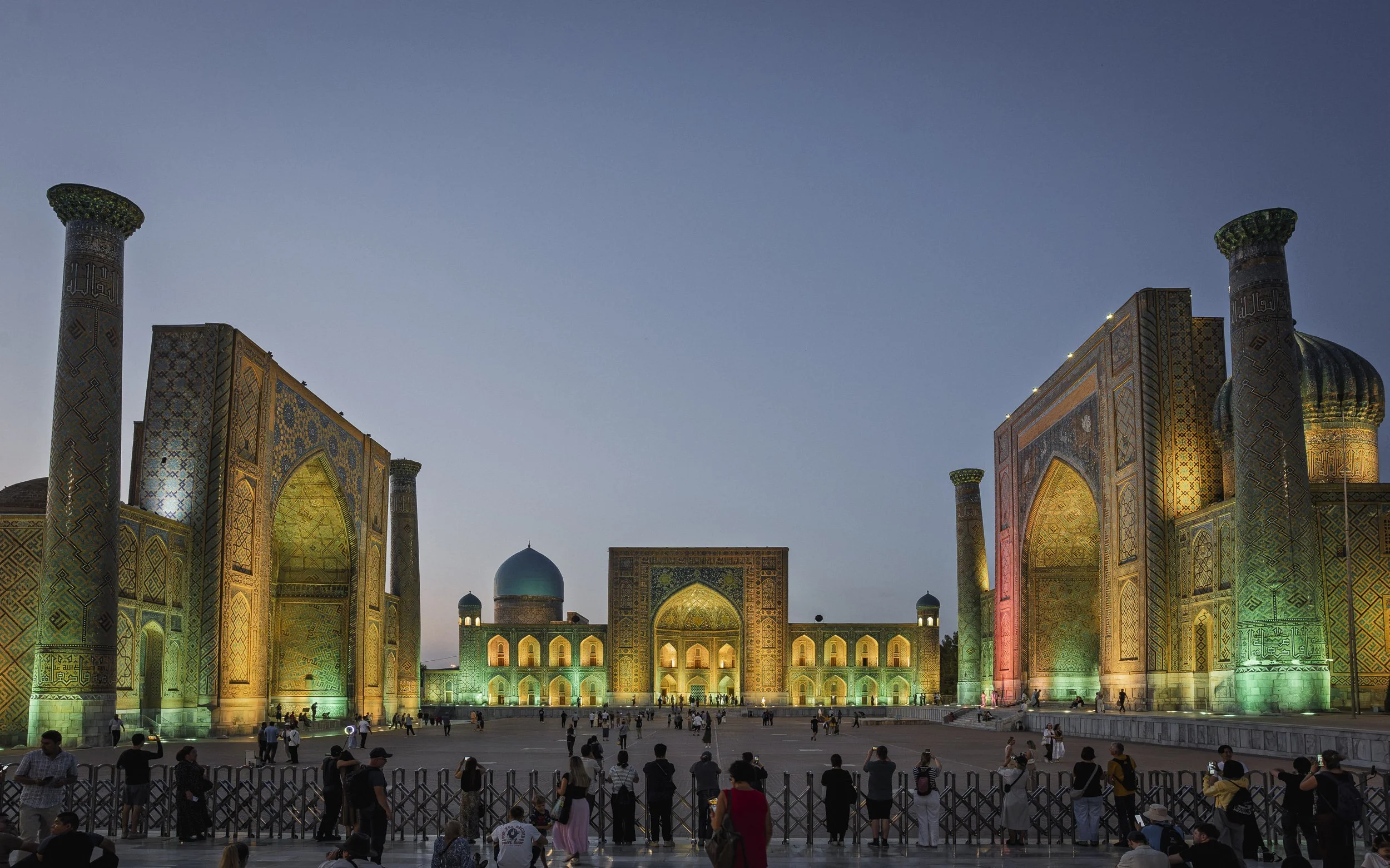
The largest of Uzbekistan’s Silk Road cities, and perhaps the most evocative. There are few places in the world that are as jaw-dropping in real life, however familiar you are with the photographs. The Registan is one of them.
Come back after dark too, when the madrasahs are dramatically lit.
A short walk away is the turquoise dome of the Gur-e-Amir, the tomb of the emperor Tamerlane, who made Samarkand his capital. Legend has it that the tomb carried a curse on anyone who disturbed it. Soviet archaeologists opened it in June 1941; within days, Germany had invaded the Soviet Union.
It isn’t hard to see the connection between the architecture of Samarkand and the Taj Mahal. India’s Mughal emperors were direct descendants of Tamerlane – it just took them another 250 years to get there.
Bukhara
Bukhara felt a little like Khiva on a larger scale, but more compact and walkable than Samarkand. Its covered markets and historic streets invite exploration without a rigid itinerary. We happened to be there on a Friday and saw the city going about other business, including Friday prayers – a reminder that these are living places, not just collections of monuments.
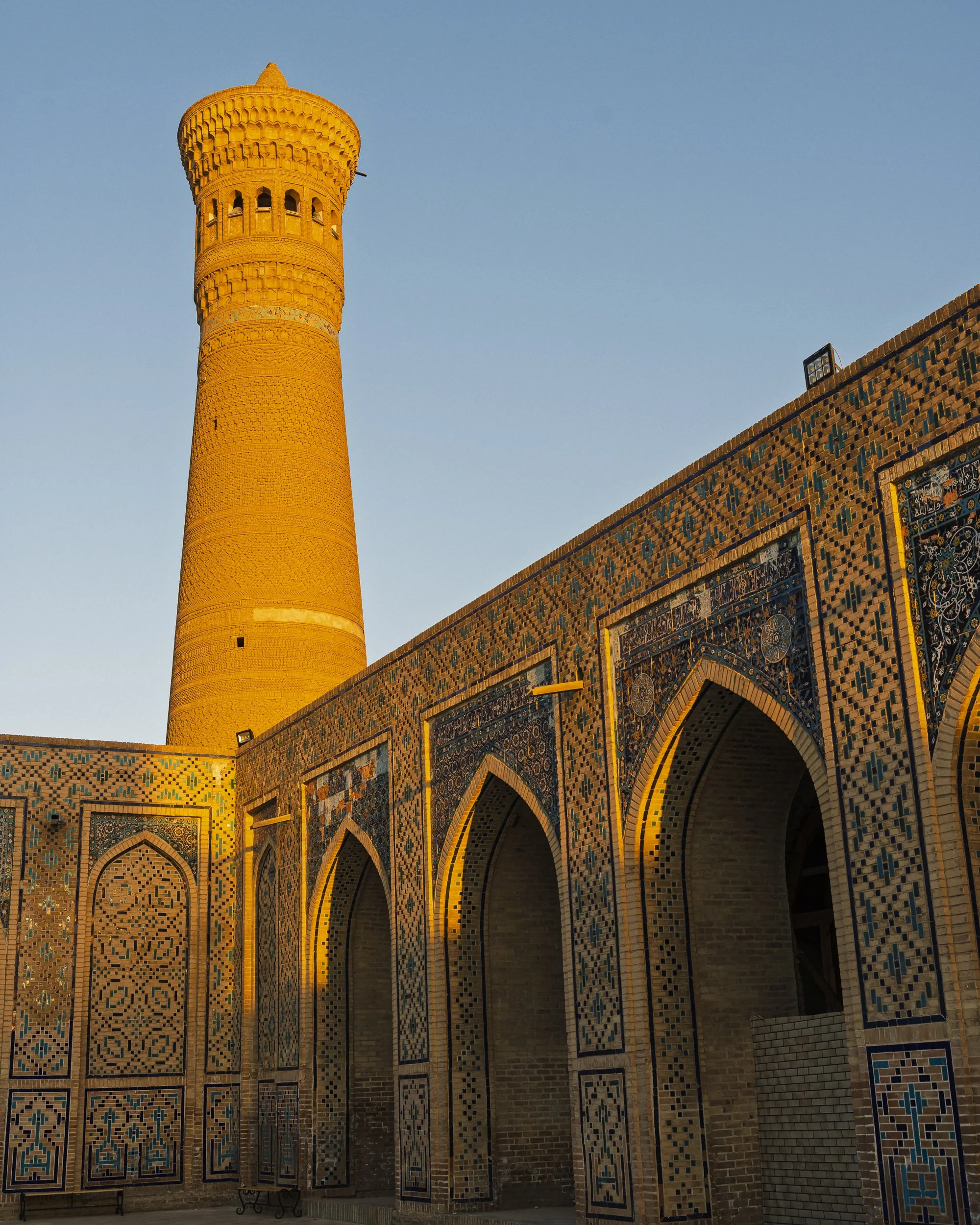
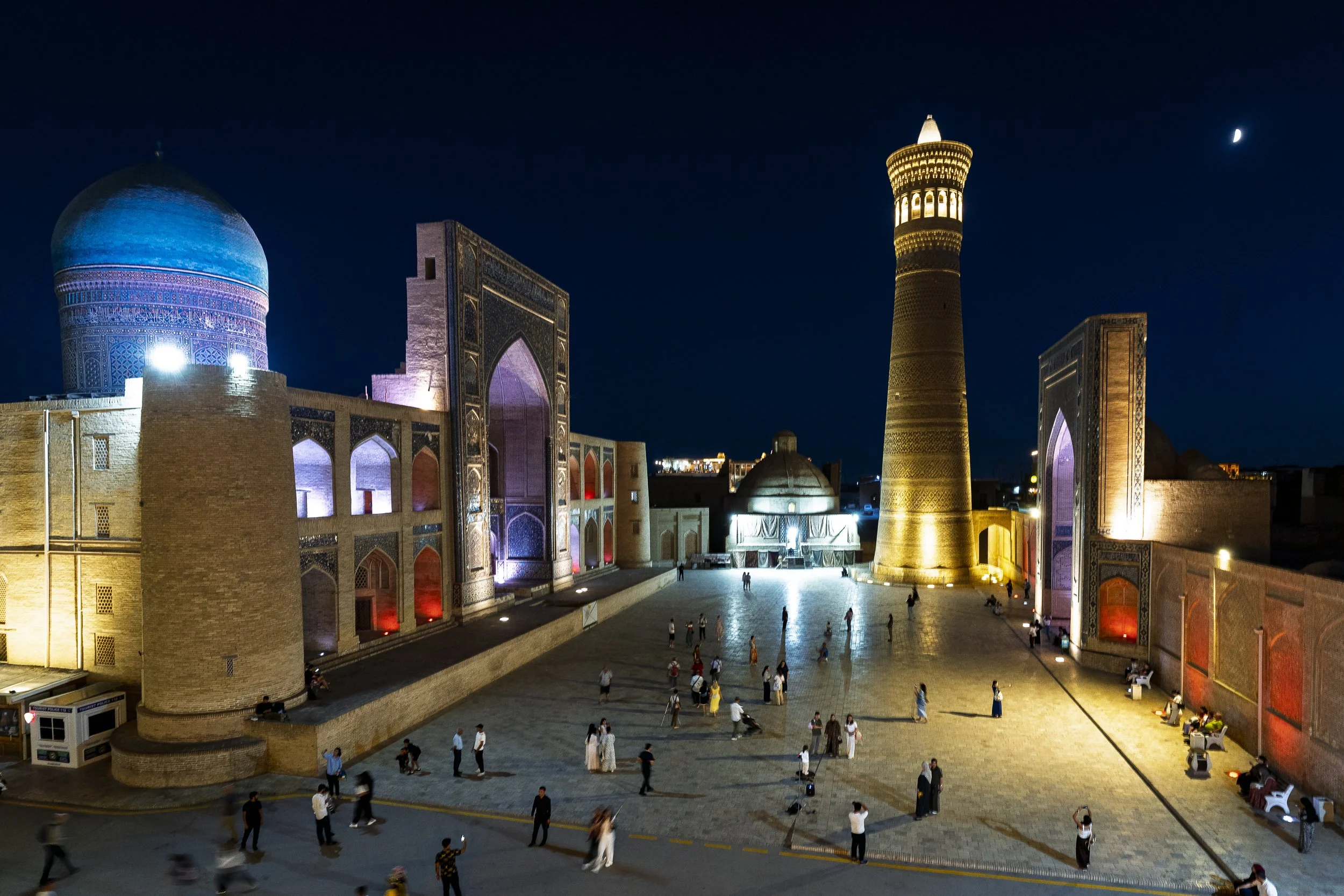
In the evening, the floodlit Kalyan Minaret dominates the old city, as it has for almost 900 years.
Here’s one for you. When Genghis Khan came to Bukhara, he destroyed most of the city, but he couldn’t bring himself to knock the minaret down. For centuries it was also known as the Tower of Death, after the tradition of executing criminals by throwing them from the top in sacks. Ouch. Today the square below is a gathering point for selfies and souvenir sellers, which is a considerable improvement.
For Instagrammers, there’s Pavillon Kalon, a souvenir shop with a rooftop teahouse overlooking the square. Buy a ticket downstairs and you can have yourself photographed with the whole scene as a backdrop.
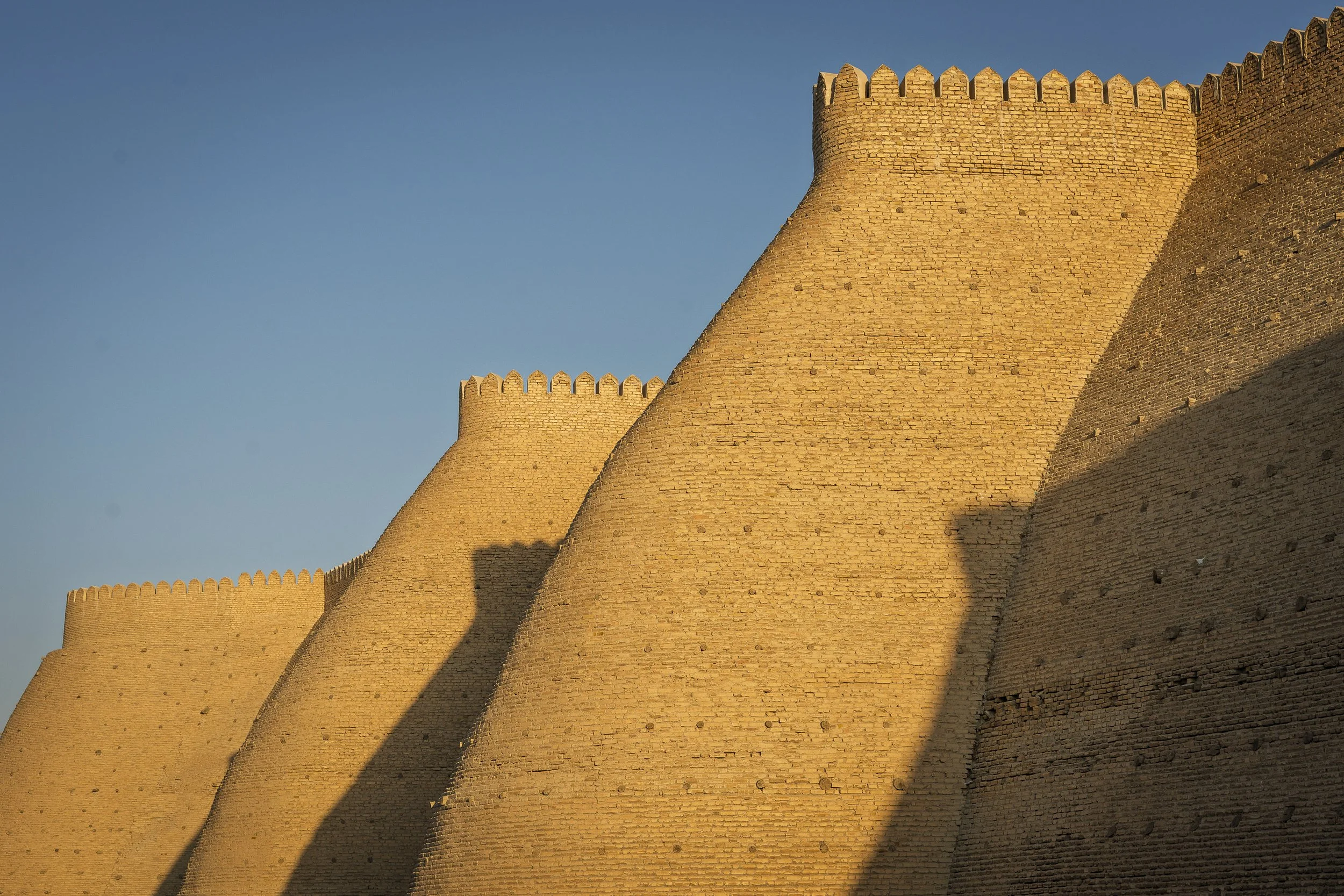
The ramparts of the Ark of Bukhara are really impressive and a walk to the top will reward you with amazing views over the old city. They carry their own dark history: in 1842, two British officers, Charles Stoddart and Arthur Conolly, were executed in front of the Ark on the Emir’s orders, casualties of the Great Game.
One of the things I found hard to reconcile was the bloody, tumultuous history of this part of the world with the laid-back hospitality and the crowds of visitors I saw.
Khiva
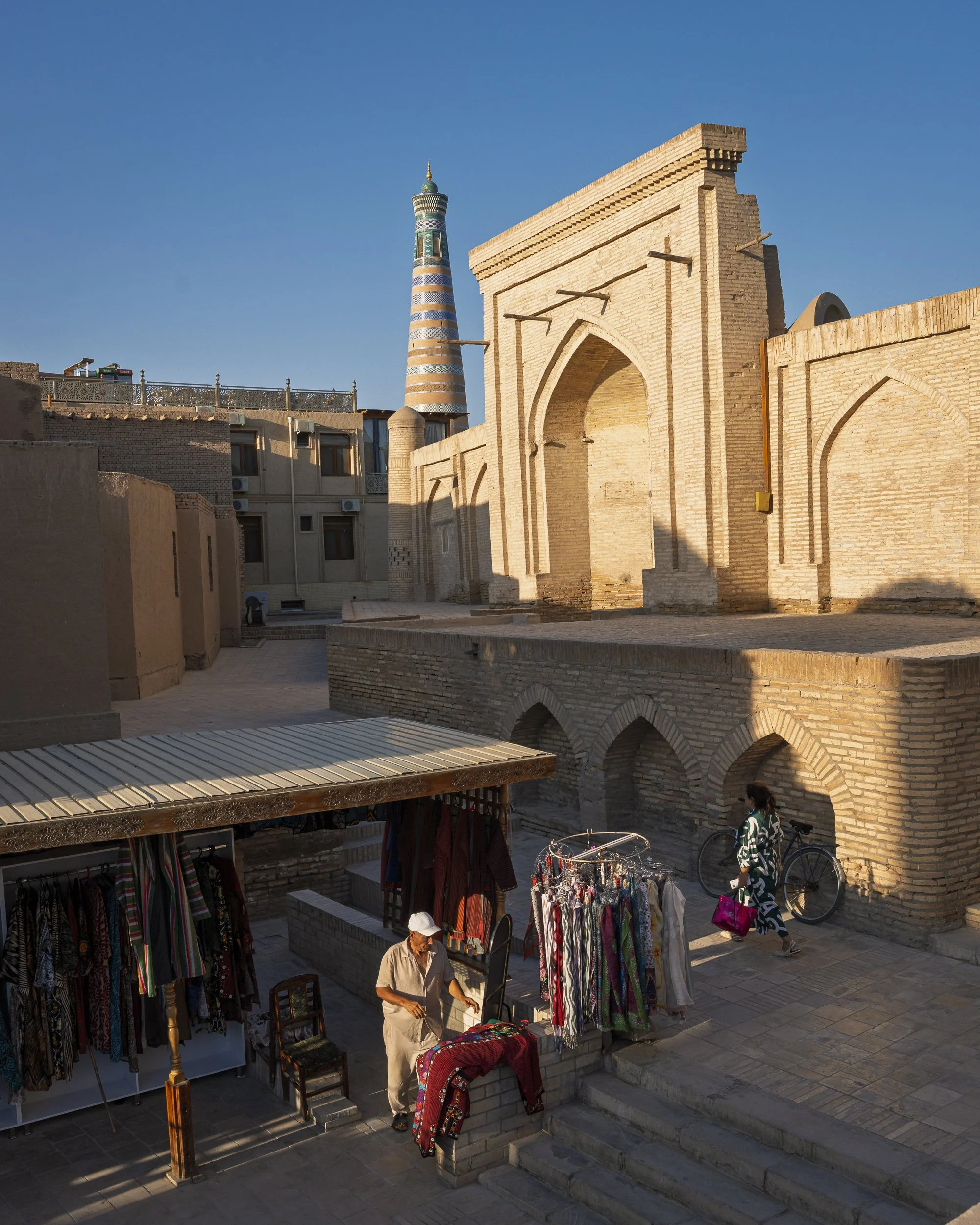
Khiva, and especially the old city of Itchan Kala is extraordinary, but it is much more commercialised than I had expected. In the middle of the day, especially when the tour groups arrive, parts of it can feel like a film set. At dawn it’s another place altogether: quieter, more evocative and much easier to appreciate.
That alone is a good reason to stay overnight rather than treat Khiva as a day trip. We stayed at the Orient Star, inside the Muhammad Amin Khan Madrassah. It’s a memorable setting, even if visitors occasionally peer into the rooms as though the guests are part of the exhibition.
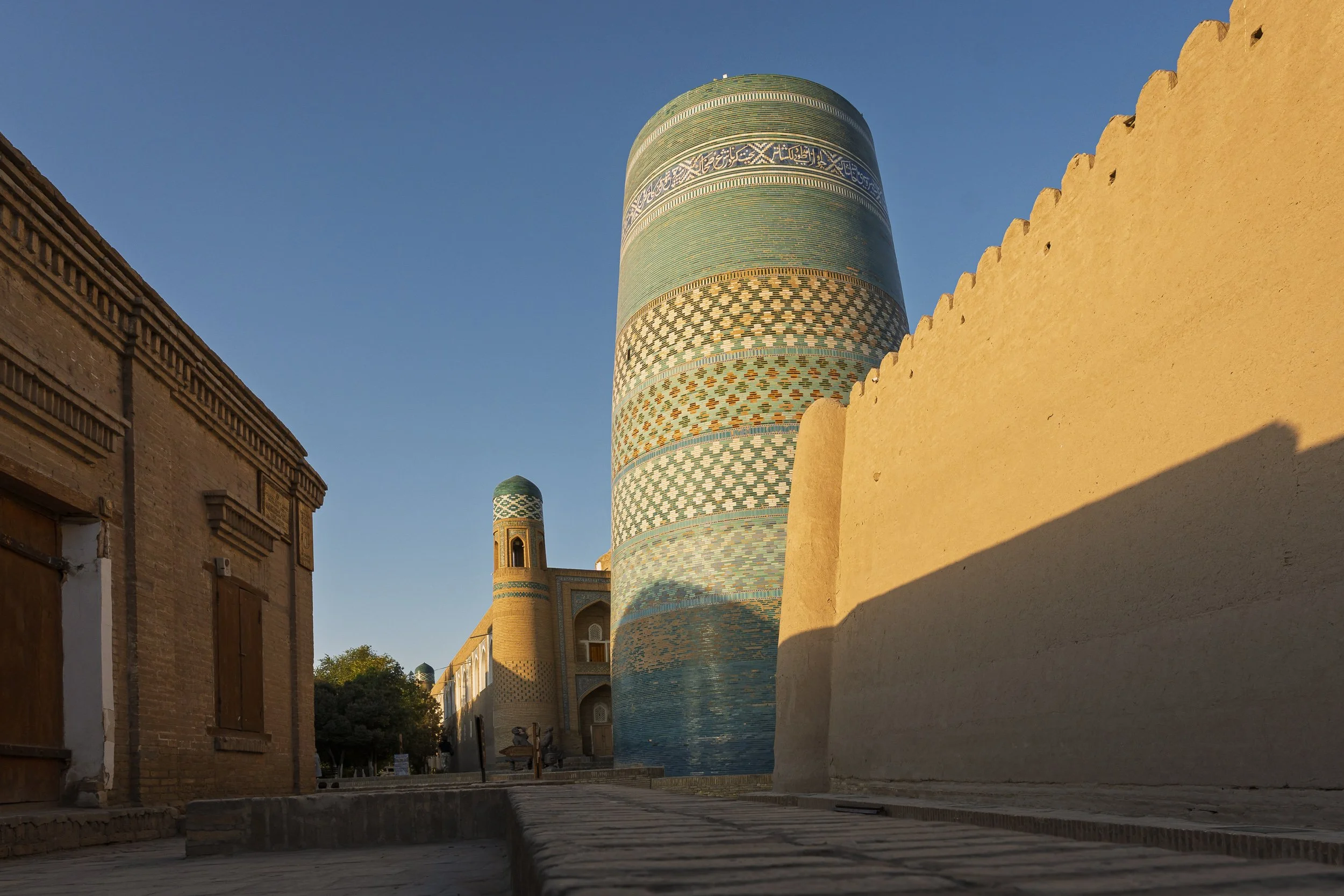
Right outside stands the Kalta Minor, the squat, tiled minaret commissioned by the same khan. It was meant to be the tallest in Central Asia, but work stopped when he died in 1855, and it has stayed stubbornly unfinished ever since. Its turquoise stump is now one of the most photographed sights in Uzbekistan.
And do step outside the walls. There’s a sometimes vibrant everyday life beyond the restored historic centre, including the weekend markets, which were well worth exploring.
Our advice for all three cities
- menu_book Read a little history before you arrive. The Silk Roads, the great trading cities, the khanates and the nineteenth-century British–Russian rivalry all become far more vivid with some context.
- directions_walk Book a walking tour early in your stay. A knowledgeable local guide brings both the history and the everyday life of these cities to life.
- wb_twilight Get up early at least once. Before the stallholders set up and the tour buses arrive, the cities have a rare tranquillity: the architecture in golden light, and time to reflect on a civilisation more than a thousand years old without steering round souvenir stalls or tour groups.
- train Book popular hotels and intercity trains ahead, especially in busy periods. Improvising is useful, but there's little virtue in arriving to find your train has sold out.
Beyond the famous cities: Fergana and the Aral Sea
The Fergana Valley
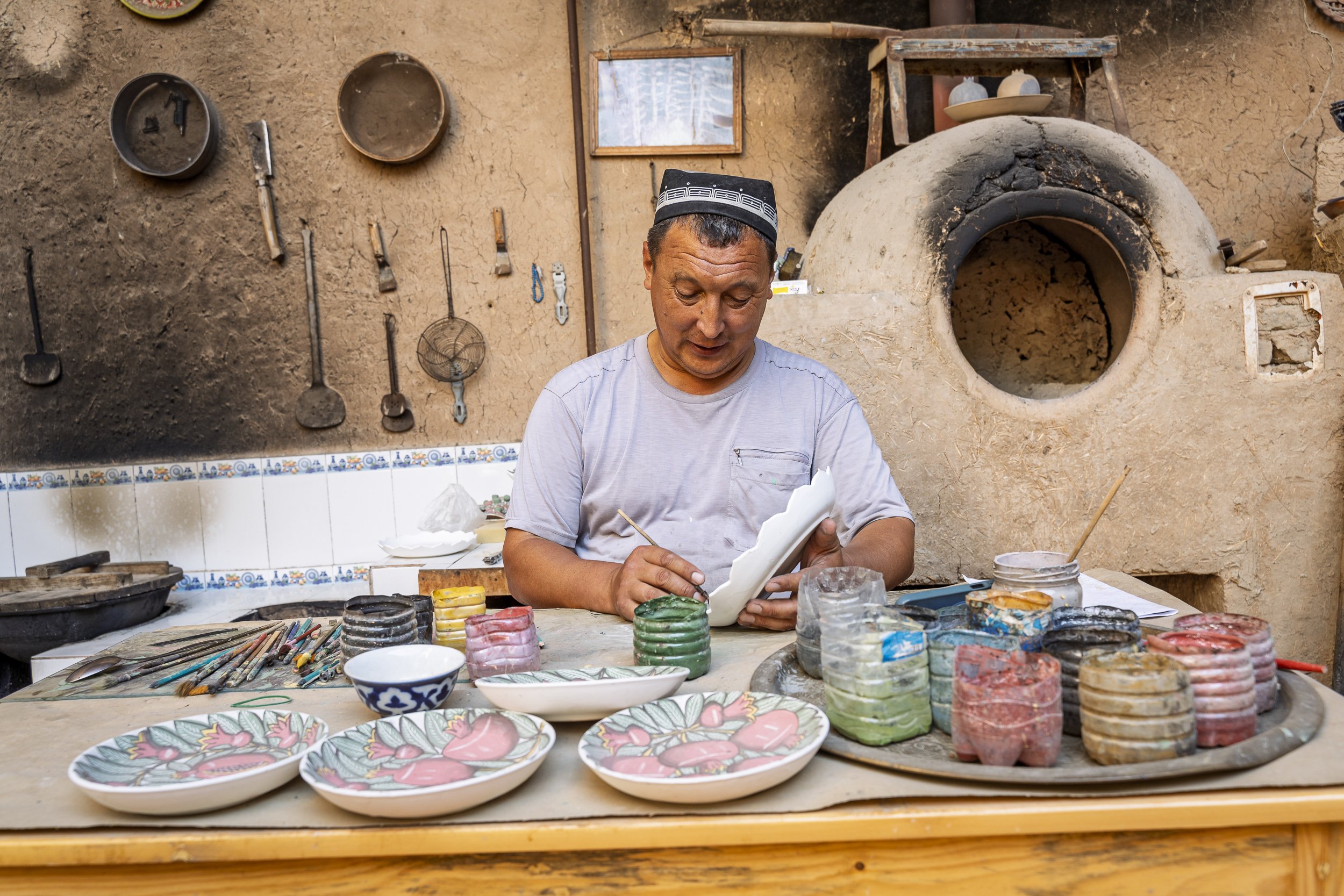
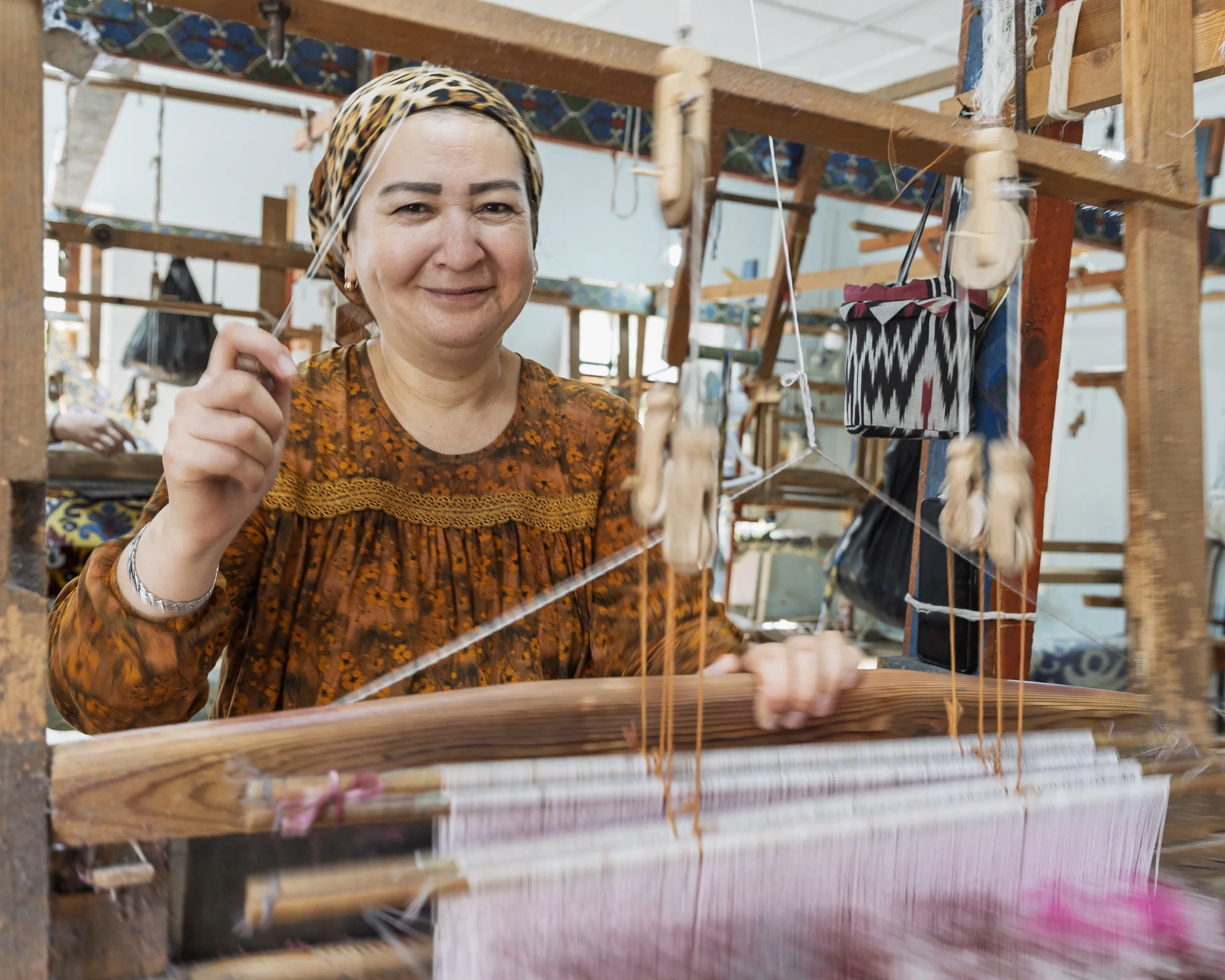
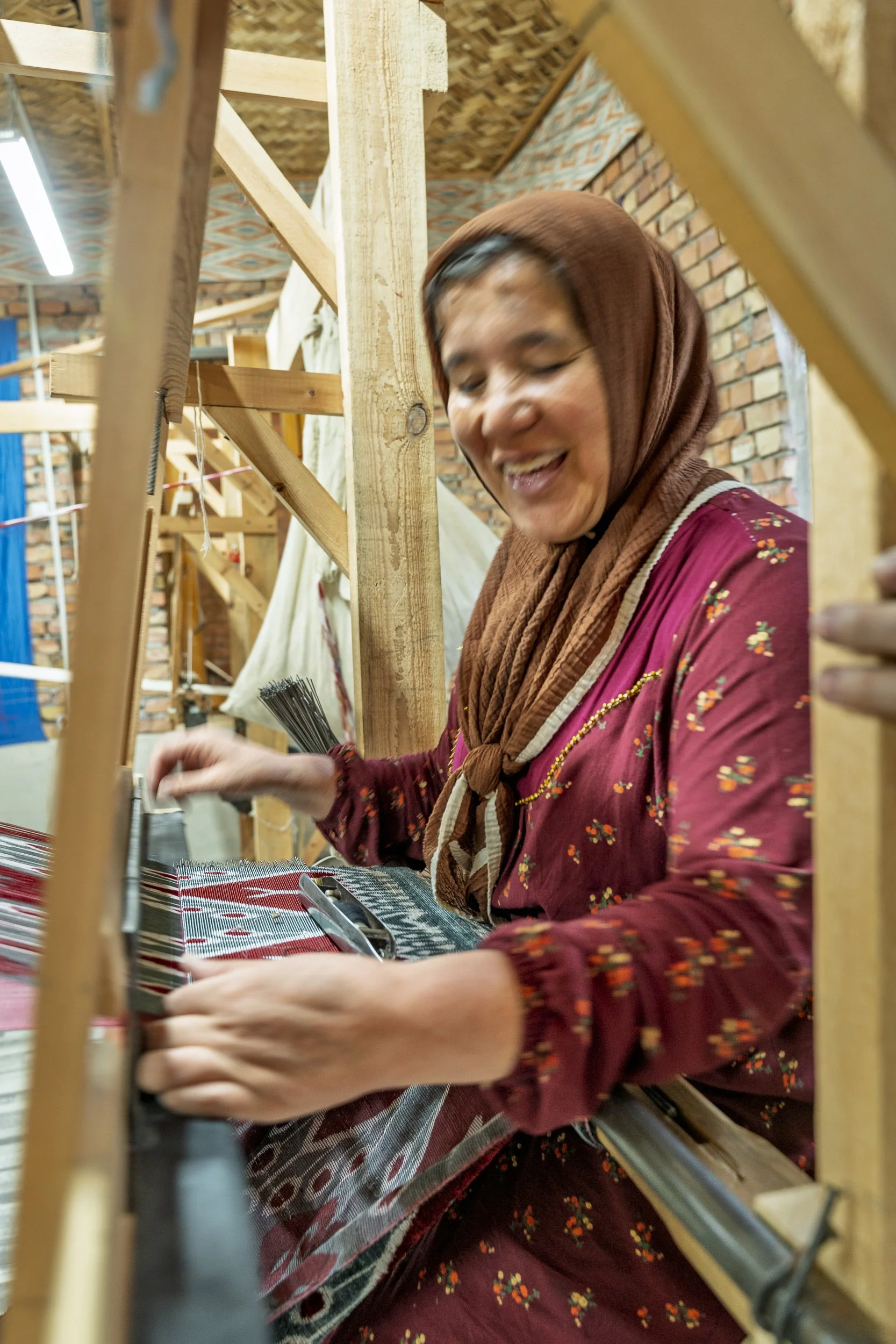
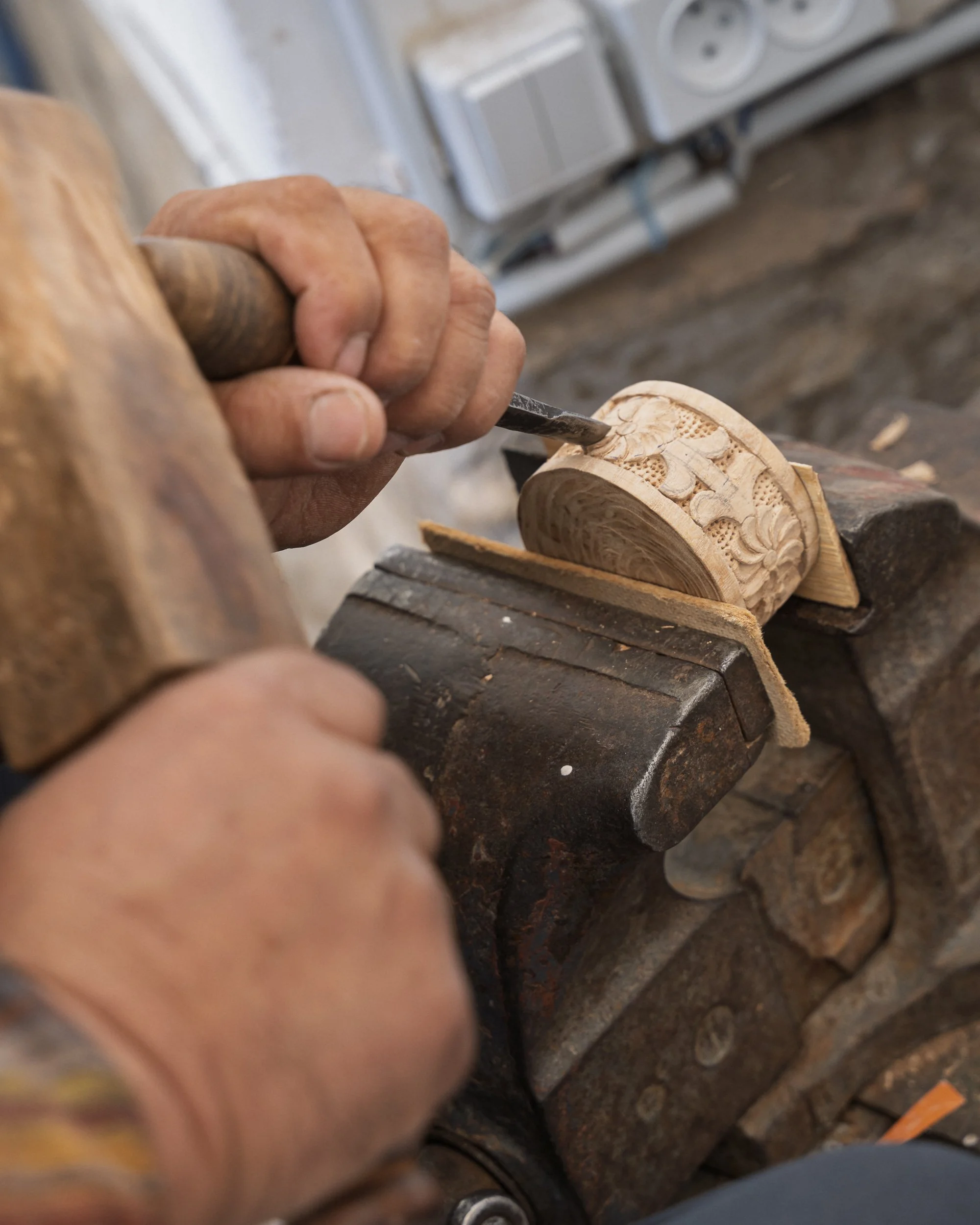
The Fergana Valley lies in the far east of Uzbekistan, a fertile basin shared with Kyrgyzstan and Tajikistan. We crossed into it from Osh. It’s the heartland of Uzbekistan’s craft traditions, above all silk weaving in Margilan and ceramics in Rishtan, and it gave us the chance to see working places rather than only restored monuments.
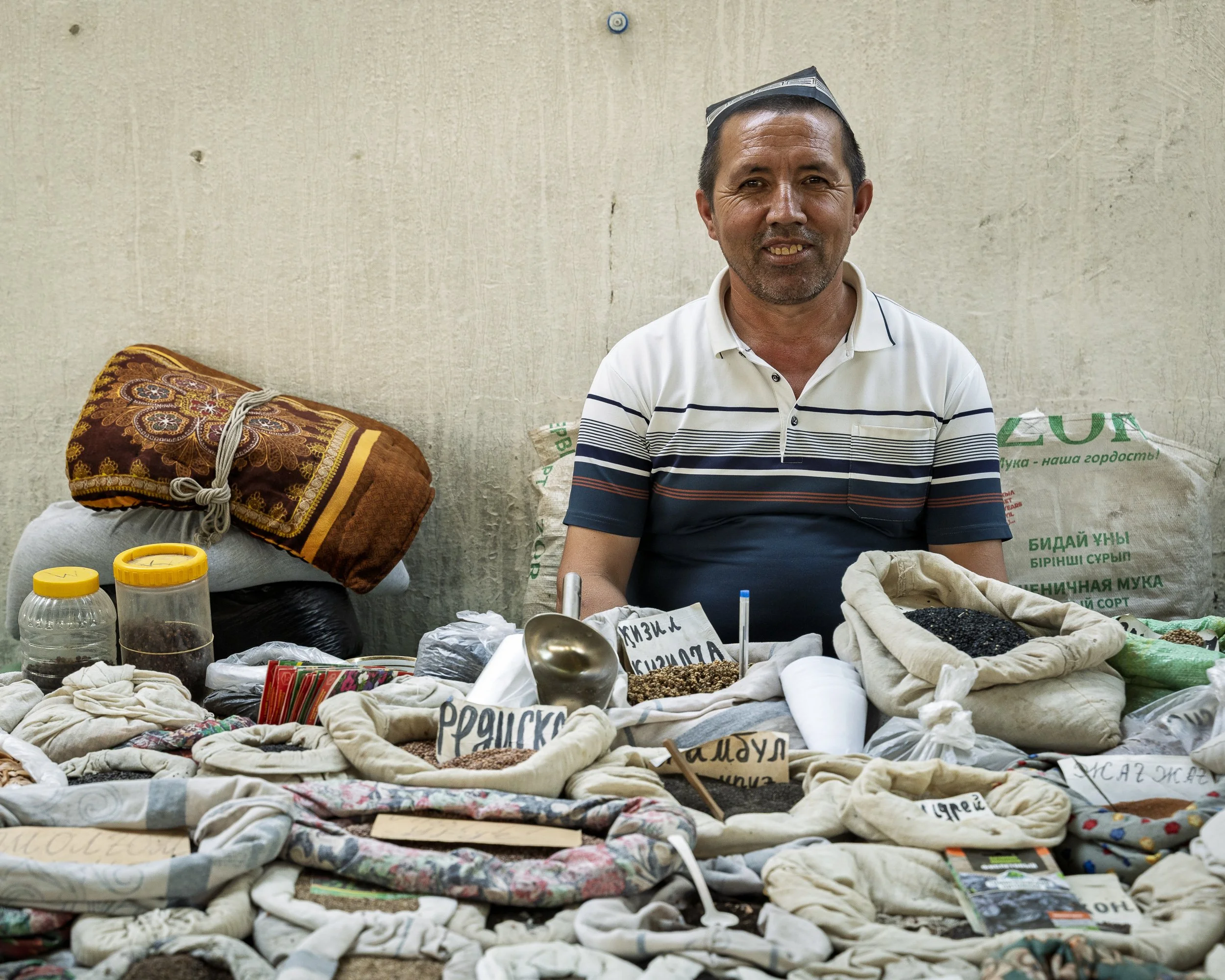
It was also one of the warmest, most hospitable places I’ve visited anywhere. Walking the streets of Margilan, I was invited into people’s homes, and everyone – especially the children – was desperate to practise their English. The bazaars and food were vibrant, colourful and insanely cheap.
To see more, have a look at Be Nice to Each Other
Karakalpakstan and the Aral Sea
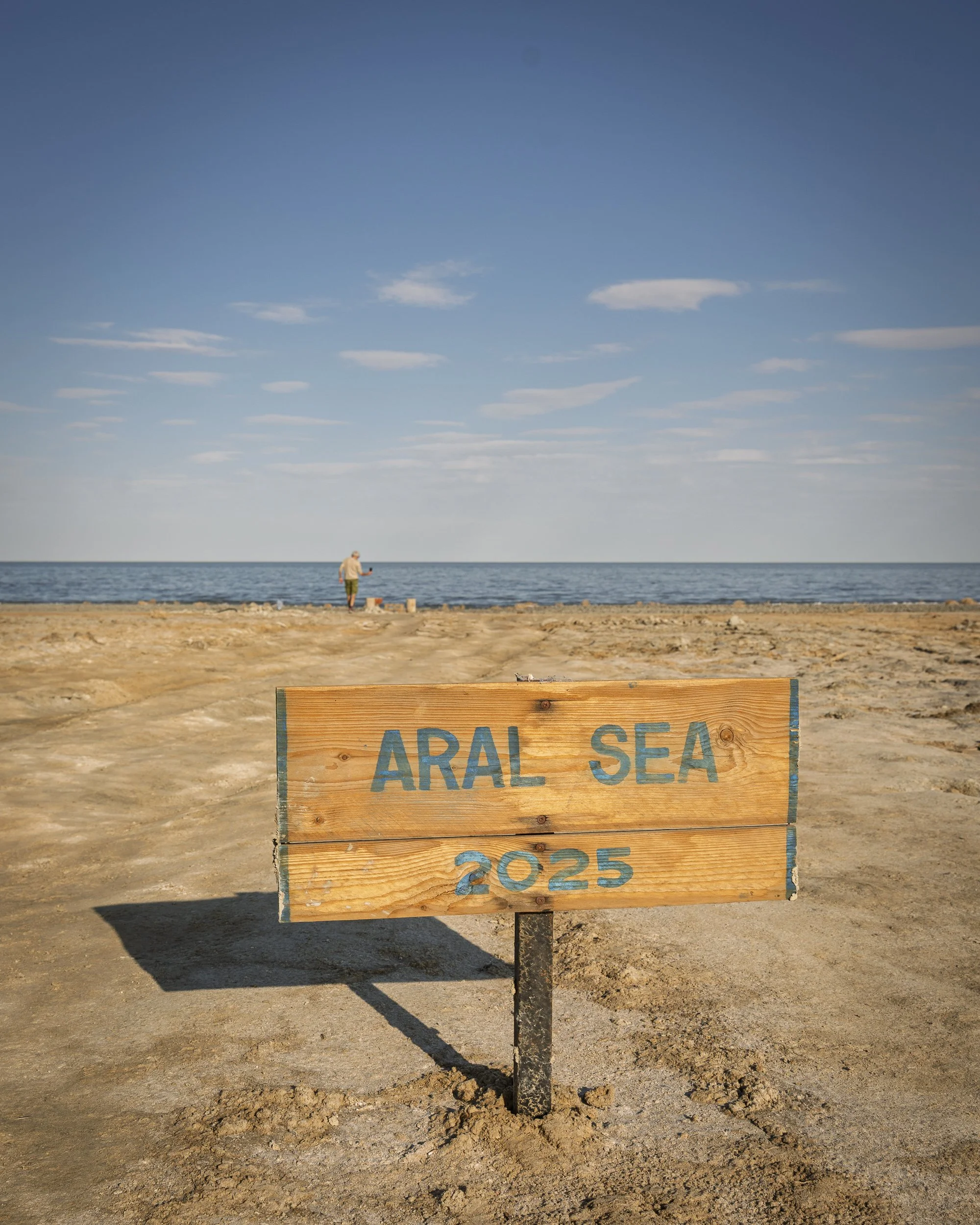
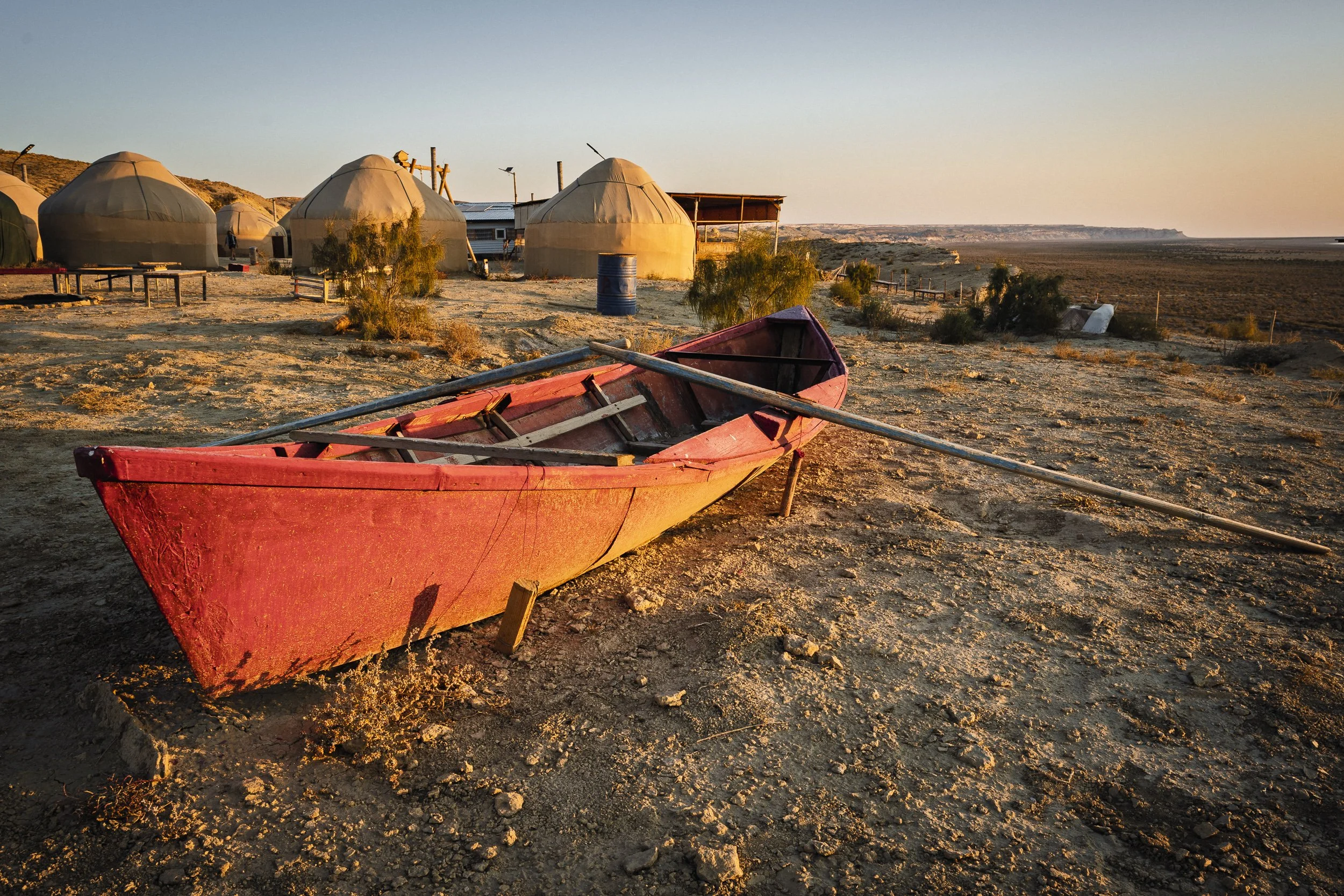
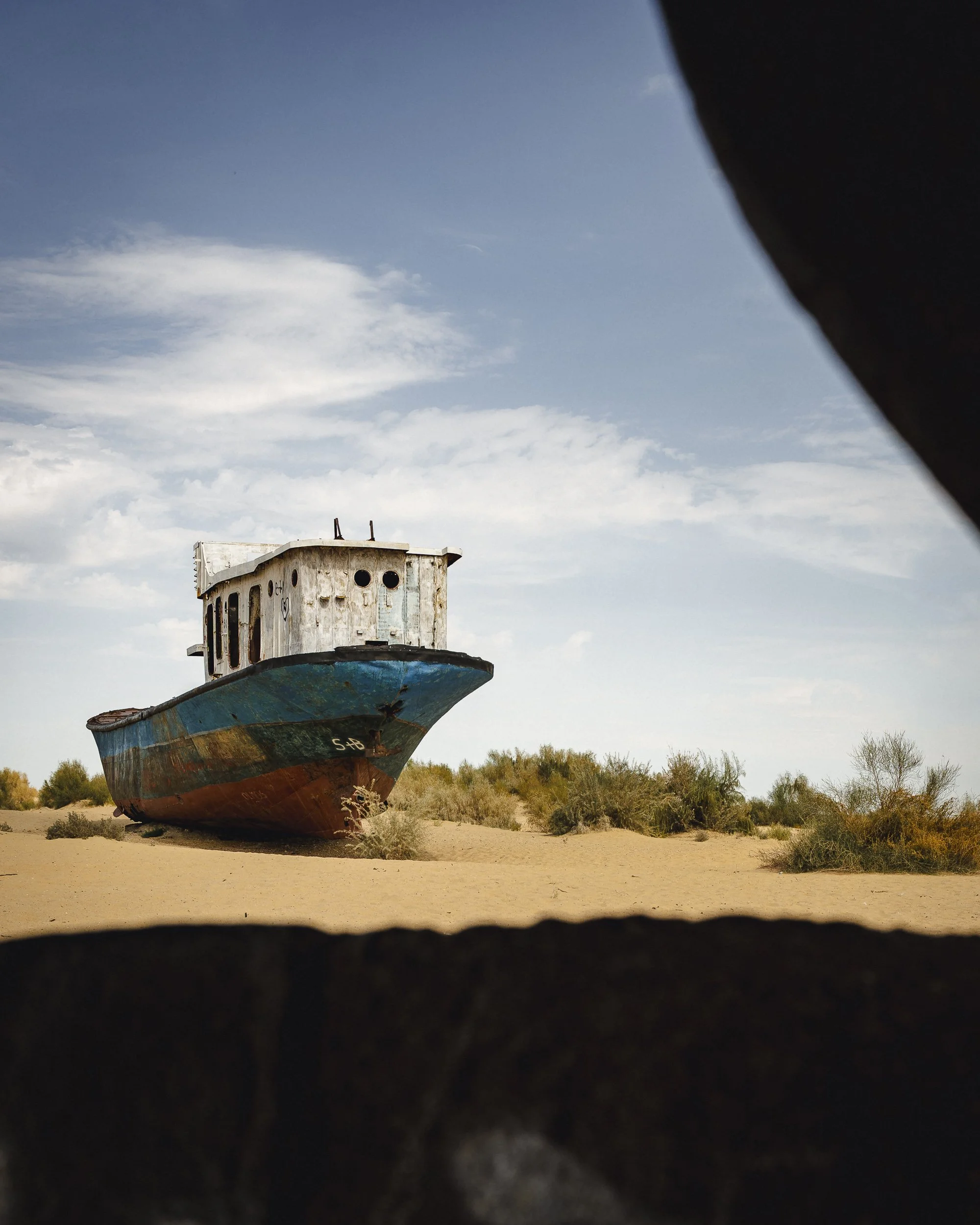
The Aral Sea wasn’t part of our original plan. When we had to abandon Lenin Peak in Kyrgyzstan, a few days opened up, so we researched our options on the road. A trip to what remains of the Aral Sea – once one of the world’s largest inland lakes, now largely desert after the rivers feeding it were diverted to irrigate Soviet cotton fields – seemed too extraordinary to miss. It was.
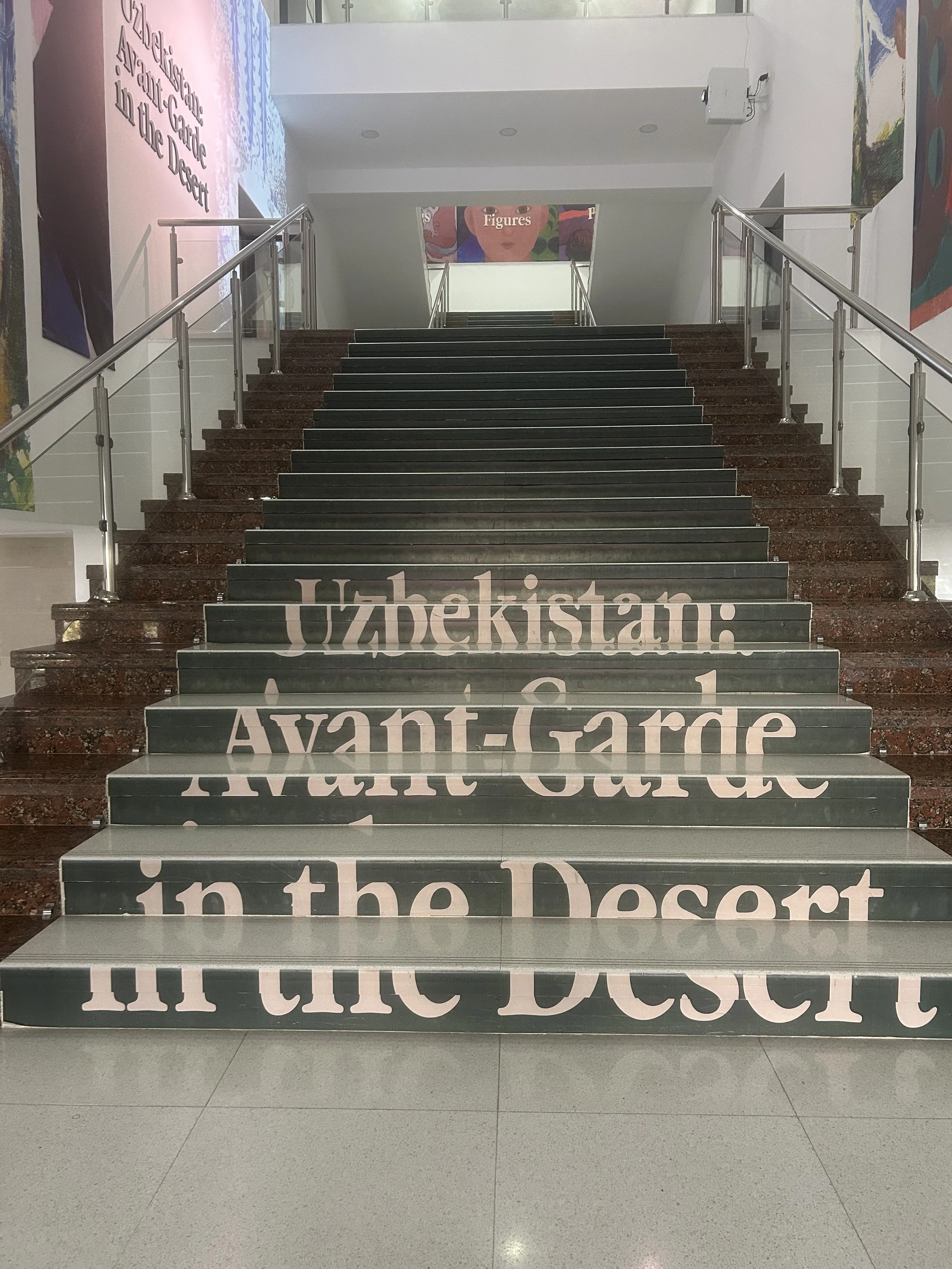
The gateway is Karakalpakstan, an autonomous region to the north-west of Khiva. Its capital, Nukus, holds one of the world’s most extraordinary collections of Soviet avant-garde art, well worth a visit in its own right. It was built by Igor Savitsky, a Russian artist who made Nukus his home and quietly gathered work the Soviet authorities had banned, far from the eyes of Moscow. Erika Fatland tells his story beautifully in Sovietistan.
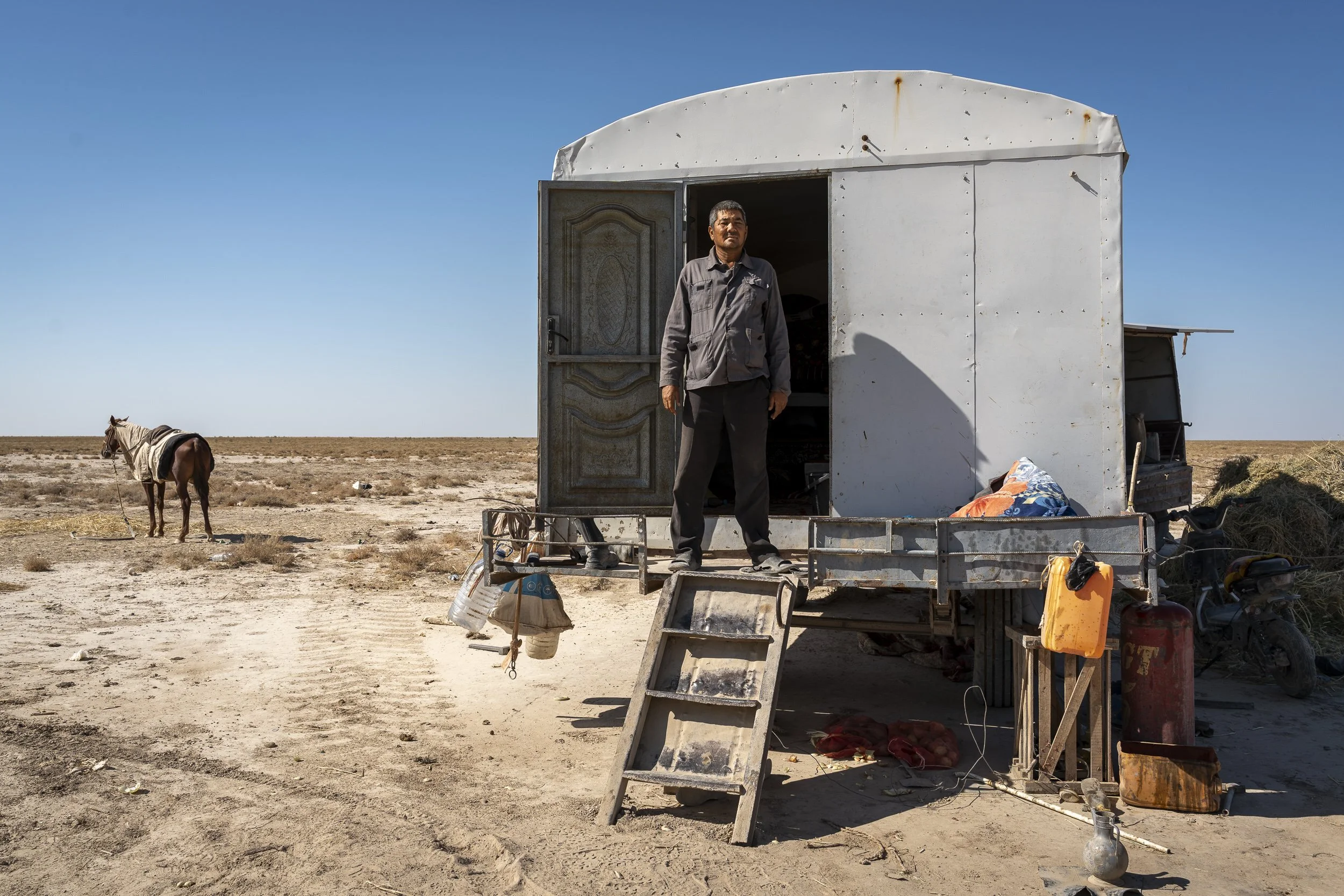
Beyond Nukus, it’s an unbelievably remote and hostile environment, and one I’m unlikely to experience again. From Moynaq, a once-thriving fishing port now marooned more than 150km from the shoreline, to farmers eking out a living in the harshest of conditions, it’s a sobering reminder of what happens when we get the environment badly wrong.
Explore my Aral Sea gallery
Our advice
If you have more time in Uzbekistan, add the bookends. The Fergana Valley in the east and Karakalpakstan in the west frame the Silk Road cities perfectly, and show you sides of the country most visitors miss.
For the Aral Sea, many operators advertise a two-day, one-night trip from Nukus to the shoreline. That means a lot of driving – up to nine hours each day. We spent two nights in a yurt camp near the shore and, if you have the time, would recommend the same. We travelled with Beqsala Tours in Nukus and would happily do so again.
The Practicalities
Independent Travel or Organised Tour?
We found Central Asia very doable as an independent journey. Then again, as two friends in our sixties with more time than hair, we had certain advantages: the luxury of planning and researching routes in advance, the flexibility to change course when something interesting and shiny appeared in front of us and enough experience to work things out on the fly.
Under your own steam
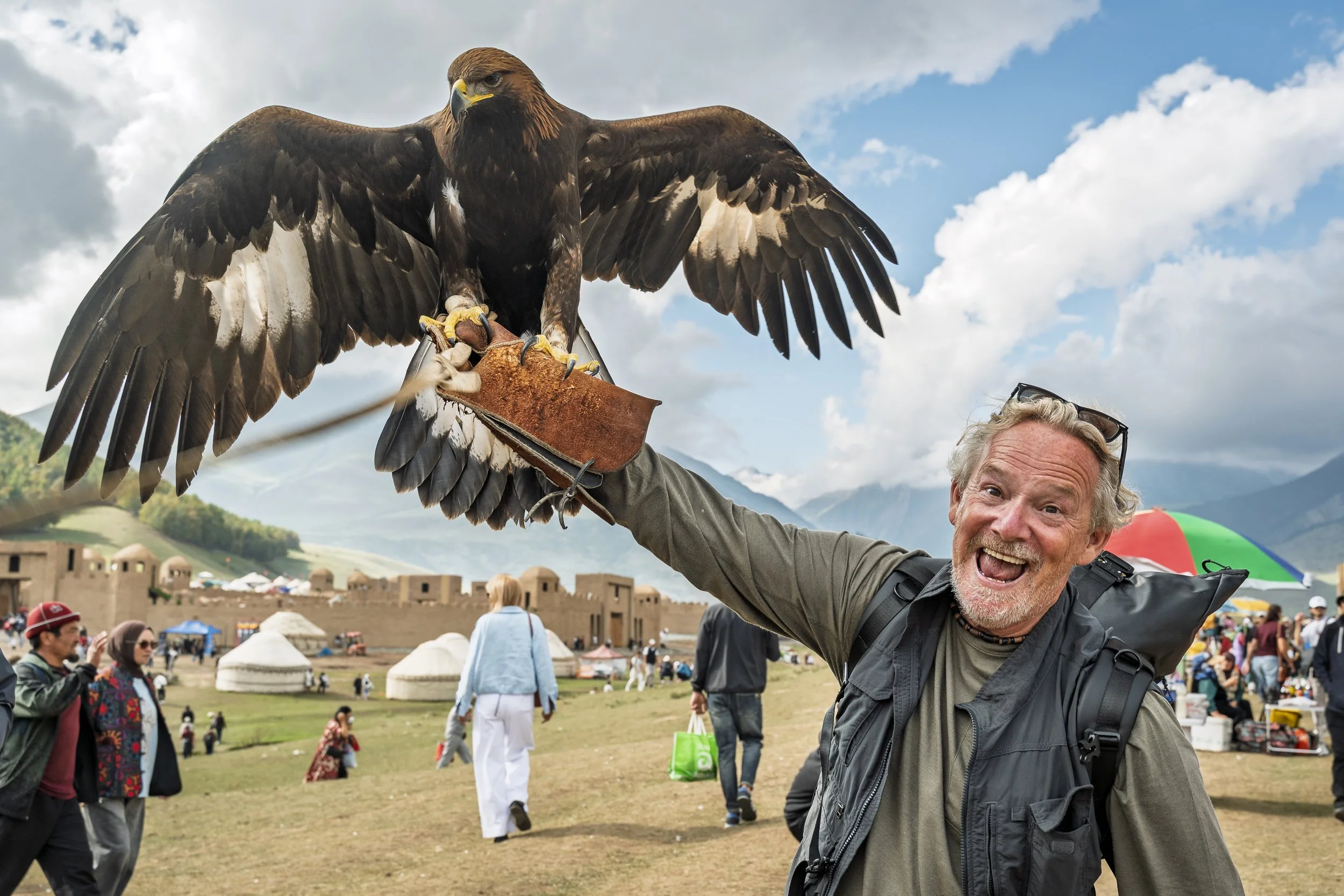
It largely worked for us. Many hostels in Kyrgyzstan have busy noticeboards for travellers looking to join a horse trek or share a 4x4 to somewhere remote. There are also active travel communities on Facebook and Reddit, and on Caravanistan, long the go-to site for practical information on travel in Central Asia.
We had a broad itinerary and were largely able to book places to stay as we travelled - but beware busy periods on the Silk Road cities in Uzbekistan where they can sell out quickly. It also means a lot of time online - and with ChatGPT or Claude
Travelling this way kept costs down (there’s a full breakdown below) and allowed experiences a more structured itinerary might have ruled out.
An organised tour
Independent travel isn’t for everyone. Central Asia is having a moment, and specialist operators such as Steppes Travel, Wild Frontiers and Intrepid run small-group and tailor-made trips lasting anything from a week to a month or more.
For those with less time, deeper pockets or no time or appetite for the planning, they could be a good alternative. What you spend in cash, you might well earn back in fewer shredded nerves, and in the knowledge of local guides and experienced operators.
To be fair, a more structured itinerary would probably have got us to the Alay Valley and Lenin Peak, which we missed in Kyrgyzstan.
A bit of both
It doesn’t have to be all or nothing. Although we travelled independently for most of the journey, we booked local walking tours in the Silk Road cities and arranged our 4x4 trip to the Aral Sea through local contacts, using GetYourGuide as a handy planning tool.
We also tried the group experience once, on an organised day trip across the border to Penjikent in Tajikistan. I suspect our guide still remembers me. While he marched the group through the market behind his flag, held aloft, I was chatting to stallholders, taking photographs and getting thoroughly distracted by interesting conversations. That’s no criticism of him – he had a schedule to keep – but it confirmed what I already suspected. A tour works well for those who appreciate that level of support. For me, the spontaneity and opportunistic discovery are a large part of the pleasure.
Worth knowing
Hostel noticeboards, Facebook groups, Reddit and Caravanistan are excellent for finding fellow travellers to share treks, drivers and 4x4 costs, often at short notice.
We travelled independently and mixed transport according to the circumstances. There is no single best way to get around Central Asia. In the cities and along Uzbekistan's main rail corridors, trains are an obvious choice. In smaller towns, marshrutkas are cheap and widespread. For mountain roads, remote destinations or a day with several stops, a private driver can be money well spent. And almost everywhere, the YandexGo taxi app rarely let us down.
Travel in Central Asia
Get around, get around, I get around
Trains
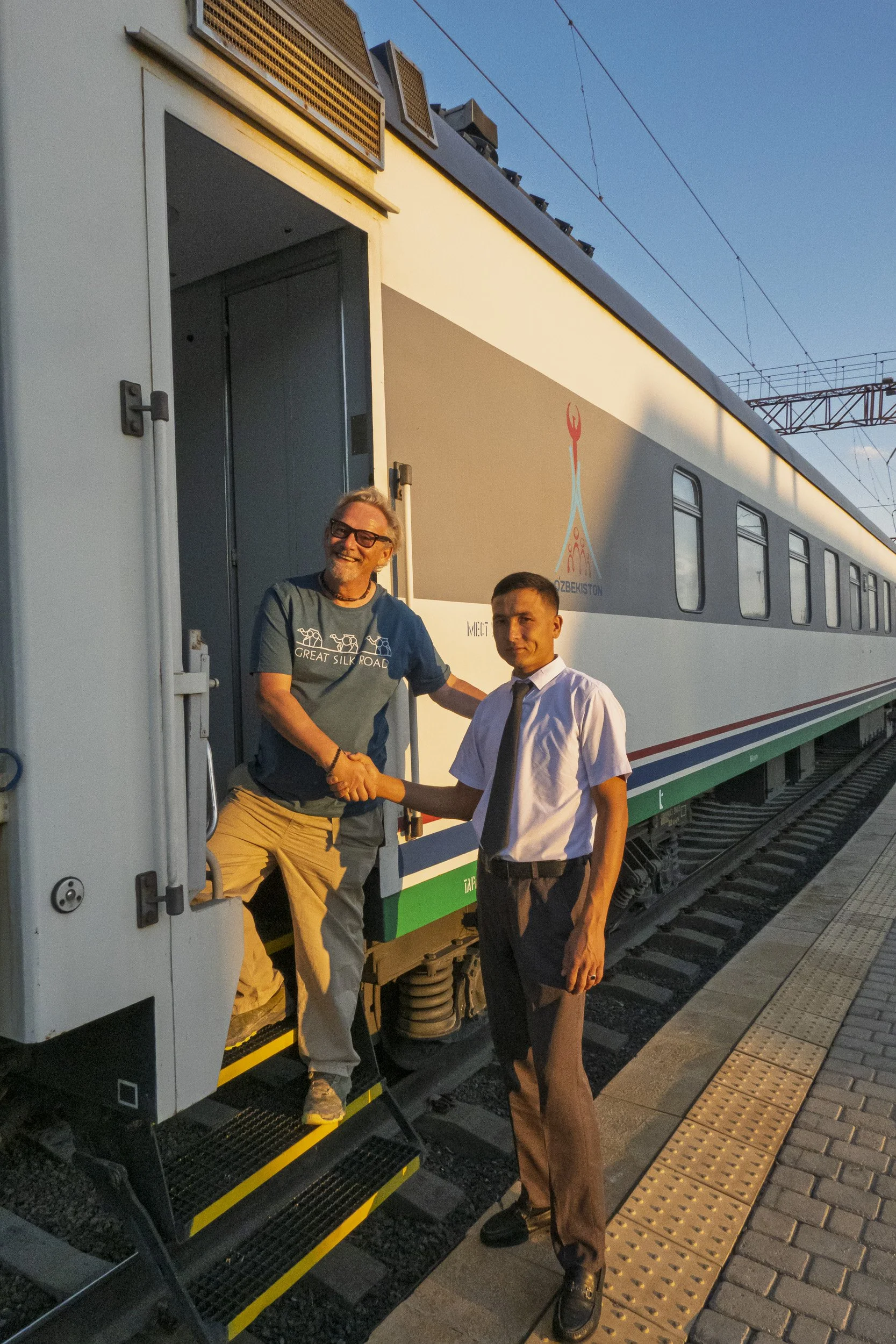
Uzbekistan’s train network is extensive, runs the length of the main Silk Road cities and has been upgraded with high speed trains. We travelled from Tashkent all the way to Khiva, stopping in Samarkand and Bukhara along the way - more than 1000 kilometres by train.
It’s also very cheap - $20 for a 14 hour sleeper from Khiva to Tashkent.
Be warned though, tickets sell out quickly although they are fairly straightforward to book on Uzbekistan Railways. There’s also an app to download
Private car and 4×4 hire
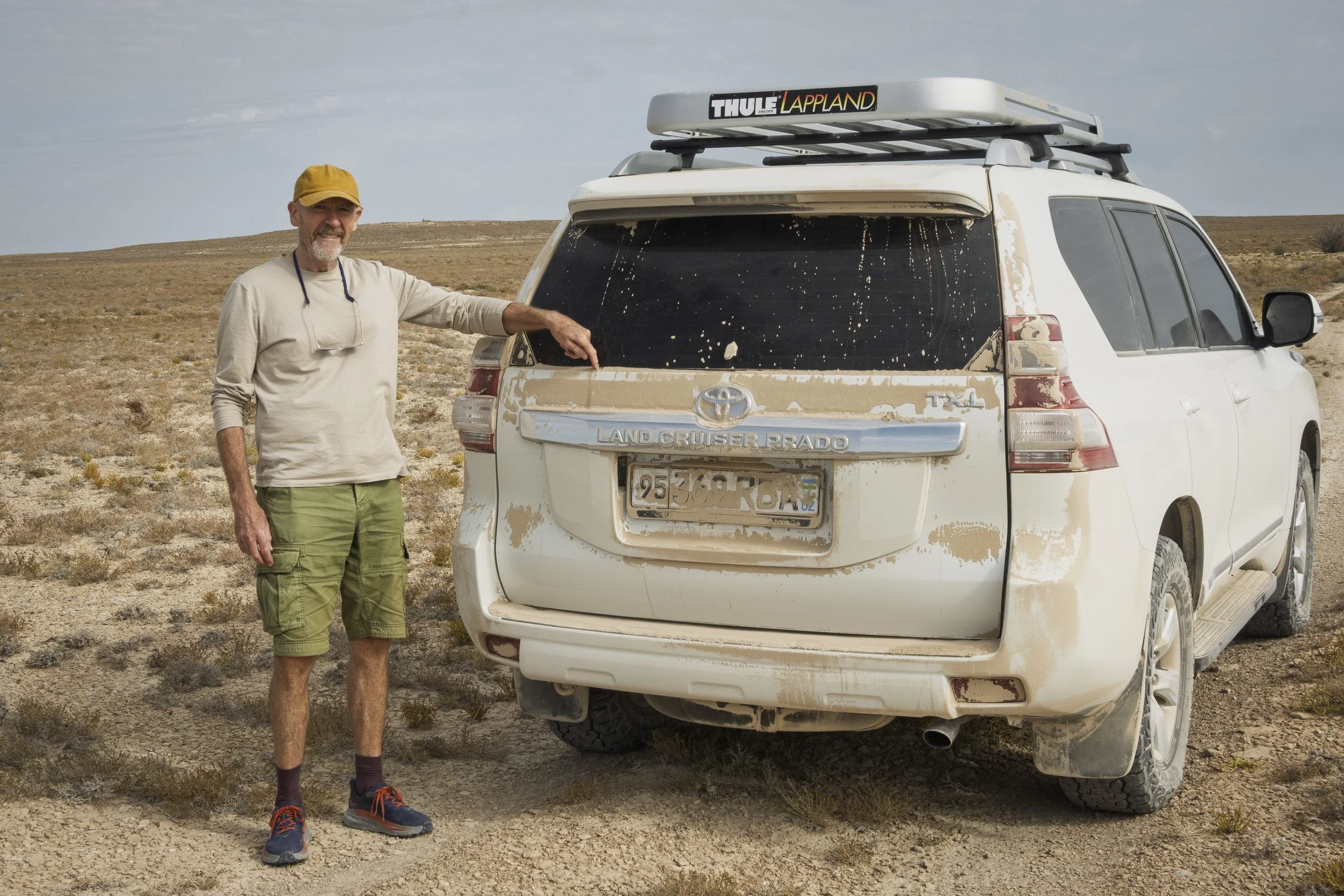
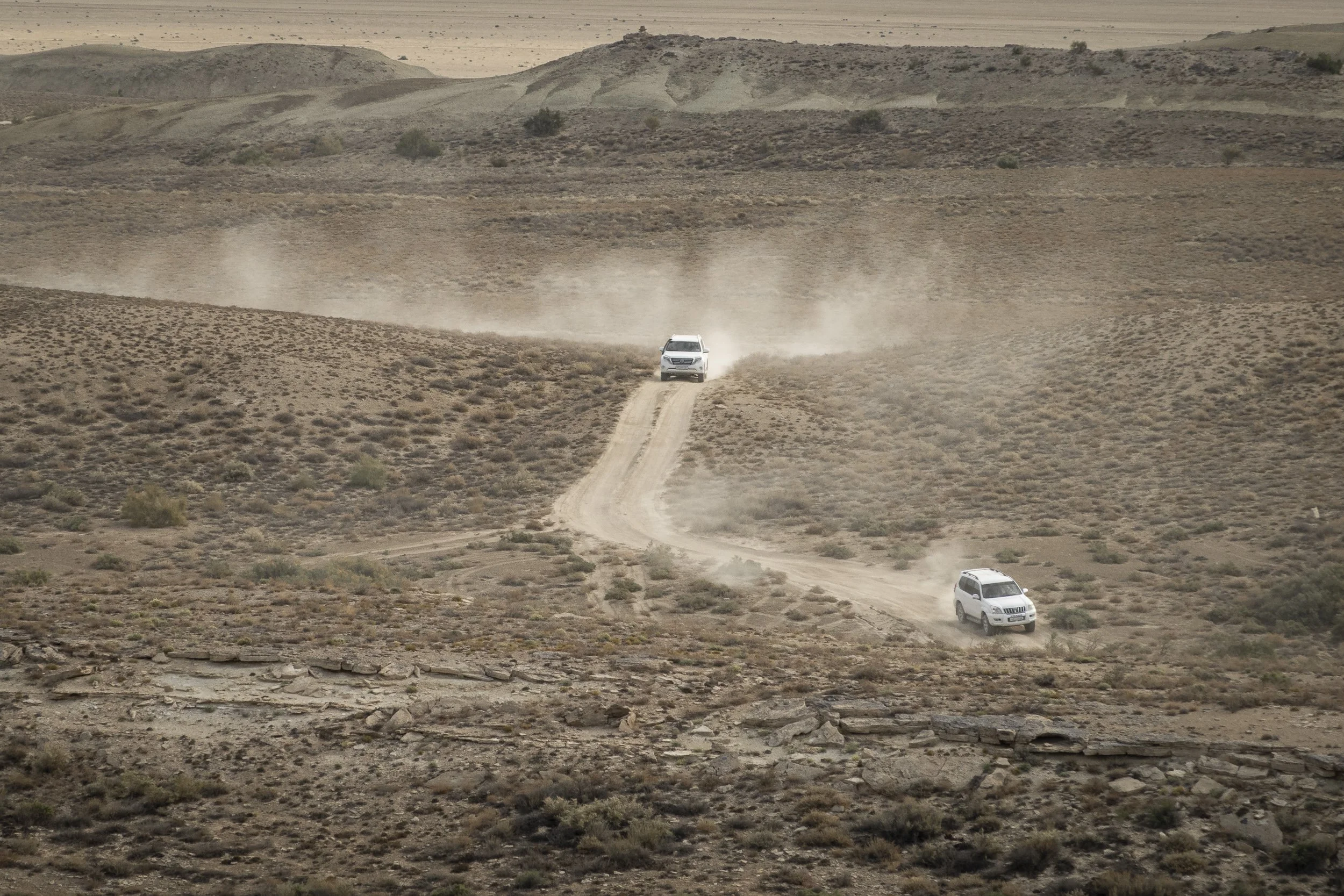
Given the state of the roads in some areas, a driver with a 4x4 is often the only practical way to reach places such as the Kyrgyz mountains or the Aral Sea. Agree the route, price and what’s included before setting off. Online forums and hostel noticeboards are also good for finding spare seats or fellow travellers to share the cost.
If you’d rather drive yourself, there are plenty of hire companies in and around Bishkek, and we met lots of people doing exactly that. Expect to pay roughly $70 to $150 a day for a 4x4, depending on how long you hire it and how plush you want your wheels to be – though you can be certain that after a week or two on these roads, they won’t have that showroom gleam. You’ll also need an International Driving Permit. Do the sums, though: once you add fuel, deposit and insurance, a local driver with his own vehicle often costs much the same.
Marshrutkas
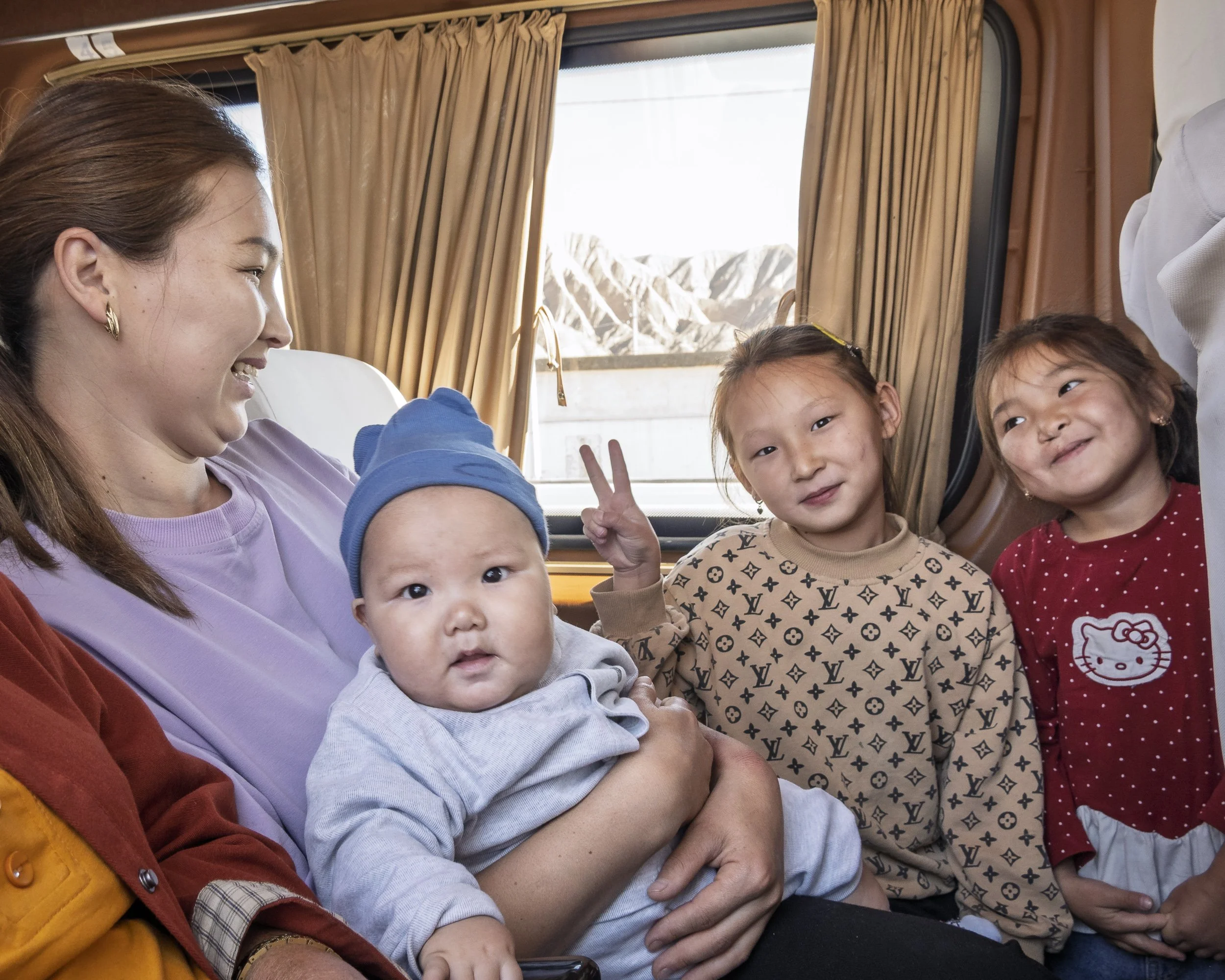
Marshrutkas – shared minibuses – are the backbone of public transport in Kyrgyzstan, and they can be a great way to get around. But a couple of tips.
First, buying a ticket isn’t the same as getting a seat. You may end up standing in the aisle for four hours – not much fun once the bus hits the unpaved mountain roads.
Second, the economics can be interesting. You agree a price, and then, just as the bus is ready to leave and getting off is almost impossible, the price goes up.
But overall, they’re a friendly and remarkably cheap way to travel – think around $7 for a seven-hour journey.
Yandex Go - to go to taxi app
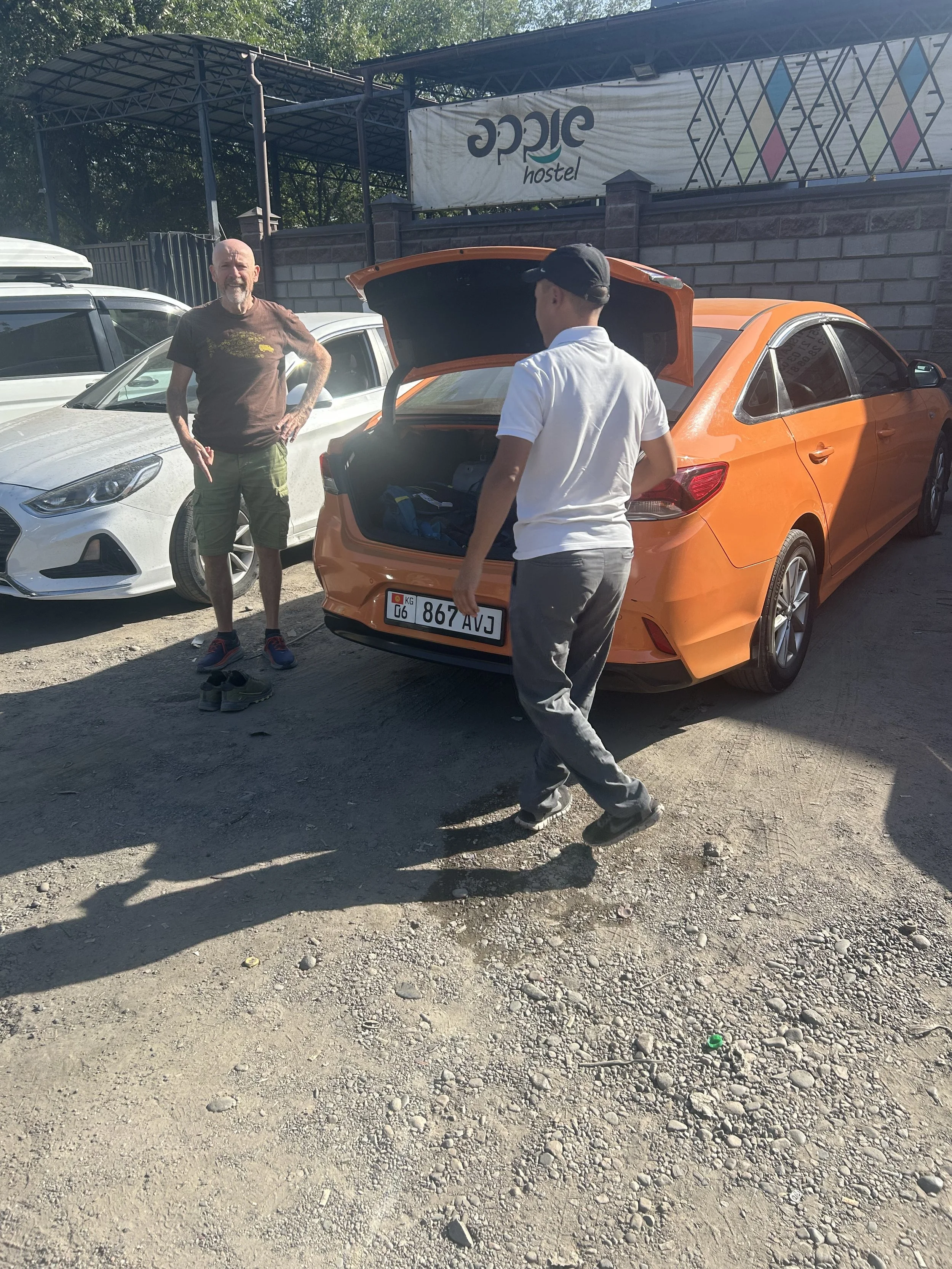
We used Yandex Go in almost every city. It’s the region’s answer to Uber: very easy to use, and often much cheaper than the taxi drivers touting for business at train and bus stations.
One tip: download it before you leave home. I did, simply because I had some spare time, and I’m glad – several travellers we met had real trouble installing it once they were in Central Asia.
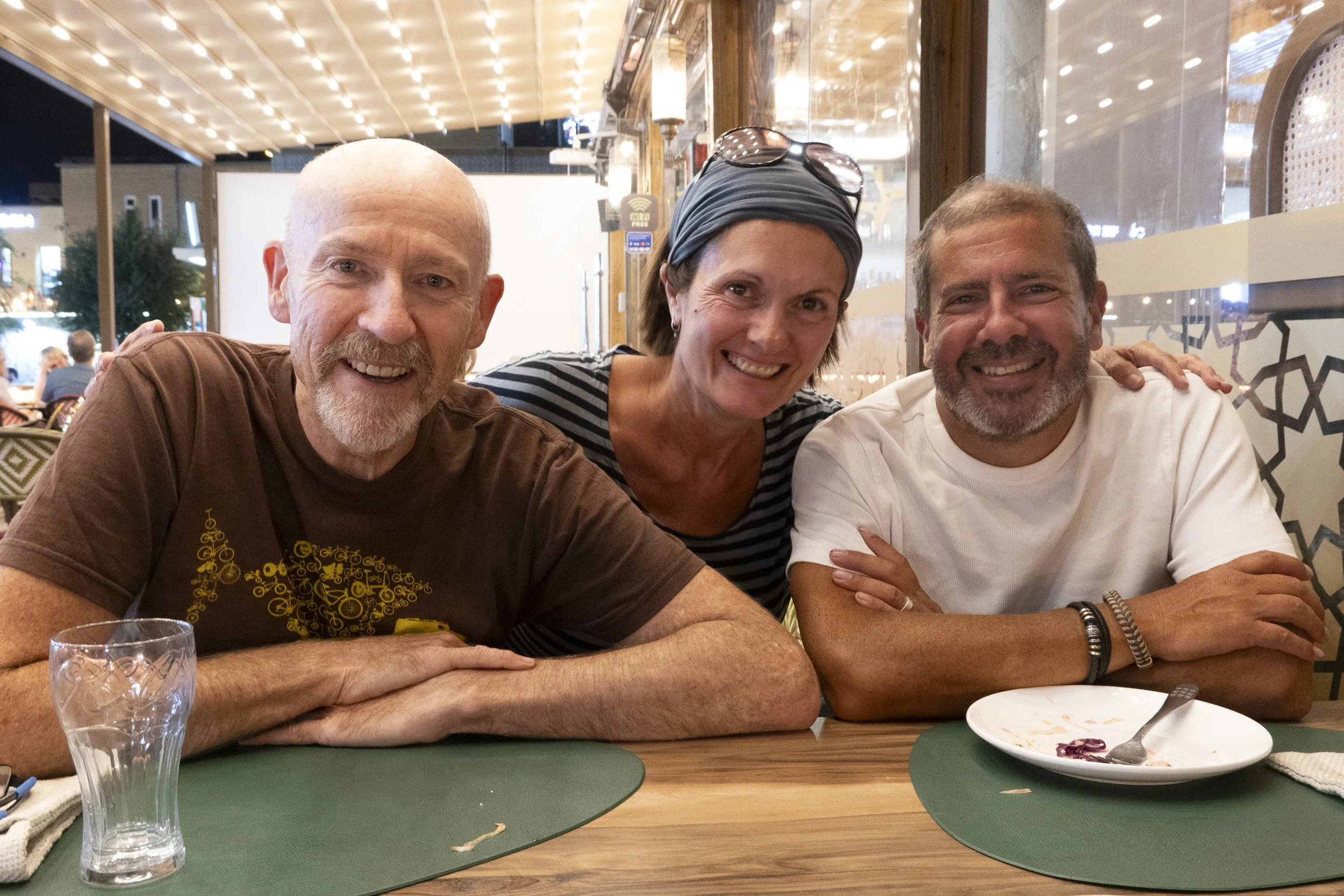
Or drive the whole way
Of course, you could always drive the lot. If you’ve ever harboured dreams of travelling overland from Europe to Singapore, John and Sam have the blueprint. We first met this inspirational pair, along with Pedro, their Land Rover Defender, in Osh, then kept bumping into them in Bukhara and Khiva. You can follow their adventures on Instagram and YouTube.
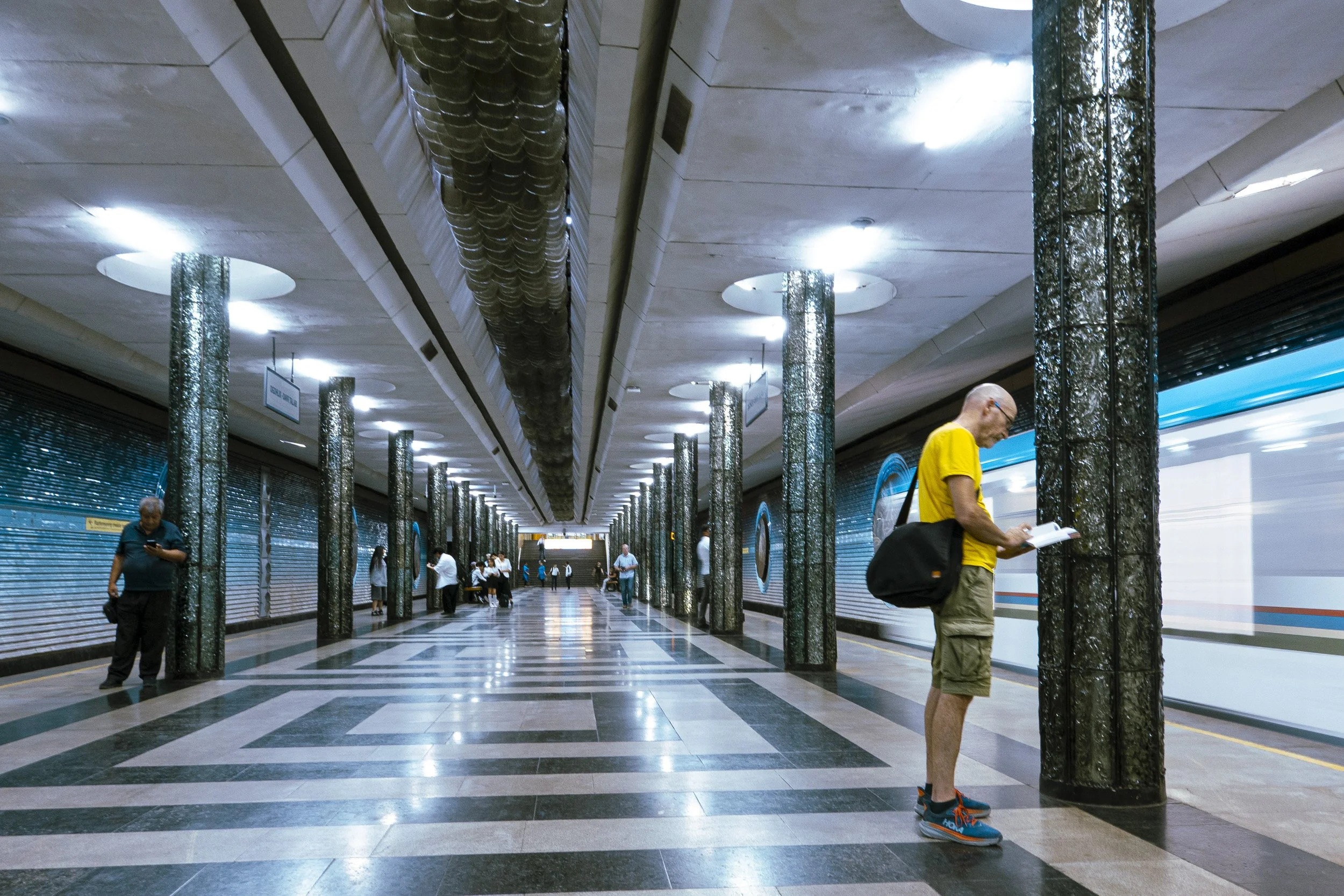
And finally. I couldn’t possibly talk about transport in Central Asia without a shout out to the Tashkent metro. Less a way of getting around than an experience in its own right. Opened in 1977, it was the first metro in Central Asia, and many of its stations are lavish Soviet-era showpieces of marble, mosaics and chandeliers. Photography was banned until 2018; now it’s one of the city’s unexpected highlights, and a ride costs pennies.
Kosmonavtlar station, Tashkent: a monument to Soviet space exploration
Our advice for getting around
- train Book Uzbek trains early. They're cheap, comfortable and popular, so use the Uzbekistan Railways app and don't leave it to the last minute.
- airport_shuttle Take marshrutkas with your eyes open. A ticket isn't a seat, and the price can rise just as the bus is about to leave – but they're friendly and remarkably cheap.
- local_taxi Download Yandex Go before you leave home. It's the region's go-to taxi app, and some travellers struggle to install it once they arrive.
- terrain Use a 4x4 for remote places. Hire a driver or drive yourself, but agree the route and price upfront, and allow far more time than the map suggests.
- subway Ride the Tashkent metro at least once, for the stations as much as the journey.
Border Crossings
We crossed three land borders on foot: Kazakhstan to Kyrgyzstan, Kyrgyzstan to Uzbekistan, and Uzbekistan to Tajikistan and back. The formalities were the usual ones, and the longest we queued was perhaps 45 minutes.
What really struck me was how friendly the officials were, on both sides of every post. Each time we were welcomed with a stamp, a smile and a genuine greeting. As we left Tajikistan, the officer thanked me for visiting and asked us to come back soon.
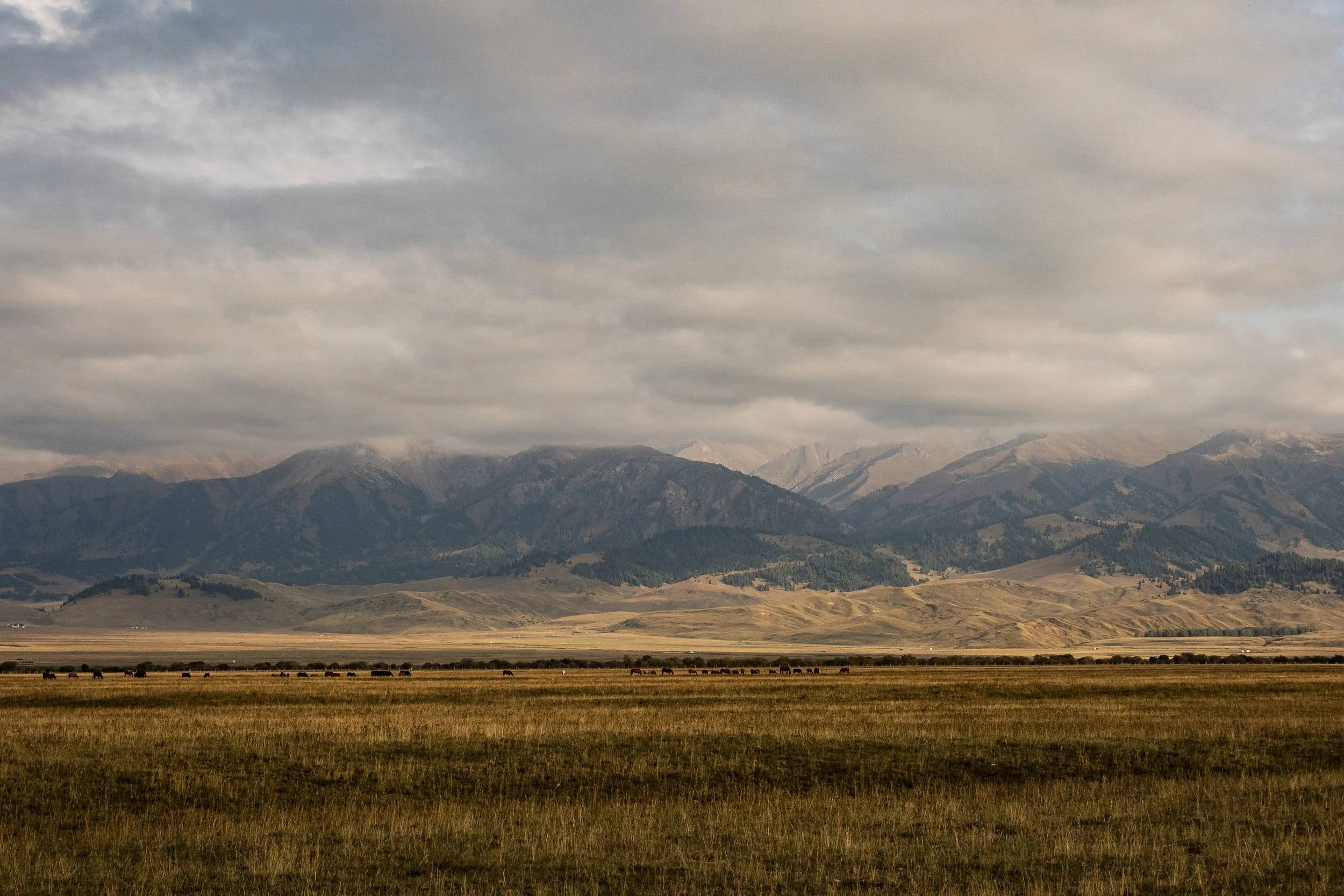
Land border crossing from Kazakhstan en route from Almaty to Karakol
More than a few immigration officials elsewhere in the world could benefit from some Central Asian customer service training.
Worth knowing
Check your visa before you go. Rules vary by passport and change often. At the time of writing (November 2026), British passport holders need an e-visa for Tajikistan, applied for online before travel, while EU passport holders can enter visa-free for 30 days. If you're heading for the Pamir Highway, you'll also need a separate GBAO permit, whatever your passport.
Money, Sims, Apps and Staying Connected
Money, Cash, cards or both?
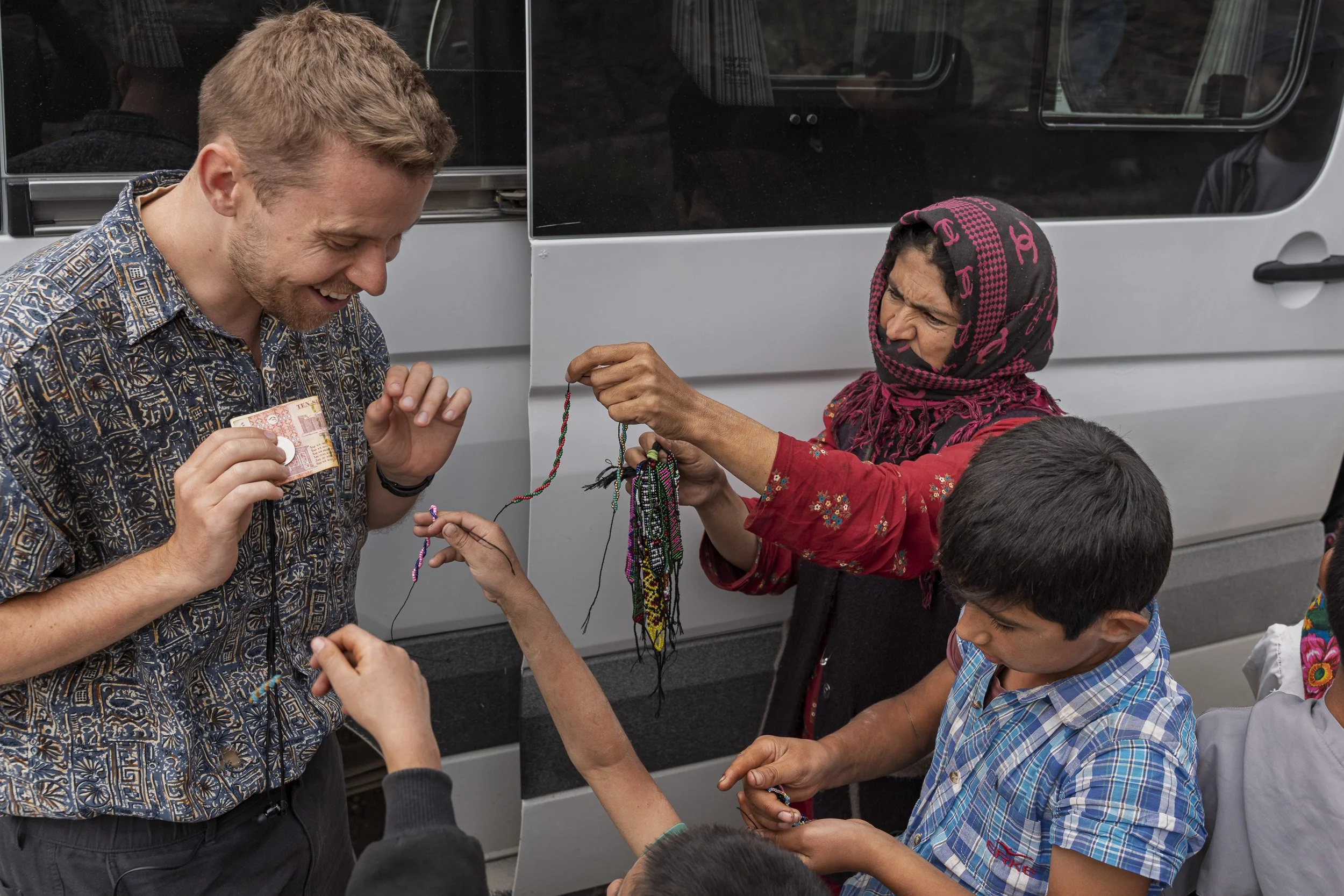
We had heard most of Central Asia remains a resolutely cash economy. Not quite the case, there were plenty of places especially in larger towns and cities where we could pay by card or digital app.
However, cash remains useful, particularly outside the major cities and for smaller transactions. Take a sensible mix of payment options and don't assume every cash machine or card terminal will work when you need it.
If you bring US dollars, pay attention to the condition of the notes. I had some $20 bills withdrawn from an ATM in New York the previous week — perfectly acceptable as tips in Greenwich Village bars — but refused in Uzbekistan because they had pen marks on them. Pristine notes are a much safer bet. And the larger the denomination the better: $50 or $100 bills are much easier to exchange than $20s.
SIM cards and staying connected
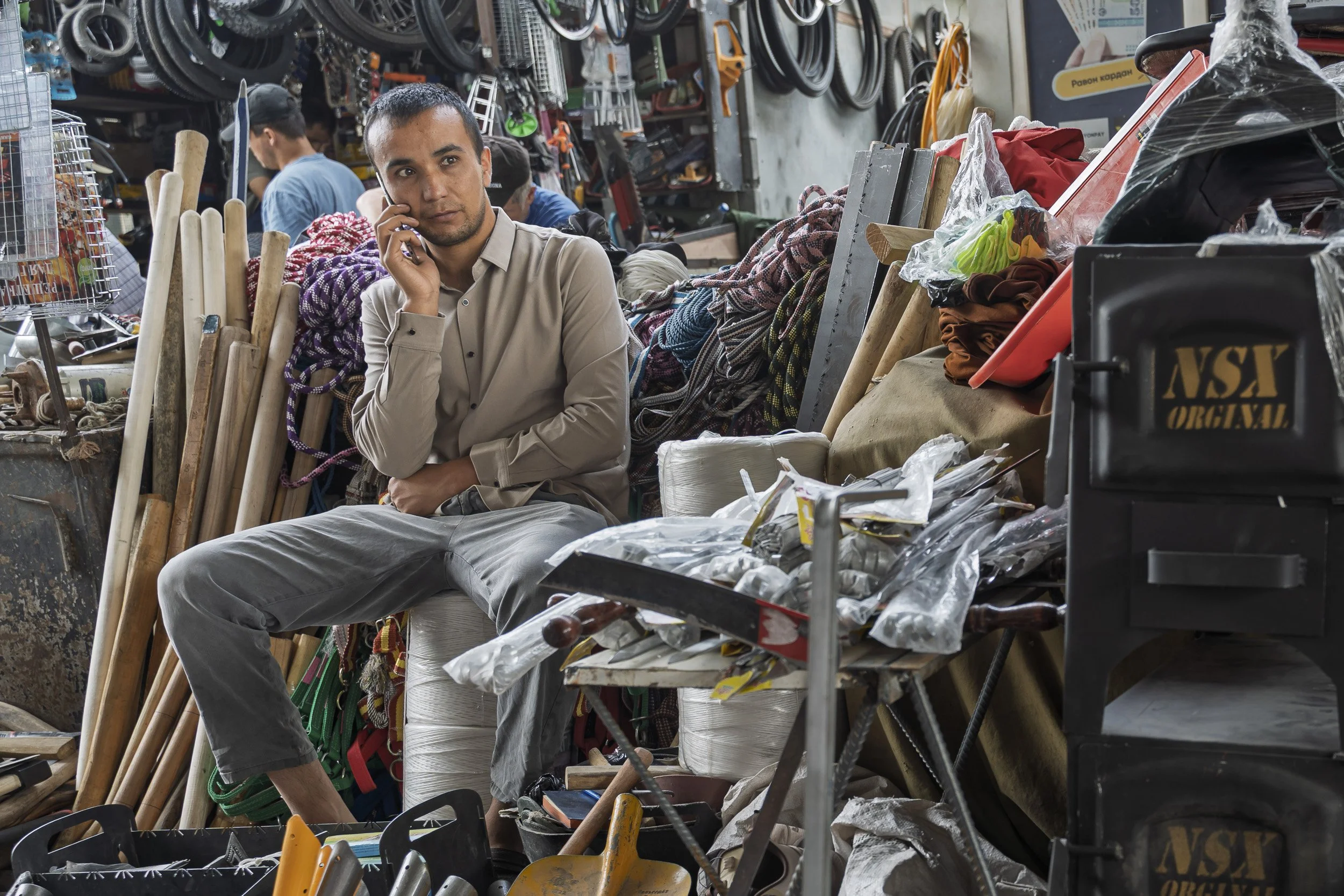
My friend bought a roaming package before he left the UK. I relied on local SIMs.
There are kiosks everywhere, with helpful staff who will insert the SIM and activate it for you while you wait. You'll need your passport. O! worked for us in Kyrgyzstan with branded shops in almost every major town and UzCell in Uzbekistan.
Data packages are inexpensive — roughly US$10 for a month with 50GB of data thrown in. A working local connection made transport, translation and bookings considerably easier.
There’s pretty good 4G and LTE connections in most places, but it can become much more difficult in the high country of Kyrgyzstan and the far west of Uzbekistan.
The apps we actually used
- translate Google Translate – conversations, menus, signs and anywhere gestures only got us so far.
- auto_awesome AI assistants – Claude, ChatGPT, DeepSeek and the rest proved genuinely useful for planning routes, comparing options and decoding the unfamiliar. Just corroborate anything important, such as visas, border crossings and timetables, against official sources before you rely on it.
- chat WhatsApp – keeping in touch with guesthouses, drivers and people we met.
- local_taxi Yandex Go – cheap, reliable city taxis. Download it before you leave home.
- train Uzbekistan Railways – booking Uzbek train tickets, which sell out quickly.
- photo_camera Instagram – staying in contact with people we met and finding local recommendations.
- account_balance_wallet Tricount – recording shared spending without constant mental arithmetic.
Telegram is also widely used across the region, so it's worth having too. And download apps and offline maps before you go: a local SIM helps enormously, but signal isn't guaranteed in the mountains.
A few photography tips
Central Asia is an extraordinary place to photograph, from the tilework of the Silk Road cities to the faces in the Fergana Valley’s markets and the vast empty spaces of the Kyrgyz high country. I’ve written about street photography in Uzbekistan in more detail in a separate dispatch, Be Nice to Each Other, but a few practical points are worth making here.
A few photographs from my Central Asian galleries
For photographers
- wb_twilight Chase the early light. The Silk Road cities in the first hour of the day, before the stalls and tour groups, are a different place entirely.
- waving_hand Ask nicely. People were overwhelmingly happy to be photographed, but a smile, a gesture and a moment's conversation made all the difference.
- nights_stay Pack a travel tripod for the high country. Clear air, altitude and almost no light pollution make the Kyrgyz mountains one of the best places anywhere for night skies.
- cleaning_services Keep your kit clean. It can get incredibly dusty, so pack lens cloths and cleaning fluid and check your sensor regularly – unless you want to spend hours removing dust spots in editing afterwards.
- battery_charging_full Carry spare batteries and a power bank. Charging points can be scarce in yurt camps and on long road days, and you don't want to miss the shot of the trip.
- airplanemode_inactive No drones in Uzbekistan. Importing or flying one without prior permission is effectively banned, and the penalties range from confiscation to fines and worse. Kyrgyzstan is far more relaxed – we saw plenty of drones in the air – but check the current rules before you go.
The damage - how much we spent
We kept a shared account of our September 2026 spending in Tricount. The figures below are for two travellers, in US dollars, and are more useful than a generic “daily budget” because they show how we actually travelled.
What we spent in September · two travellers · US$
Excludes return flights from the UK to Almaty (around £600 each) and a little spending in early October.
That was comfortable independent travel — not luxury, and certainly not an exercise in spending as little as possible. We paid for private transport and excursions when they made sense, ate out every evening and stayed everywhere from hostels and yurt camps to the occasional rather splendid historic hotel.
There were some remarkable bargains. Excellent dinners in the Fergana Valley for $4, nights in a yurt for $20 and a 14-hour overnight sleeper train for just $20 — although we arrived feeling as though we'd walked the entire distance.
At the other end of the scale, we spent $400 each on a two-night 4×4 expedition to the Aral Sea. Not cheap by local standards, but worth every dollar for an experience we would otherwise have missed.
Your costs will vary with route, season, accommodation choices and the number of organised excursions. But hopefully these figures give you a reasonable idea of what five weeks of independent travel might cost.

Food
Meat, pomegranates and too much plov
Meat, bread and open fires
Central Asia is a carnivore’s paradise, especially if you like mutton, beef or horse. Most of it is grilled as shashlik (think kebabs) or boiled in hearty soups.
Vegetarians? Well, good luck. There are options in the larger cities, but it takes more effort than many travellers expect.
Expect plenty of lagman, hand-pulled noodles with regional twists (the green, dill-flavoured noodles in Khiva are well worth trying), and, of course, the ubiquitous plov.
And bread.
The bazaars
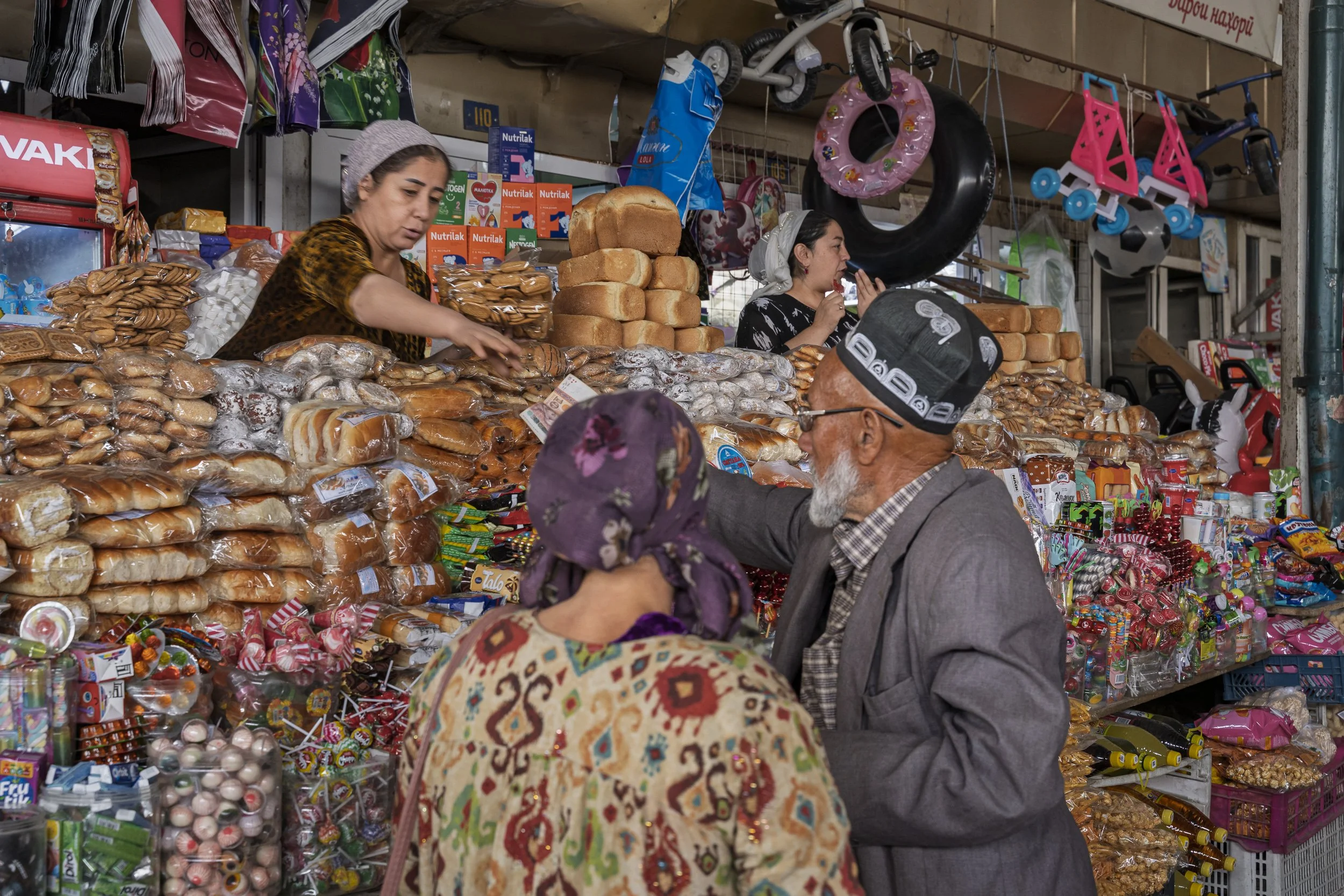
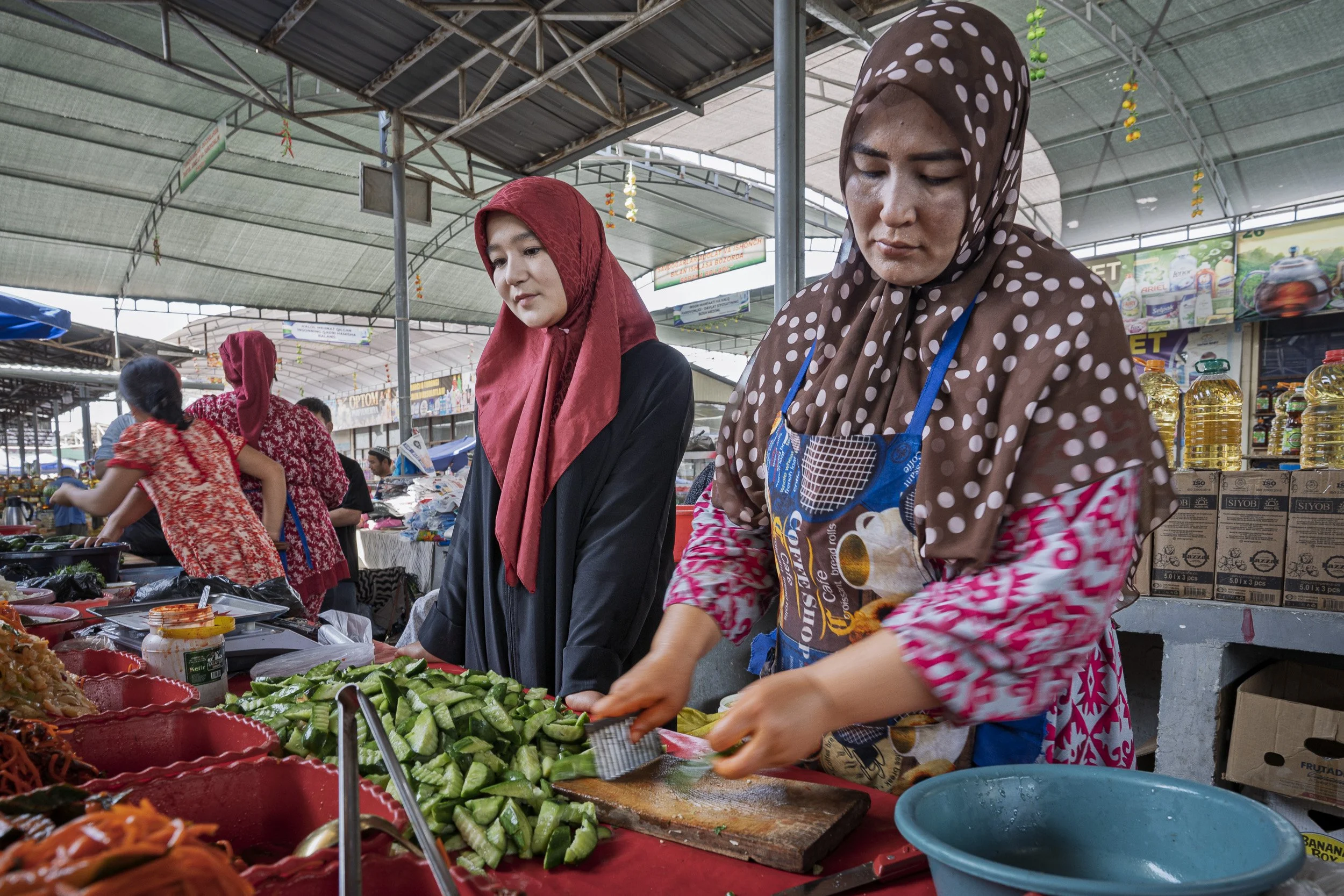
The bazaars are a feast in themselves, and Uzbekistan’s are the most spectacular of all: towers of tomatoes and peppers, pyramids of melons, sacks of nuts and dried apricots. Wandering the markets turned into one of the great pleasures of the trip, from Tashkent’s vast Chorsu Bazaar under its great green dome to the Margilan bazaar in the Fergana Valley.
If pomegranates or apples are your thing, you’re in the right part of the world. Almaty takes its name from the Kazakh word for apple, and the wild ancestor of the apple we all eat is said to have come from the mountains of Central Asia. The city wears the connection proudly: at the foot of the Kok Tobe cable car, a vintage yellow Moskvich sits on the pavement, stuffed to the windows with fruit.
Kimchi on the Silk Road
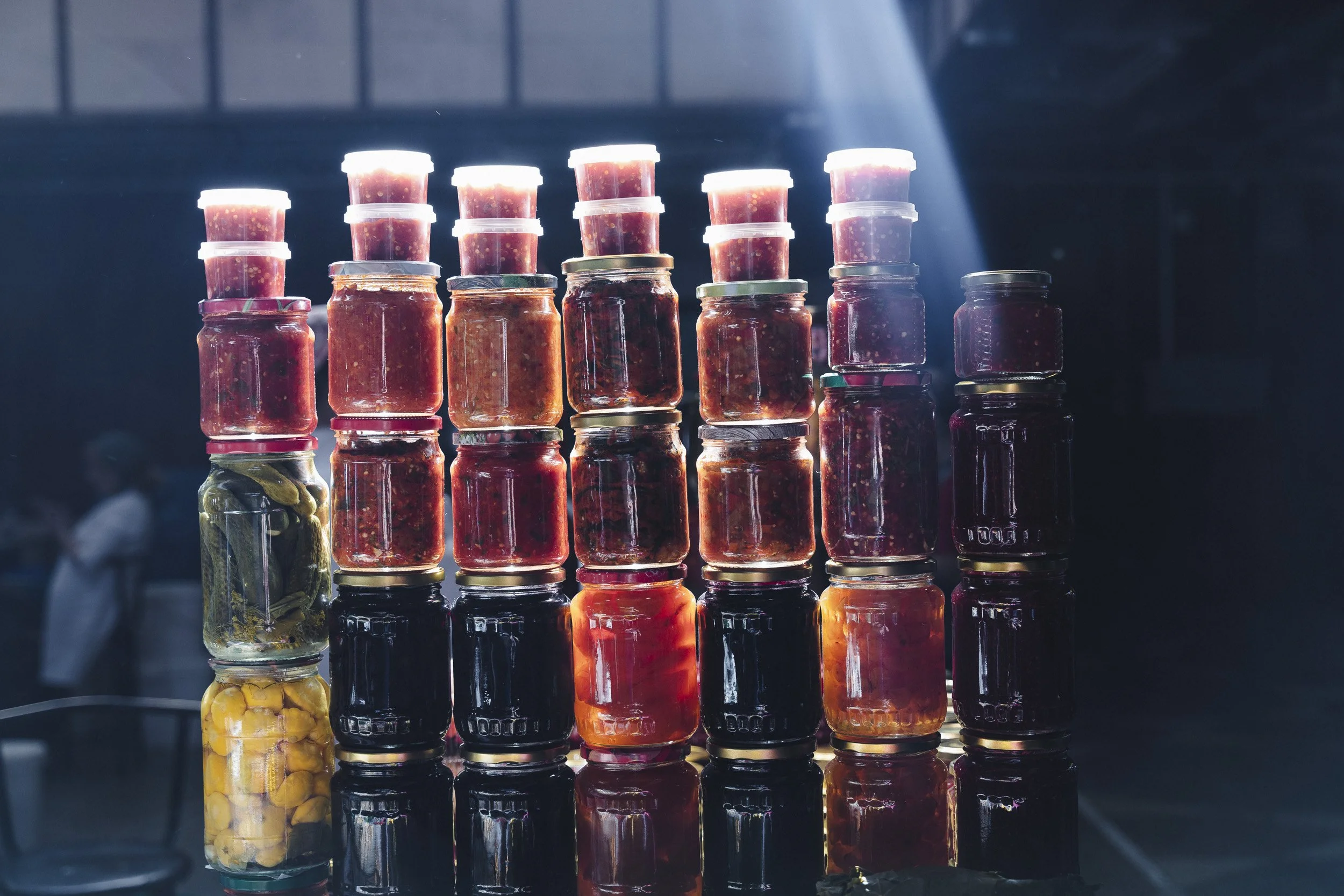
In markets from the Fergana Valley to Nukus, we kept finding stalls of what looked very much like kimchi. That’s because it was. In 1937 Stalin deported a large chuck of the Soviet Union’s Korean population to Central Asia, and their descendants are still here. Korean pickles and spicy carrot salad have been market staples ever since, sitting alongside jars of pickled vegetables, chillies and preserves that glow like stained glass when the light catches them.
Fermented everything
Then there’s the dairy, much of it fermented. In Kazakhstan, kumis, fermented mare’s milk, is something of a national treasure. In Osh and the Margilan bazaar, street sellers ladle ayran, a salty yoghurt drink, from huge painted clay pots. In Kyrgyzstan, the cheerful Shoro barrels on every street corner dispense maksym, a fermented grain drink, and chalap, a tangy yoghurt one. And at a camel farm in Karakalpakstan, we drank camel’s milk straight from the source. All are acquired tastes. Try them anyway.
Bread (and somsas)
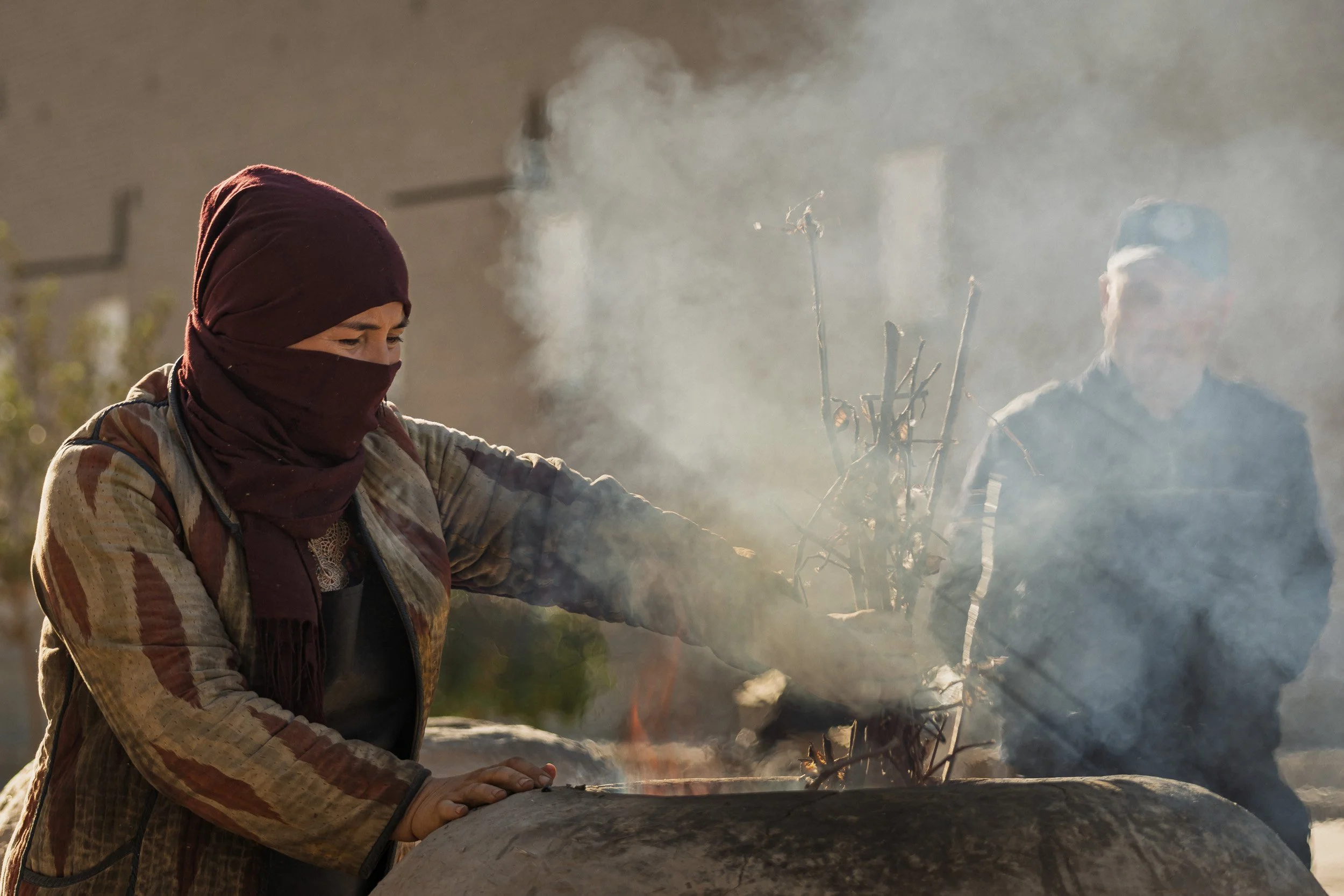
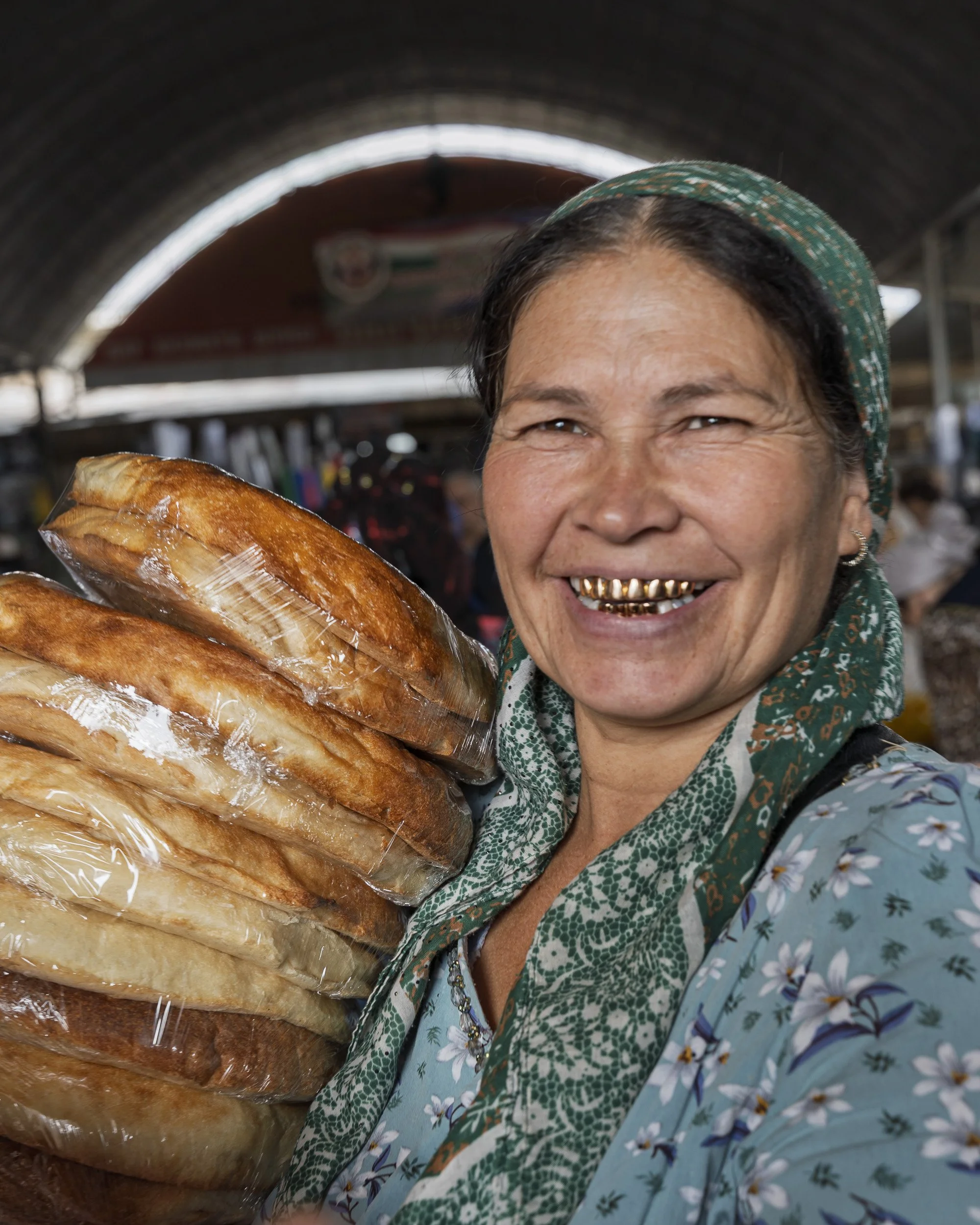
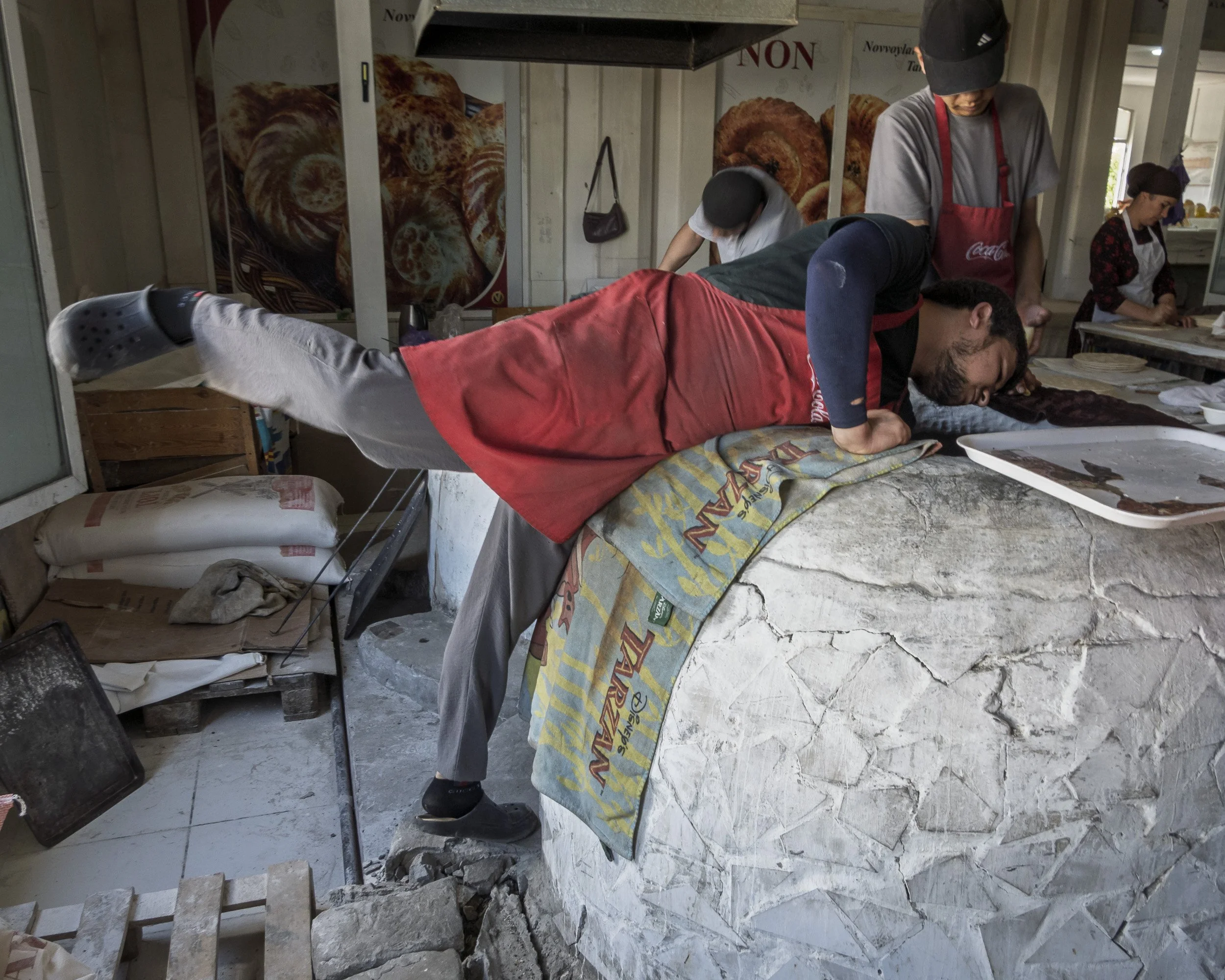
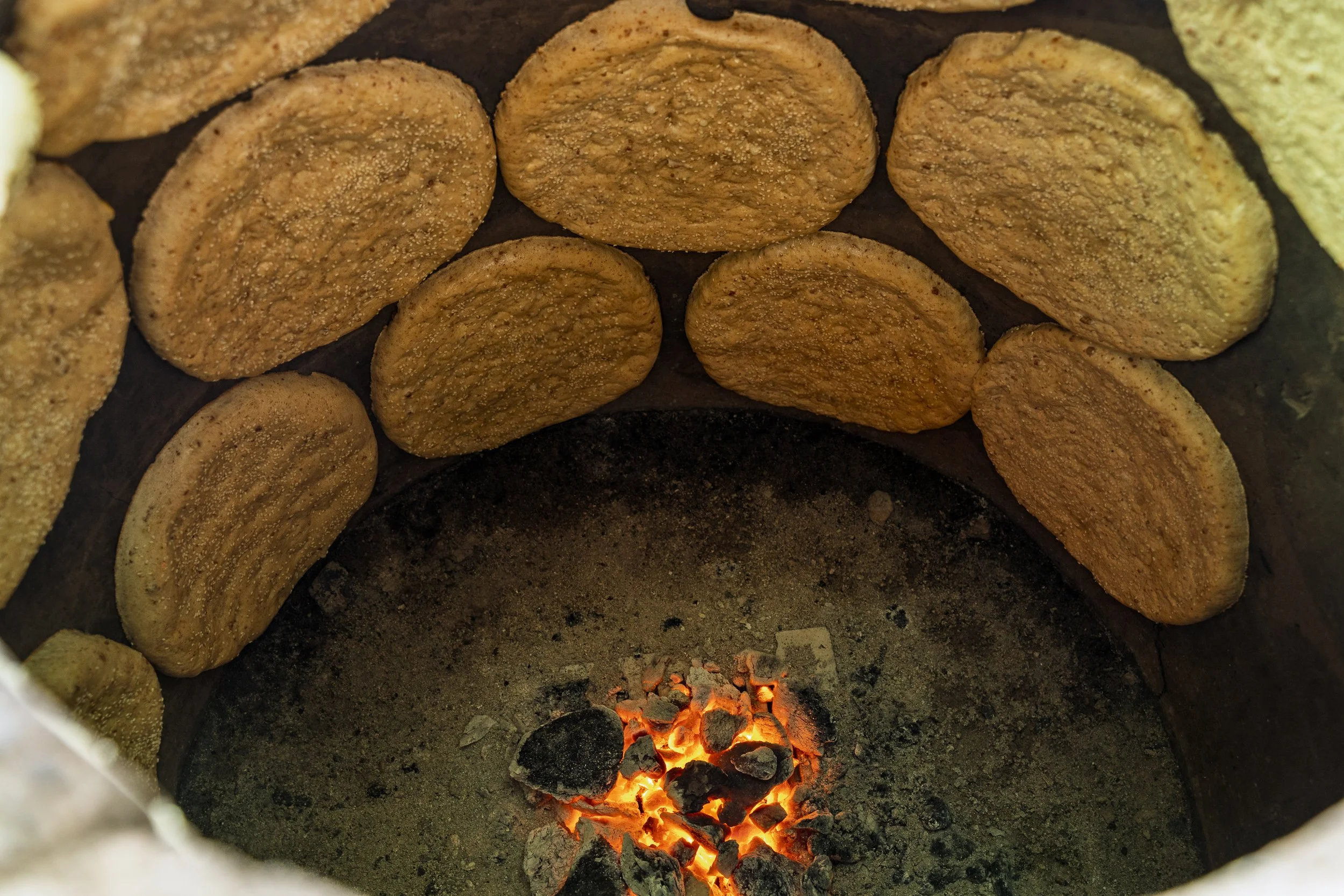
Every neighbourhood has its bakery, and the round non bread, slapped onto the inside walls of clay tandoor ovens, is treated with real respect: never placed upside down, never thrown away. Watching the bakers at work, sometimes disappearing headfirst into the oven, was often as good as eating the results. Almost.
The same ovens turn out somsas, flaky pastries stuffed with mutton and onion, and the perfect street-side snack.
The bakers I met were always delighted to show off their work and happy to be photographed. In Tashkent, you can even book a bread-making tour to watch the process and try making your own non.

All You Need Is Plov
After five weeks, I’m not so sure.
Plov is the region’s signature dish, and the T-shirts on sale in Uzbek bazaars insist it’s all you need: rice slow-cooked with carrots, onions and meat in a great cast-iron kazan. It’s also the dish of celebration, cooked in vast cauldrons for weddings and gatherings, where it can feed hundreds.
Much as I enjoyed it the first time, there’s only so much even I can take. The amount of mutton fat poured into the rice is bordering on the obscene. I never did work out why so little of that extraordinary market produce made it onto restaurant plates.
Breakfasts were reliable but repetitive: eggs, tomatoes, cucumber, bread and, if you’re particular about your morning coffee, a great deal of instant.
Worth knowing
Vegetarians won't go hungry – but plan ahead. The bazaars are a delight, with superb fruit, vegetables, nuts, bread, salads and cheeses everywhere. The challenge is restaurants, where even vegetable dishes and soups are often cooked with meat stock or mutton fat. Larger cities have more options, and a translation app and a few key phrases will help.
Health and staying safe
People often ask whether independent travel in Central Asia is safe. In five weeks across four countries – in cities, on public transport and in some very remote places – we never once felt threatened. Unless, that is, you count some of the driving on the mountain roads. As a rule, the younger the driver, the more adventurous the overtaking.
Mostly, though, it’s the hospitality I’ll take home with me, and nowhere more so than in the Fergana Valley. I’ve travelled widely, and I struggle to recall anywhere we were made to feel more welcome. That’s our experience, of course, not a reason to abandon normal precautions, ignore official travel advice or travel without insurance. Although you may want to close your eyes for some of those overtaking manoeuvres.
If there was one real threat to my wellbeing, it was a stomach bug in Bukhara. On one walking tour, I became better acquainted with the toilets of the city’s hotels and restaurants than with some of its medieval monuments. A local pharmacy soon had me back in circulation, and the episode reinforced the value of carrying basic medical supplies, knowing where to find a pharmacy and having insurance that covers everywhere you plan to go.
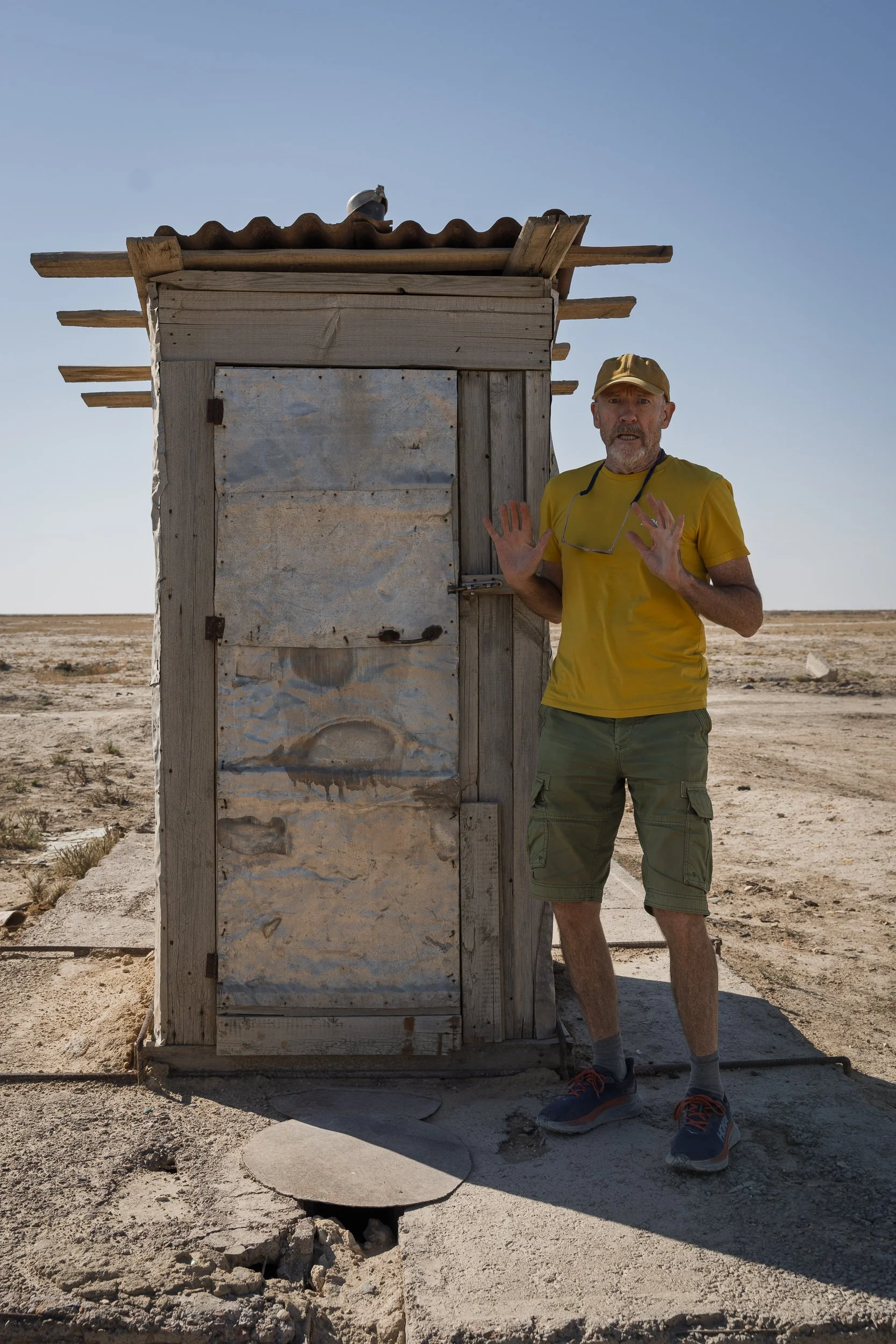
Central Asian toilets are not for the faint-hearted
Staying well
- directions_car Wear a seatbelt – if there is one. Mountain roads and enthusiastic overtaking make a strong case for it, and it's fine to ask a driver to slow down.
- water_drop Take care with food and water. Stick to bottled or filtered water, and be wary of salads and anything that's been sitting around in the heat. Even sensible travellers get caught out.
- medical_services Carry a basic medical kit. Rehydration salts, anti-diarrhoea tablets and any prescription medication you need. Pharmacies are plentiful in towns and cities, but not in the mountains or the desert.
- verified_user Get proper travel insurance. Make sure it covers every country on your route and any activities you're planning, such as trekking or horse riding at altitude.
- landscape Respect the altitude. Son-Kul and the high passes sit well above 3,000 metres. Take it slowly for the first day or two and drink plenty of water.
- travel_explore Check official advice before you go. Look at the UK Foreign Office (or your own government's) travel advice for each country, and seek medical help for severe or persistent symptoms.
Unfinished business. How we’d do it again
The main change would be to give Kyrgyzstan considerably more time. There is always more to see in Uzbekistan, but it is the south of Kyrgyzstan and a journey through Tajikistan which remain, well, unfinished business. And next time, I’d plan the route around the region’s geography rather than trying to connect dots on a map which look logical from a distance.
But I wouldn’t change the approach. Travelling independently gave us the freedom to follow our interests, talk to people and stay longer when somewhere appealed. Setbacks rarely turned into disasters: there was usually a solution, even if it wasn’t the one we’d planned.
How we'd do it again: three journeys, not one
01
Kyrgyzstan and Tajikistan
Mountains and nomadic life
A proper journey through the high country, with time for horse trekking, mountain roads, remote valleys and the nomadic traditions that are still part of daily life. A 4x4 loop of northern and central Kyrgyzstan, a flight south to Osh and on along the Pamir Highway would make an extraordinary trip. It's the one I most want to return for.
02
Uzbekistan
The Silk Roads and beyond
From the Fergana Valley through Tashkent, Samarkand, Bukhara and Khiva, then west to Nukus, Moynaq and the Aral Sea. The contrast between monumental architecture, working craft traditions and the stark landscapes of Karakalpakstan is what makes this route so rewarding.
03
Kazakhstan, western China and Mongolia
Another horizon
The journey we didn't attempt: much more of Kazakhstan, continuing into western China and Mongolia. A separate undertaking, not something to squeeze onto the end of a Silk Road trip. Strictly speaking they sit beyond Central Asia, but they belong to the wider geography that first drew me to this part of the world.
You could divide these journeys further, especially if walking, horse trekking or photography is the main purpose. Five weeks was enough for a remarkable trip, but also enough to understand how much we hadn't seen and how much else there is to explore. I'll be back.
Further reading
For all the apps and AI, we still packed a brand-new copy of the Lonely Planet guide to Central Asia. It felt only right: our formative travel years in the late 1980s and early 1990s were shaped by Tony and Maureen, (or Taz and Maz as we called them), Wheeler's books, and some habits are worth keeping. Three books travelled with us, or followed us home.

Central Asia
Invaluable for seeing the whole region laid out at a glance – the maps, the distances, the sample itineraries – and for planning a route across four countries before we'd set foot in any of them.

Sovietistan
A Norwegian journalist's vignettes of the five "Stans". A little dated now, but perceptive and very readable. I read the chapters after we'd visited somewhere, which worked rather well.

The Silk Roads
A meaty sweep of world history told from an Asian perspective, putting Central Asia back at the centre of the story. Not light holiday reading, but it makes the cities you walk through make far more sense.
All three are available in print or digital format from wherever you get your books.